Follow the Health Headline Back to the Study
A headline announces that a familiar spice fights inflammation, improves blood sugar, or protects the heart, and suddenly dinner seems to need a therapeutic upgrade. Before changing your cupboard, follow the claim backward: what product was tested, who took it, how much they used, and which outcome changed? Those questions often reveal a considerable distance between a kitchen ingredient and the intervention in a study. Superfood is an appealing label, but it does not establish a clinical benefit or specify a preparation. Ginger, turmeric, cinnamon, garlic, and other seasonings can be excellent foods while the evidence for a particular health claim remains narrow, mixed, or incomplete. This guide identifies promising areas of research and the boundaries around them, so you can enjoy flavorful meals without turning a study headline into an unsupported treatment plan.
A: The label alone provides no preparation, dose, or demonstrated health outcome.
A: No. Those are distinct settings, and NCCIH describes different findings for them.
A: Its formulation and exposure differ, so efficacy and safety require their own assessment.
A: Describe that measurement; do not automatically convert it into proof of fewer disease events.
A: Only if the design can isolate that ingredient's effect; a mixture result alone cannot.
A: Historical use and measured clinical efficacy answer different questions.
A: No. Design, quality, replication, and relevance influence confidence in the conclusion.
A: It determines what changed relative to what, including whether standard care continued.
A: No. Greater exposure does not by itself establish safety or clinical benefit.
A: No. Enjoyable flavor and a useful role in meals are sufficient culinary reasons.
What Backed by Science Should Actually Mean
Almost any plant ingredient can be connected to a scientific paper. That connection might involve chemical analysis, cells in a laboratory, an animal experiment, or a trial in people. These forms of research answer different questions. A paper showing that a compound affects a laboratory process does not automatically establish that an ordinary serving of the food improves someone’s health.
A stronger claim names the evidence precisely. It identifies the preparation, participant group, comparison, duration, and measured result. It also explains what remained uncertain. Calling a seasoning science-backed without those details can make preliminary work sound like settled clinical guidance. The useful task is to match the strength of the wording to the strength and relevance of the evidence.
For this article, top means ingredients worth examining because they attract substantial public interest and have recognizable research discussions. It does not mean they have been ranked in a trial against one another. There is no evidence-based universal winner here, and a cooking ingredient does not need a disease-treatment claim to deserve a place in dinner.
A useful way to approach an article is to read past its opening claim and locate the actual study description. If the description never identifies a preparation or measured outcome, the reader cannot assess its relevance. Follow the citation where one is provided, then compare the careful language in the research summary with the certainty of the headline. That difference often reveals the point at which an interesting result became an inflated promise.
Ginger: A Specific Nausea Question, Not Every Kind of Nausea
Ginger is one of the clearer examples of why the condition and preparation must remain visible. The NCCIH ginger overview reports that it may help nausea and vomiting associated with pregnancy, while most studies examined supplements rather than foods. Evidence does not support transferring that conclusion to every setting: studies of motion sickness mostly have not shown benefit, and usefulness around chemotherapy or surgery remains uncertain.
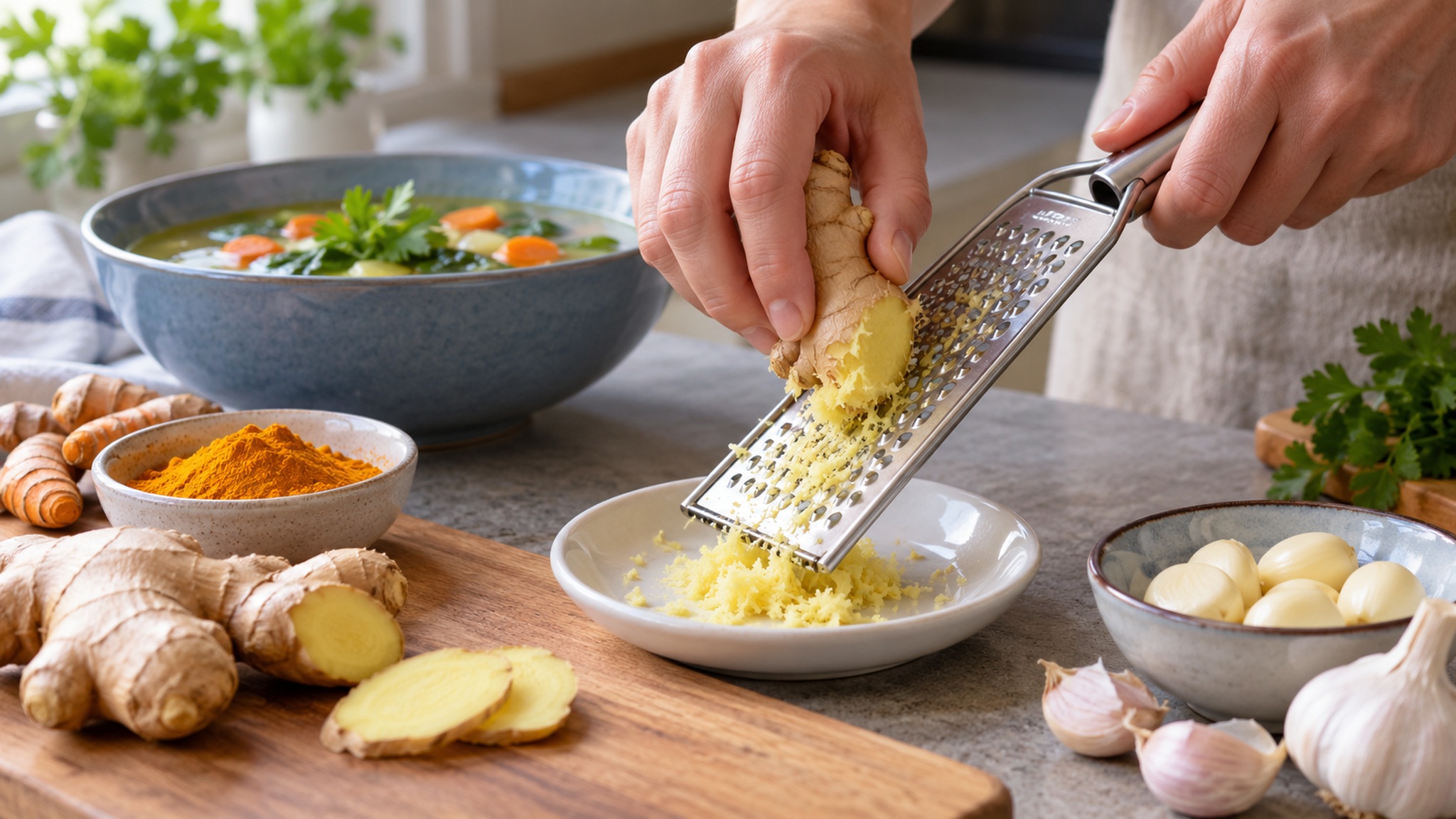
Those distinctions matter before making a personal decision. Pregnancy-related symptoms deserve discussion with the clinician managing that pregnancy, including whether a supplement is appropriate. A ginger-flavored meal or tea is not automatically equivalent to a trial product. In the kitchen, use ginger for the sharp aromatic character you enjoy; do not infer a clinical dose from the amount that happens to taste good in soup.
Turmeric: Promising Findings With Important Product Differences
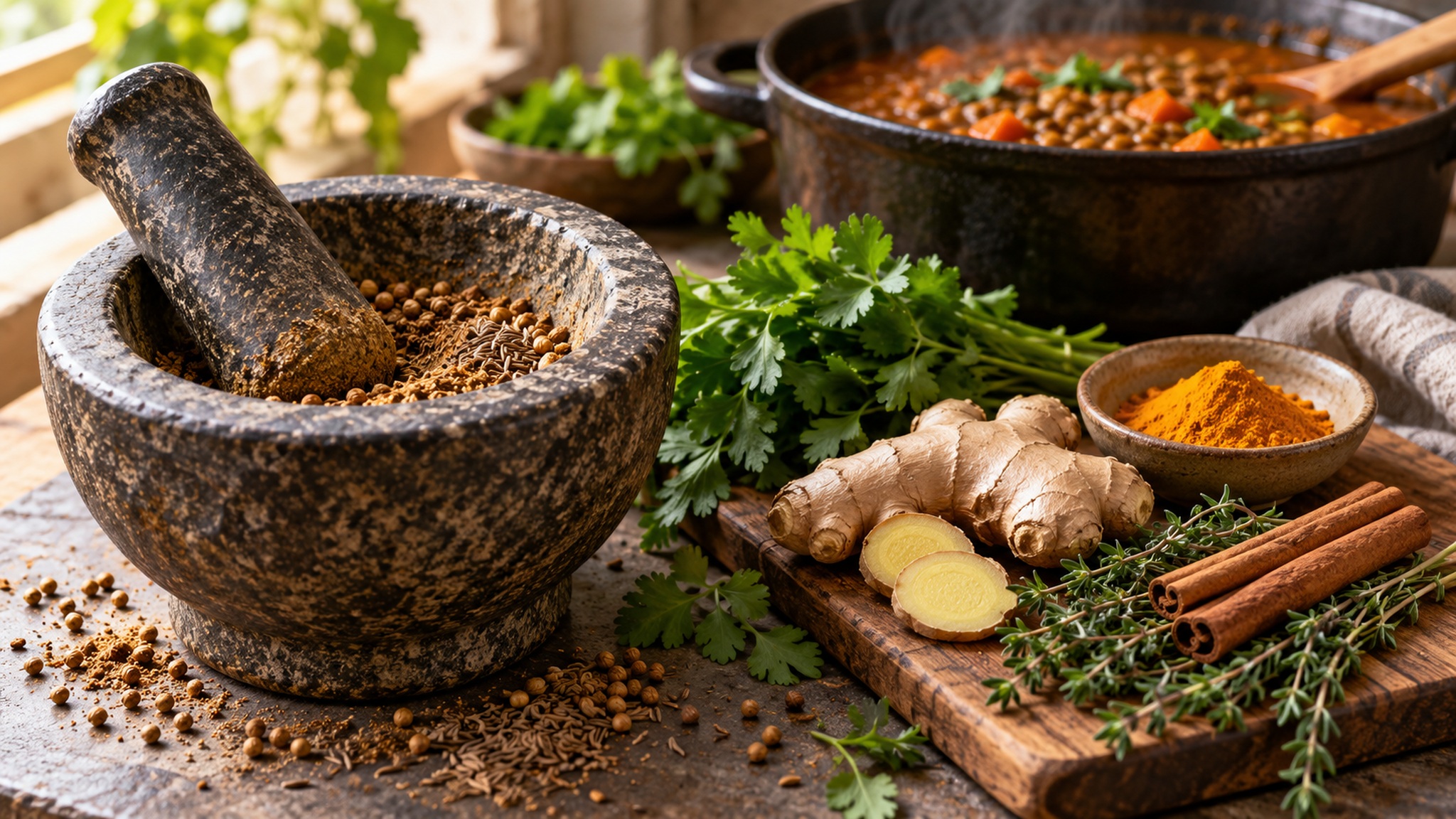
Turmeric’s yellow color is familiar, but research discussions often concern curcumin or formulated extracts rather than the spice as eaten in a meal. The NCCIH turmeric review describes encouraging initial findings for some knee osteoarthritis measures while emphasizing the need for higher-quality evidence and uncertainty about health benefits more broadly. It also reports liver injury concerns with some products designed to increase bioavailability. A kitchen combination of spices should therefore not be presented as a validated treatment formula, and a concentrated product with enhanced absorption should not be assumed safer or better simply because its label stresses potency.
Cinnamon: Popular Blood-Sugar Claims Need Restraint
Cinnamon appears frequently in discussions about diabetes and weight loss, but popularity is not the same as a settled answer. The NCCIH cinnamon guidance says research does not clearly support its use for a health condition and that benefit for diabetes or weight loss is unclear. Interpretation is complicated when reports do not clearly identify the species or plant part tested. Those limitations should stay attached to the claim.
A sprinkle can be a pleasant addition to fruit, oats, or an unsweetened dish without needing a therapeutic explanation. It does not remove the sugar or energy from the recipe, and it is not a substitute for prescribed diabetes management. Increasing the amount to imitate a supposed treatment can introduce a different safety question from ordinary culinary use. Discuss concentrated or prolonged high-intake use with a qualified professional rather than improvising from a headline.
Garlic: The Preparation Is Part of the Finding
Garlic is another ingredient whose everyday identity can conceal differences between research products. The NCCIH garlic overview describes small effects of supplements on some cardiovascular risk factors in certain populations, while also identifying potential harms and interactions. That is a narrower statement than saying a clove prevents heart disease. An outcome such as a change in a measured risk factor is not equivalent to proof that a particular food prevents a heart attack.
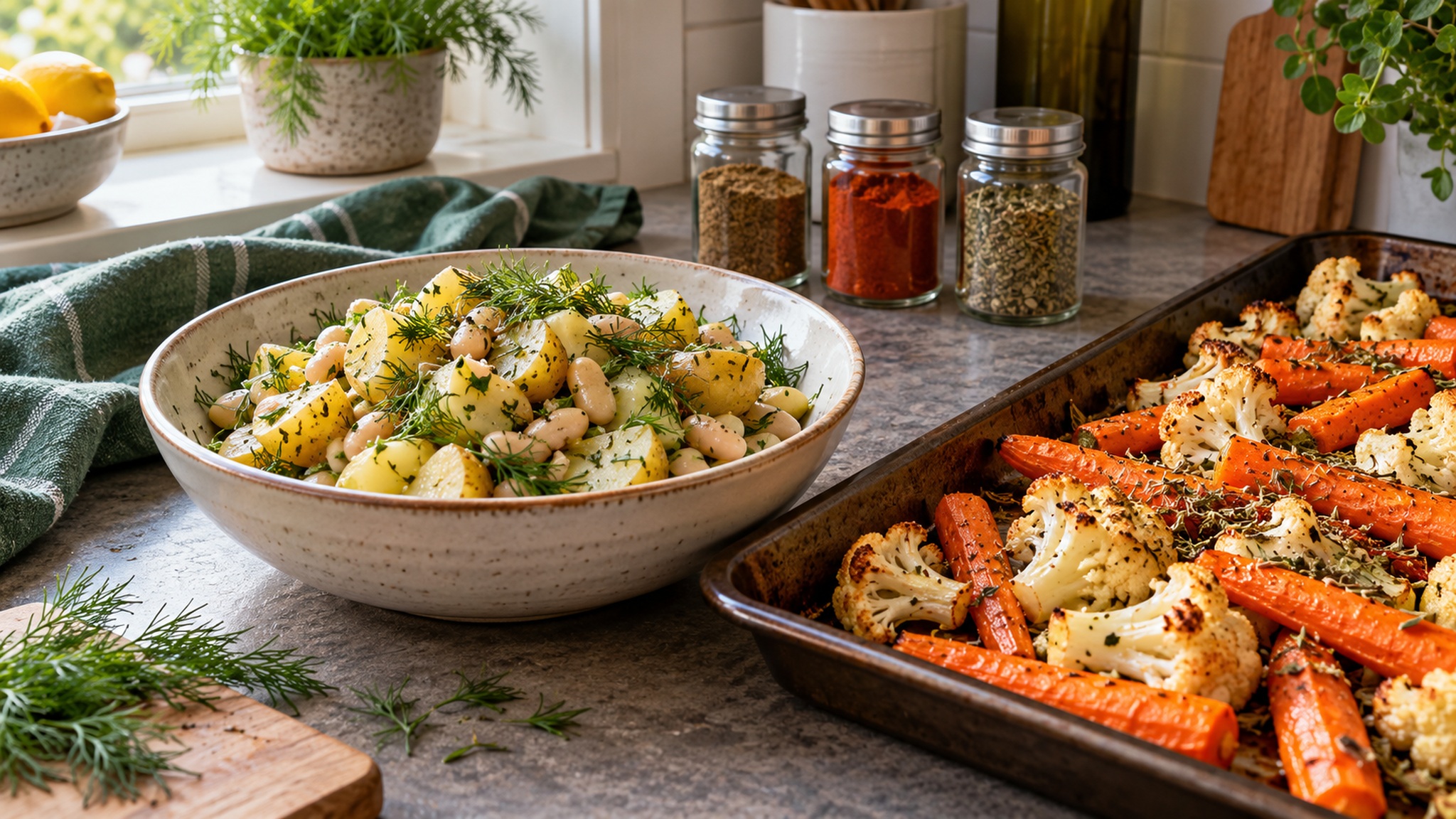
Supplements can differ from raw, cooked, or powdered garlic, and the relevant evidence follows the tested preparation. A recipe that contains garlic may also contain vegetables, beans, oils, salt, and other ingredients. The health meaning of the meal cannot be assigned solely to one aromatic component. Keeping the preparation and outcome explicit prevents that confusion.
In practical cooking, garlic can supply a savory base for a wide range of dishes. Use the form that fits the recipe and your tolerance, whether that is a fresh clove or an unsalted culinary powder. If considering a garlic supplement, check with a clinician or pharmacist, particularly when medicines or a planned procedure are involved. That is a different decision from making dinner taste appealing.
Leafy Herbs Offer a Food-Pattern Opportunity
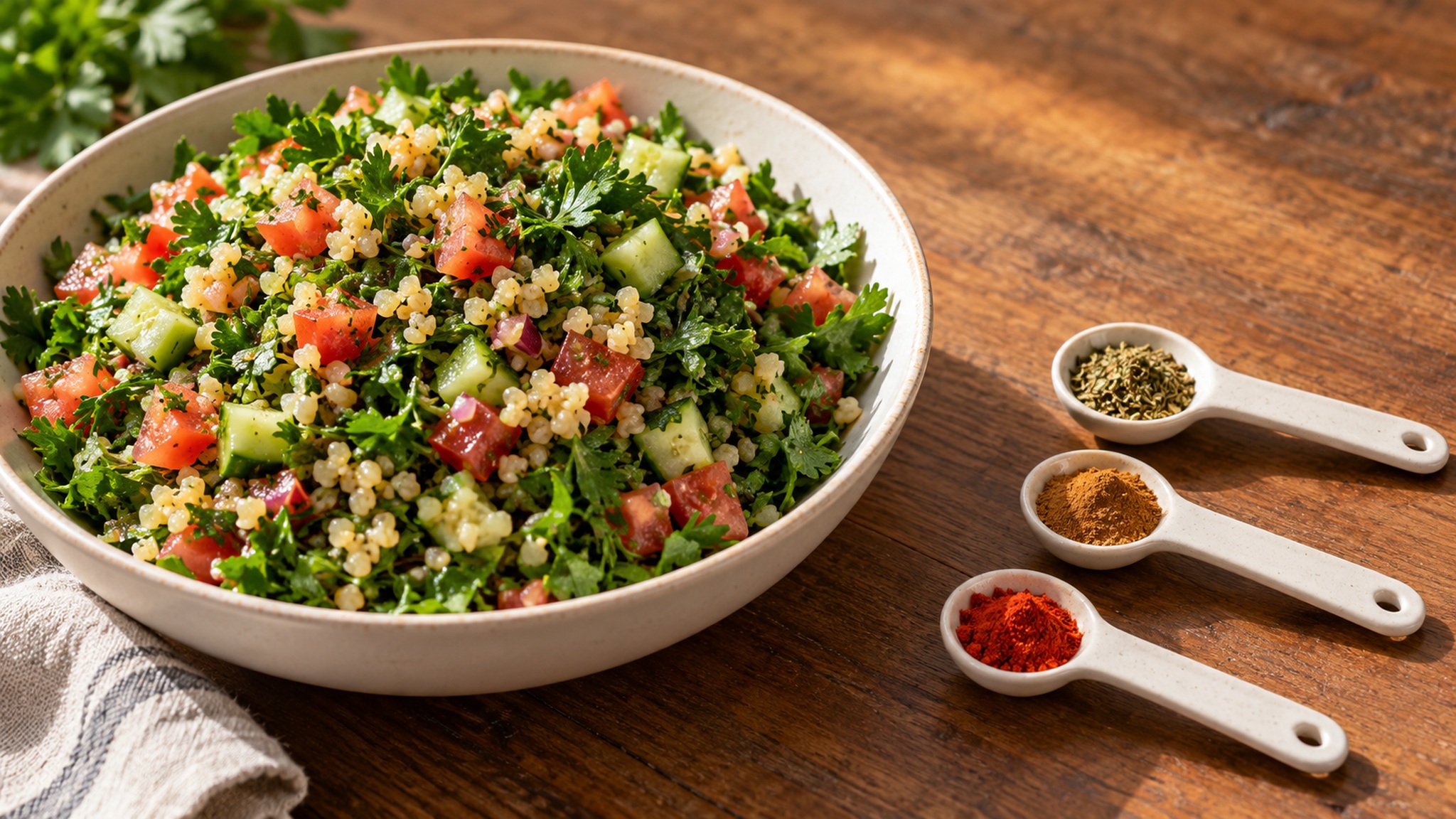
Basil, parsley, cilantro, and other leafy herbs are often described as superfoods because they contain plant compounds. Their dependable culinary role is easier to describe: they can add freshness and variety to meals. A generous herb addition may make beans, vegetables, or a grain salad more enjoyable. That is a worthwhile food choice even when no direct disease-prevention claim can be assigned to the garnish.
Be cautious when a claim moves from chemical content to a clinical promise without showing the intermediate evidence. A leaf can contain an interesting constituent while the amount eaten, its metabolism, and the relevant health outcome remain uncertain. The right conclusion may be to enjoy the herb as food, not to seek the highest possible concentration of its extract.
A Trial of a Mixture Cannot Identify One Winning Spice
Research sometimes tests a combination of seasonings within a controlled eating pattern. Even if an outcome improves, that design may not show which ingredient produced the change or whether the same effect would occur with a single spice. The mixture, food context, participant group, and comparison all belong to the result. Selecting one familiar component from the ingredient list and crediting it with the whole finding creates an unsupported conclusion. To establish that narrower claim, researchers would need an appropriate comparison capable of separating the component’s effect.
Read the Outcome Before Reading the Celebration
Studies can measure symptoms, blood pressure, laboratory markers, body weight, disease events, or other endpoints. A change in one does not prove a change in all the others. For example, an improvement in a symptom score is not automatically evidence that a disease has been cured. The headline should identify what was measured rather than replace it with an expansive verb such as protects or reverses.
Look for the size of the effect as well as whether it was statistically significant. A small average difference can be real while having uncertain importance for an individual. Consider the comparison too: was the intervention added to usual care, compared with a placebo, or substituted for something else? Those choices determine what the study can reasonably tell you.
Duration supplies another boundary. A short study cannot settle long-term benefits, harms, or adherence simply because the result looked encouraging at its final visit. Follow-up, replication, and consistent findings across suitable studies build confidence. Until then, use language such as preliminary or uncertain when that accurately reflects the evidence.
Absorption Claims Are Not Automatic Benefit Claims
A product may advertise better absorption as though that alone proves a better health outcome. Absorption describes one part of the pathway between swallowing an ingredient and its effects. It does not establish efficacy, the best dose, or safety for everyone. Increased exposure may change risks as well as potential benefits, which is one reason formulation differences matter in supplement research.
Kitchen advice can become misleading when it turns this scientific issue into a universal recipe hack. Combining foods because they taste good is straightforward; promising that the combination reproduces a studied therapeutic intervention requires more evidence. Avoid turning a particular formulation’s research into a claim about every dinner that contains similarly named ingredients.
Traditional Use and Clinical Research Answer Different Questions
A long culinary or traditional history can explain why an ingredient is familiar and why researchers became interested in it. That history deserves accurate description, but it does not establish the size of a treatment effect under modern clinical conditions. Equally, limited trial evidence does not mean the ingredient has no culinary value. Keep the two discussions clear: cultural food practices can be meaningful on their own terms, while specific medical claims require evidence suited to the particular claim.
Make a Purchase That Matches Your Actual Goal
If your goal is more enjoyable meals, a modest jar of a spice you like may be the appropriate purchase. You can evaluate that decision directly by cooking with it. If your goal is relief of a symptom or management of a condition, the decision needs information about evidence, preparation, safety, and your own care. A supplement marketed with familiar food imagery should not blur those goals.
Before paying more for a concentrated product, ask what the label promises and whether the cited study tested that same preparation. Consider the participant group and the intended outcome. An unfamiliar formulation with a dramatic claim deserves more scrutiny, not automatic confidence because the underlying plant also appears in the spice aisle. Bring the product details to a clinician or pharmacist if it is being considered for a medical purpose.
There is also no requirement to purchase every ingredient discussed in a wellness article. A satisfying food pattern can use seasonings that are affordable, familiar, and culturally appropriate. The nutrition of the meal depends on much more than whether it contains the current fashionable powder. Keep the cupboard connected to dishes you can actually cook and enjoy.
Enjoy the Ingredients Without Inflating the Evidence
Ginger, turmeric, cinnamon, garlic, and leafy herbs can all make food more appealing, but their research stories differ. Preserve those differences instead of compressing them into one superfood promise. Name the preparation, condition, and outcome when discussing a study, and leave uncertainty visible. That habit lets culinary enjoyment and scientific curiosity coexist: dinner remains pleasurable, while health decisions are grounded in evidence relevant to the person and purpose involved.