

High-Protein Diets take center stage on Nutrition Streets as a powerful approach to fueling strength, supporting metabolism, and building lasting energy. This dynamic nutrition style goes far beyond protein shakes and grilled chicken—it’s about understanding how protein works in the body and how to use it strategically for real-world results. From athletes and active lifestyles to weight management, aging well, and everyday wellness, high-protein eating has earned its place as a cornerstone of modern nutrition. On this page, you’ll explore a wide range of articles that break down protein sources, timing strategies, and meal ideas designed for different goals and dietary preferences. Learn how protein supports muscle repair, helps regulate appetite, stabilizes blood sugar, and keeps you feeling fuller longer. We also explore plant-based and animal-based options, smart snack ideas, and common myths surrounding high-protein plans. Whether you’re optimizing performance, rebuilding strength, or simply eating with intention, High-Protein Diets on Nutrition Streets offer clear guidance, science-backed insights, and practical inspiration to help you power every meal with purpose.
A: It varies by body size, activity, and goals—many people do well with a higher-protein range, but a dietitian can personalize it.
A: Most healthy adults tolerate it well, but people with kidney disease (or concerns) should get medical guidance first.
A: No—whole foods work great. Powder is just a convenient option when you’re short on time.
A: Yes—lean on tofu/tempeh, edamame, lentils, beans, seitan, and higher-protein plant milks/yogurts.
A: Greek yogurt bowl, eggs + egg whites, cottage cheese + fruit, or a smoothie with milk/yogurt and protein.
A: Check overall calories, fiber, sleep, and stress—pair protein with fiber and healthy fats for better staying power.
A: Rotate sauces and seasonings—Mexican, Mediterranean, Korean, BBQ, and curry flavors change the whole meal.
A: Some are solid; choose ones with decent fiber and reasonable added sugar, and treat them as convenience foods.
A: Getting protein within a few hours is generally helpful—total daily intake matters most.
A: Start with a protein, add a fiber-rich carb/veg, then finish with a flavor (sauce, herbs, spices).
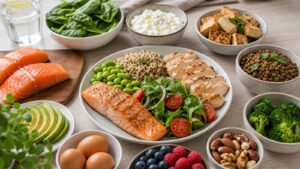
What Is a High-Protein Diet? Benefits, Risks, and Beginner’s Guide
Learn what a high-protein diet means, how much protein people need, potential benefits and risks, quality sources, meal distribution, and who needs clinical guidance.
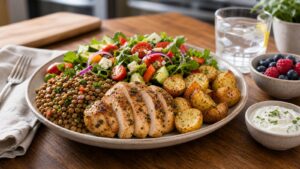
High-Protein Diet for Weight Loss: Does It Really Work?
See how higher-protein eating may support weight loss through fullness and muscle preservation, plus practical targets, food choices, tradeoffs, and progress checks.
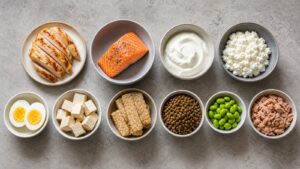
Best High-Protein Foods Ranked by Protein per Serving
Compare high-protein foods by realistic serving, including lean meats, seafood, dairy, eggs, soy foods, legumes, seitan, grains, nuts, and convenient options.