

The Gut–Brain Connection is one of the most exciting frontiers in modern nutrition—revealing how what happens in your digestive system can shape your mood, focus, stress levels, and overall mental clarity. Often called the body’s “second brain,” your gut is home to trillions of microbes that constantly communicate with your nervous system through complex chemical and neural pathways. This silent conversation influences everything from emotional balance and sleep quality to memory, motivation, and resilience. On Nutrition Streets, this Gut–Brain Connection hub explores the science, strategies, and everyday choices that support both digestive and mental well-being. Here, you’ll discover how foods, nutrients, lifestyle habits, and gut health patterns can affect anxiety, depression, brain fog, energy, and long-term cognitive health. From fermented foods and fiber-rich diets to inflammation control and stress-aware eating, each article breaks down powerful ideas into practical, approachable insights. Whether you’re curious about improving focus, supporting emotional wellness, or optimizing long-term brain health, this collection connects the dots between digestion and cognition. Step inside and explore how nourishing your gut can transform the way your mind feels, functions, and thrives.
A: Add one high-fiber food daily (beans, oats, berries) and increase gradually with plenty of water.
A: Not always—many people benefit from fermented foods and more fiber first; supplements are individual.
A: Rapid fiber jumps, stress, or sensitivities can do it—go slower, cook foods well, and test portions.
A: Simple meals: rice/oats, bananas, yogurt (if tolerated), soups, and cooked vegetables.
A: Many adults fall short—build up slowly and focus on variety rather than a perfect number.
A: Excess added sugar can crowd out nutrient-dense foods—balance matters more than strict avoidance.
A: For some it supports regularity; for others it triggers reflux or anxiety—adjust timing and dose.
A: Unless you have celiac, allergy, or clear intolerance, you may not need to remove them—try a mindful trial.
A: Yes—late heavy meals can disrupt sleep; consistent timing often improves digestion and energy.
A: For persistent pain, blood in stool, unexplained weight loss, severe reflux, or ongoing symptoms.
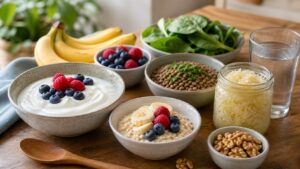
Gut-Brain Connection Foods: What to Eat for Better Mood and Digestion
A gut-brain food guide for better mood and digestion, including fiber, fermented foods, omega-3s, polyphenols, protein, and gentle meal ideas.
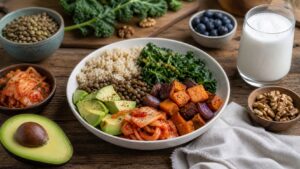
Best Foods for a Healthy Gut-Brain Connection
A practical list of foods for a healthy gut-brain connection, with fiber, fermented foods, omega-3s, polyphenols, and meal ideas.
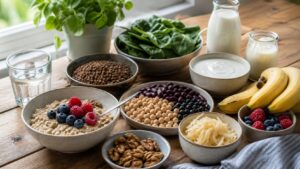
How Your Gut Microbiome Affects Mental Health
An explainer on how the gut microbiome may affect mental health, plus food patterns that support gut-brain signaling.

Signs Your Gut Health Is Affecting Your Brain
Learn signs gut health may be affecting brain function, mood, focus, and energy, plus nutrition steps that support gut-brain balance.