Give Avocado Oil a Kitchen Job Before Giving It a Health Halo
A bottle of avocado oil often enters the kitchen with ambitious promises: better nutrition, easier high-heat cooking, and a premium ingredient that seems to belong in almost any meal. Some of that appeal has a practical basis. Avocado oil supplies mostly unsaturated fat, and a refined product can offer a mild flavor that works across many dishes. Yet the benefits are easier to understand when you start with a specific cooking job rather than a vague idea that one oil upgrades everything it touches. Do you need a neutral dressing, an ingredient for roasted vegetables, or an alternative to the fat you currently use? Those questions help you decide whether avocado oil earns its price. They also leave room to examine product quality, storage, and the difference between evidence about dietary fats and claims about this particular bottle.
A: No. The extracted oil has a different nutritional role from the whole fruit.
A: A refined product is often chosen for mildness; taste the specific bottle with the food.
A: No. Butter has recipe functions beyond fat, so use a formula designed for liquid oil.
A: No. Monitor the food and reduce heat when smoking develops.
A: They identified problems in sampled products, not the composition of every bottle currently sold.
A: No. Color is not a complete purity or quality test.
A: Keeping other variables steady makes its actual flavor and performance easier to judge.
A: No. Evaluate the whole food and the reliability of its ingredient claim.
A: Seek advice about the specific oil and your circumstances instead of assuming safety.
A: When it performs the needed job and leaves more room in the budget for varied meals.
What Avocado Oil Supplies—and What the Fruit Supplies
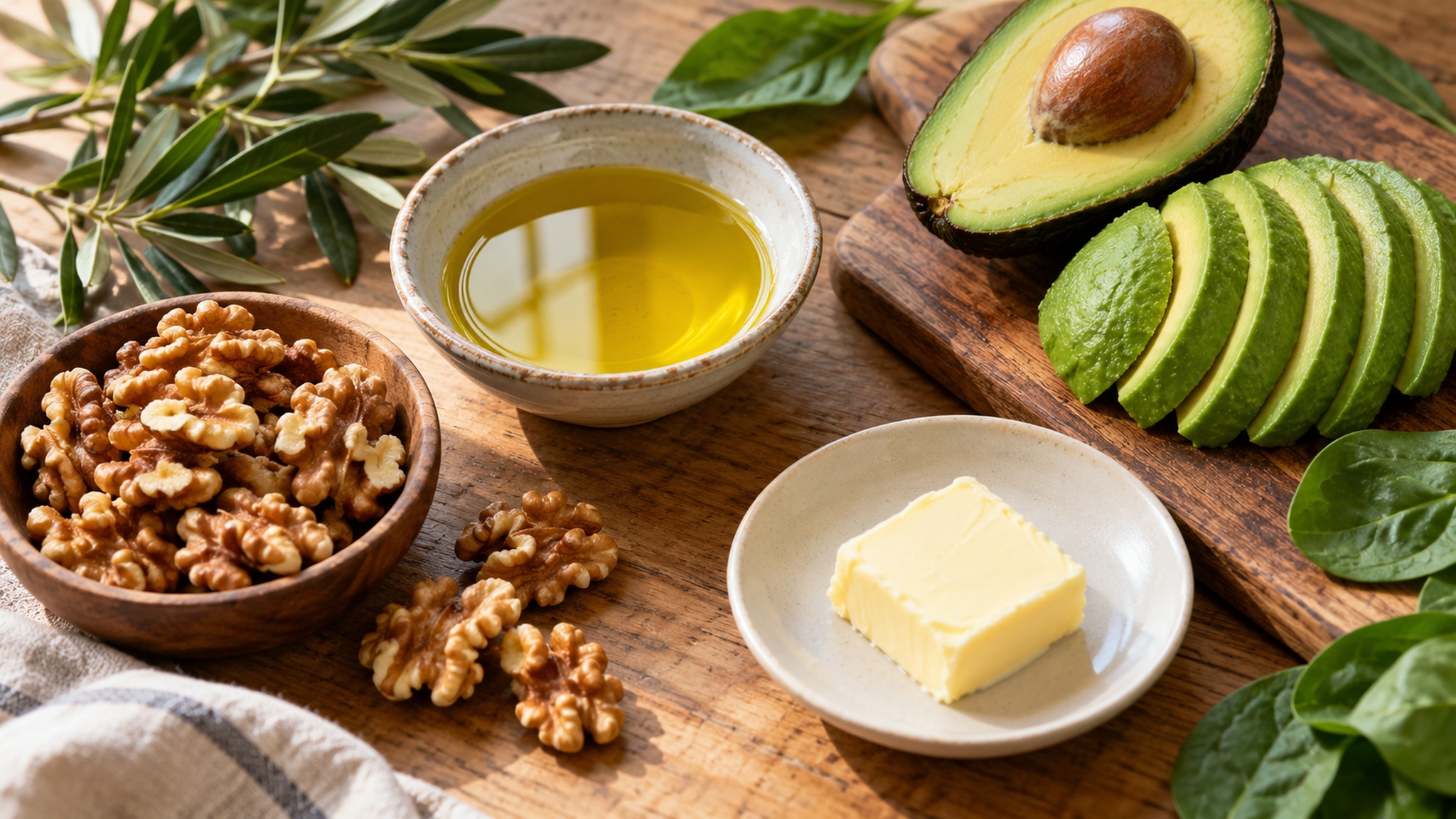
Avocado oil and whole avocado are related ingredients with different roles. The oil is a concentrated fat extracted from the fruit, while the fruit itself contributes a broader food matrix, including fiber and texture. Using oil in a dressing does not reproduce every nutritional feature of adding avocado slices to a meal. That distinction matters whenever packaging uses an image of the fruit to imply that a spoonful of oil is nutritionally equivalent to eating it.
Its fatty-acid profile is largely monounsaturated, although composition varies and the oil still contains other types of fat. This makes it a reasonable option among suitable liquid plant oils. It does not establish that replacing any other plant oil with avocado oil produces a superior clinical result. The evidence for improving fat quality is stronger than the evidence for crowning one premium bottle as the best choice for everyone.
It helps to name the desired function before shopping. If you want the softness and flavor of avocado in a sandwich, buy the fruit; if you need a liquid ingredient for a cooking method, assess the oil. Neither version is a shortcut to the other. Choosing by function also prevents an expensive oil from becoming an unnecessary addition to a meal that already has the texture and fat it needs.
Refined and Unrefined Products Need Different Expectations
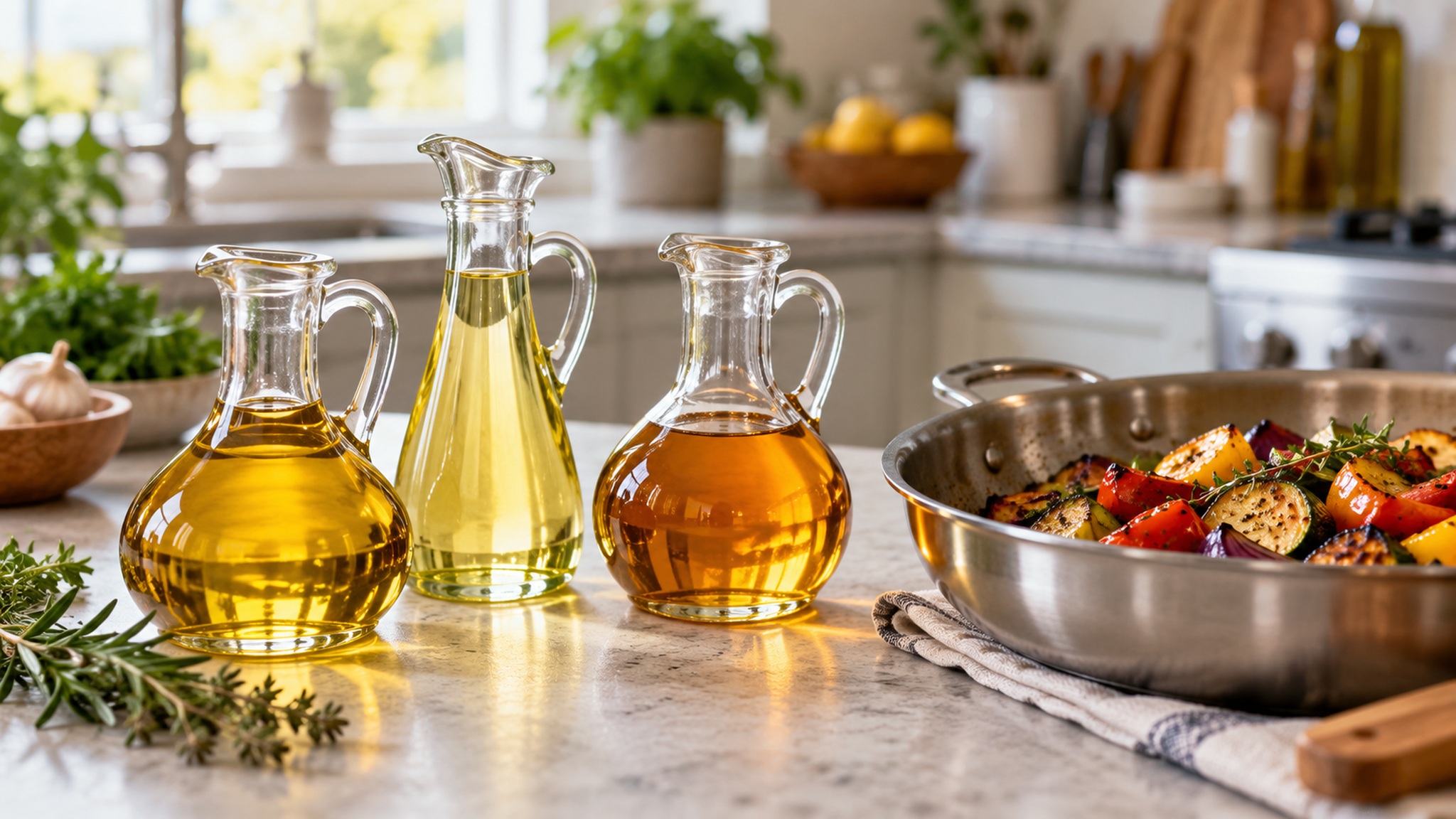
Refining generally produces a milder oil, which can be useful when you do not want the cooking fat to dominate flavor. Unrefined versions may bring a more noticeable character and color. Read the actual product description instead of assuming all avocado oils perform identically. A recipe built around gentle ingredients might benefit from a neutral product, while a cold dressing may welcome a more expressive one. The appropriate choice begins with taste and use, not with the belief that more processing always means a less useful ingredient.
Replacement Makes the Nutrition Benefit Concrete
The nutritional case for avocado oil is often clearest when it replaces a cooking fat richer in saturated fat. A household might use it instead of butter in a regular vegetable preparation or adjust a dressing built around a rich creamy base. That changes which ingredient supplies part of the meal’s fat. Simply adding it to a meal while leaving the original recipe untouched is a different action, with a different effect on total intake.
WHO recommends replacing saturated fat with unsaturated fats or carbohydrate from naturally fiber-rich foods. The guidance supports a nutrient substitution, rather than naming avocado oil as uniquely necessary. WHO guidance on fat replacement. This is useful for separating a defensible reason to change a cooking habit from a product claim that would require direct evidence about avocado oil itself.
Consider the grocery tradeoff as well. If buying a premium bottle means cutting back on the vegetables, beans, or other foods you wanted to cook, the overall decision deserves another look. An affordable oil that helps you prepare varied meals may be a better fit than a more fashionable ingredient used sparingly because of cost. Avocado oil can be a good choice without becoming a requirement for healthy home cooking.
Use It in the Pan With Attention to the Food
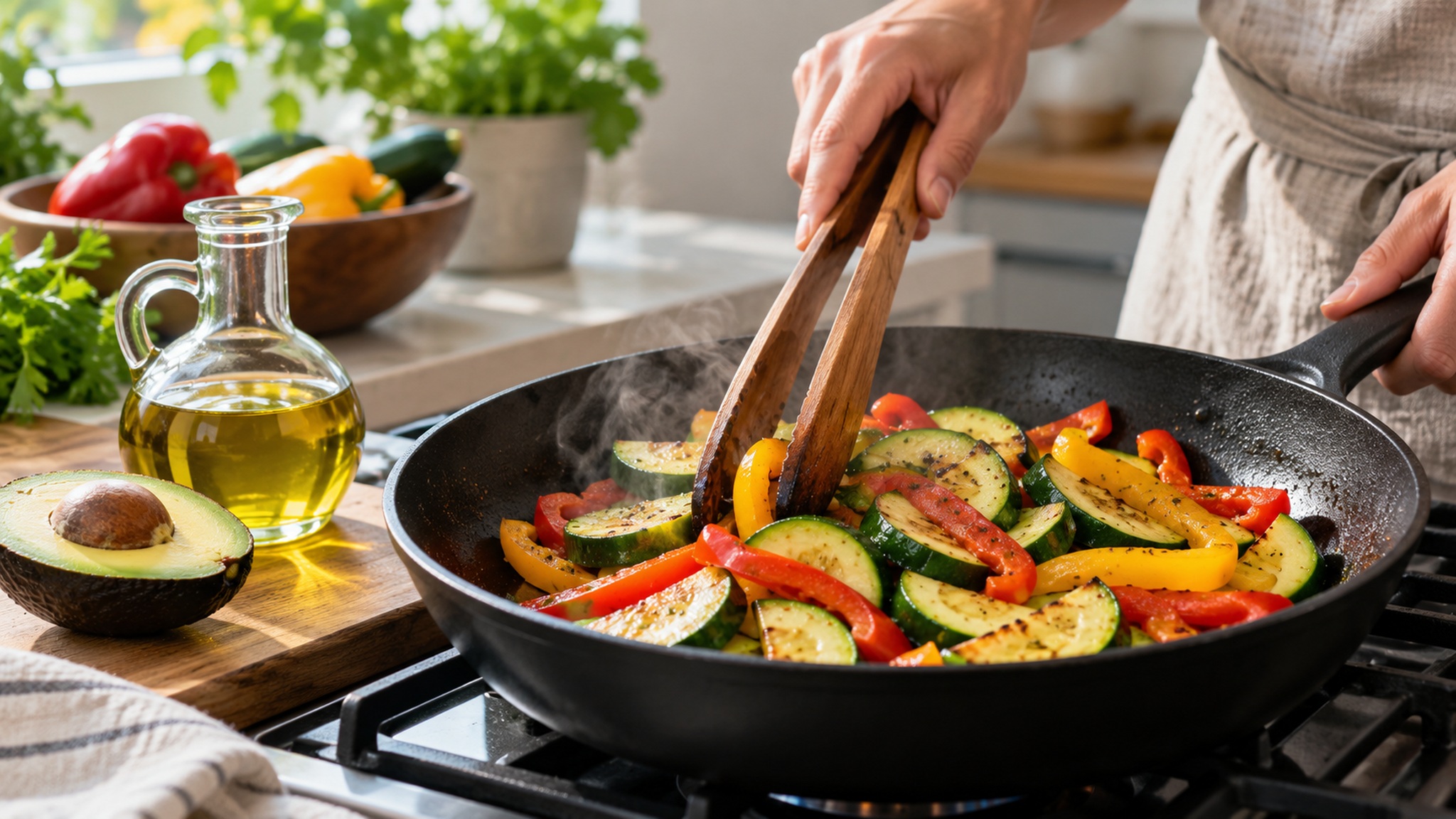
A refined avocado oil can be convenient for a skillet dish where mild flavor is desirable. Prepare the vegetables or protein first, then heat the pan according to the recipe rather than leaving the oil unattended. The goal is controlled cooking that produces the desired texture. A high-heat reputation should not become permission to push every dish toward visible smoke or to ignore the food’s own cooking requirements.
Food releases water, pan materials differ, and burner settings do not translate into one universal temperature. Those practical details explain why technique matters even when a bottle advertises a high smoke point. If smoke develops, lower the heat and reassess the pan rather than assuming the label guarantees perfect stability. Good cooking is responsive: you observe browning, moisture, and aroma, then adjust the method to the result you want.
Roasting Is About Distribution as Much as the Oil
For roasted vegetables, a useful first step is even coating rather than a large quantity. Toss the cut pieces in a bowl with the intended oil and seasoning so the amount is distributed across their surfaces. Arrange them with enough space for the recipe’s desired browning, and turn them when appropriate. Adding more oil does not solve crowding, uneven cutting, or a roasting time that does not suit the vegetables.
A mild avocado oil can let the seasoning lead. Try carrots with cumin, broccoli with lemon added after cooking, or peppers with a small amount of smoked paprika. These are culinary examples rather than evidence that a particular pairing amplifies the oil’s health effects. Choose the combination because it makes a vegetable dish you enjoy, then keep the preparation simple enough for an ordinary dinner.
It can help to test avocado oil in a dish you already know. Keep the vegetable, cut size, oven setting, and serving amount consistent with your usual version. Compare the finished texture and flavor before deciding the oil belongs in every recipe. A clear test protects you from attributing the effect of several simultaneous changes to a single new ingredient.
Cold Dressings Offer a Simple Flavor Test
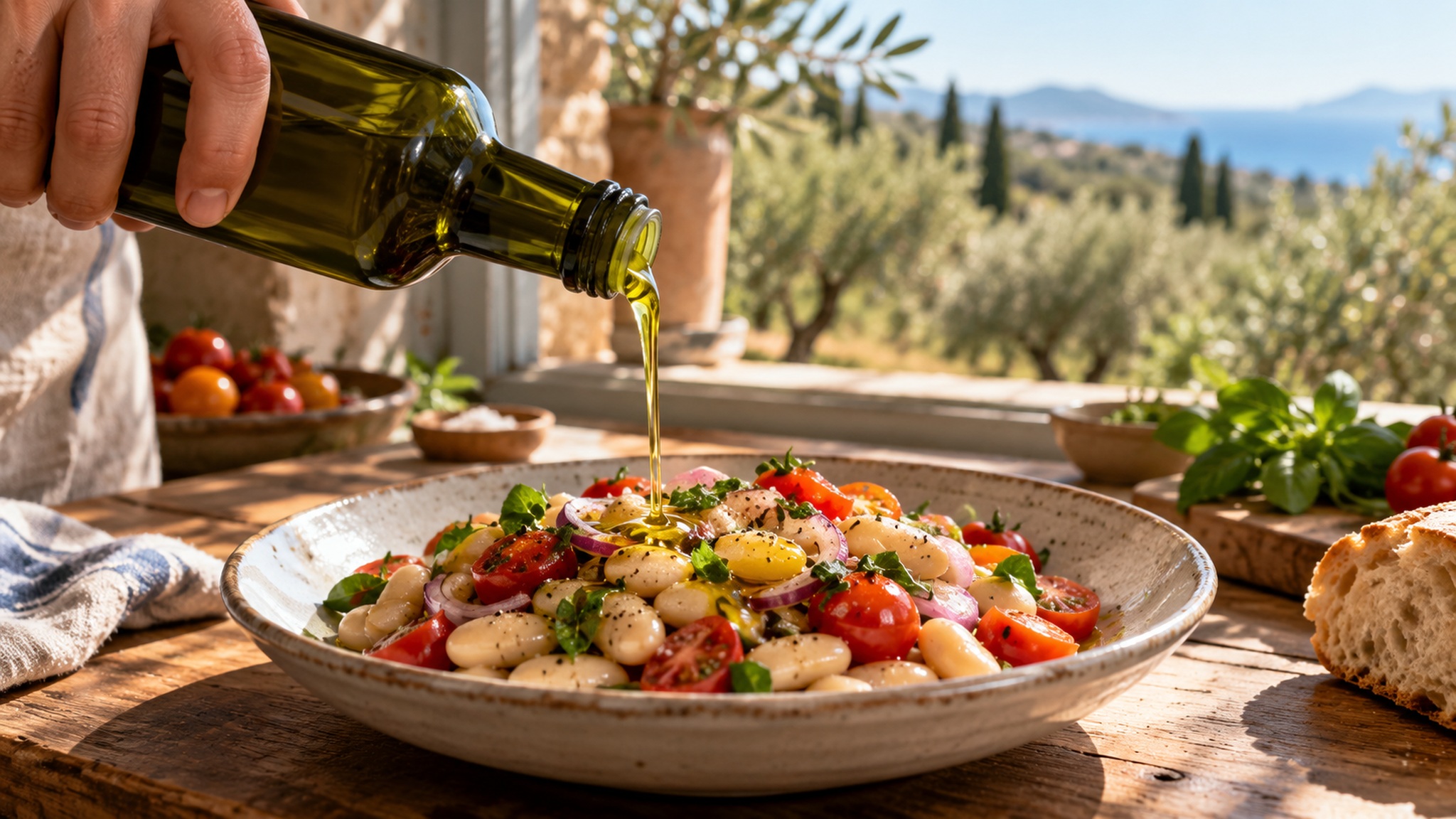
A dressing is a useful place to learn what a particular bottle tastes like. Combine a small amount with lemon juice or vinegar and an appropriate seasoning, then taste it on the food rather than only from a spoon. The same dressing can seem sharp alone and balanced over beans or greens. Refined and unrefined products may lead you toward different flavor combinations. Adjust the recipe to your palate, with the oil serving the dish instead of making the dish serve the product.
Baking and Marinades Require Recipe-Specific Judgment
Avocado oil may work in recipes already designed around a neutral liquid oil, provided its flavor fits and the recipe’s other requirements are respected. That does not mean you can replace butter in every baked item without changing the result. Butter contributes properties beyond fat, and a formula may depend on its physical behavior. Use a recipe intended for liquid oil when you want a predictable first experiment.
For marinades, oil carries flavor and helps coat surfaces, but it should not be treated as a preservative or a way to make unsafe handling acceptable. Follow food-safety requirements for the ingredient being marinated, and avoid using a mixture that contacted raw animal foods as an uncooked finishing sauce. Choose an amount that serves the marinade and the portion of food. The oil’s reputation does not change those basic responsibilities.
Quality Research Is a Reason to Read Carefully
University of California, Davis researchers have investigated the purity and quality of avocado oils sold in the United States. Their 2020 and 2023 work identified problems in sampled products and emphasized the need for enforceable standards. That research makes sourcing and quality information relevant when comparing bottles. It should not be stretched into a claim that every brand, batch, or current shelf has the same problem. UC Davis research overview.
The distinction between freshness and purity also matters. An oil can be authentic yet deteriorated, or a product can be mislabeled about its composition. A simple home taste test cannot definitively resolve every authenticity question. Prefer producers that provide useful product information and respond clearly about quality practices. Avoid assuming that a green color, an impressive price, or the word pure proves what is inside.
More recent UC Davis reporting has also examined avocado-oil claims in processed foods. The researchers described authenticity problems in sampled chips and dressings, adding another reason to distinguish a food’s marketing from its verified composition. UC Davis report on avocado-oil products. Even an accurately labeled product still needs evaluation as a complete food; an oil claim does not settle its portion, sodium, or nutritional role.
Store a Purchase You Can Actually Use
Choose the container size according to your cooking frequency. If you are still deciding whether you like the oil, a smaller bottle limits waste and gives you time to learn its place in your meals. A large sale purchase is not necessarily economical if it sits open while you reach for another oil. The same principle applies to a household with several specialty products: inventory is useful only when it supports real cooking.
Keep the bottle capped and away from strong light and heat, and follow product-specific instructions. A counter directly beside the stove may be convenient but exposes the oil to repeated warming. If it develops an unexpectedly stale smell or flavor, reconsider using it instead of relying entirely on the printed date. Sensory changes are not a complete purity test, but they can alert you that a cooking ingredient is no longer serving the dish well.
Portions and Allergies Still Belong in the Decision
Use avocado oil deliberately rather than assuming a favorable profile makes quantity irrelevant. Measuring once can help you see how much a typical pour adds to a shared recipe. If you have an avocado allergy or other relevant reactions, ask an appropriate clinician about the specific product rather than guessing that all oils are interchangeable or automatically safe. Product processing and individual circumstances may matter. A general cooking article should help identify the issue while leaving individual allergy decisions to qualified care.
Decide Whether It Earns a Permanent Place
Choose two or three dishes that reflect your ordinary week, such as a skillet vegetable mixture, a roasting tray, and a dressing. Try the bottle in those settings without overhauling the entire menu. Notice whether its mildness, handling, and flavor make the dishes easier or more enjoyable. A good result is practical: you reach for it because it reliably works, not because you feel obliged to justify an expensive purchase.
Then compare the value with your other suitable oils. Avocado oil may become your regular choice, an occasional option, or an ingredient you decide not to buy again. All three outcomes are reasonable. Its most defensible benefits are its useful fat profile and the cooking roles a particular product performs well. Keeping the decision grounded in food, quality, and cost makes room for healthy meals without requiring a premium label on every pan.