Why Olive Oil Has Earned Its Place at the Table
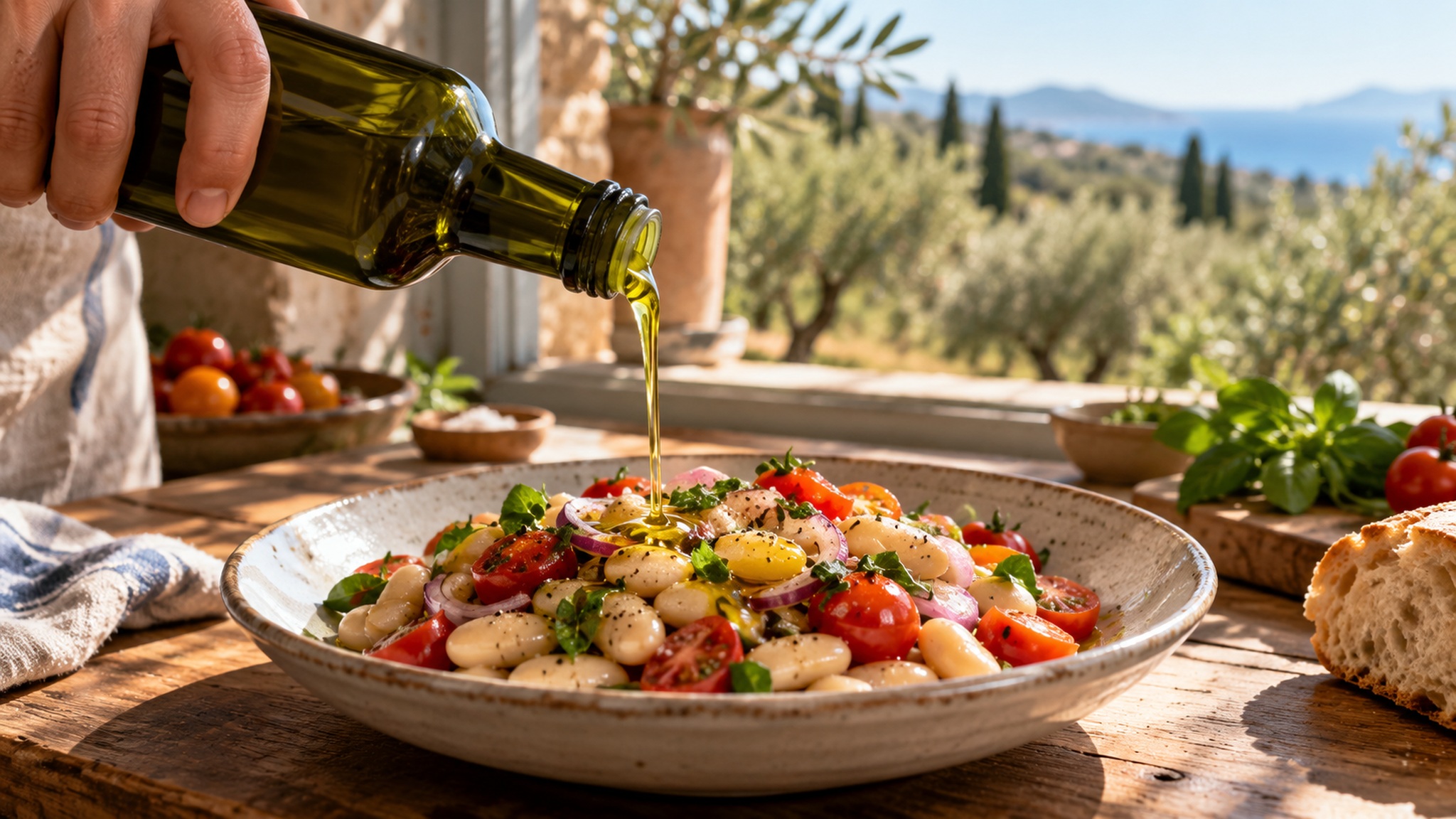
A drizzle of olive oil can make a bowl of beans taste like a meal you want to eat again. That small culinary advantage helps explain why its reputation reaches beyond nutrient charts: it belongs naturally with vegetables, legumes, grains, fish, and many other foods that support a varied eating pattern. Olive oil also has a useful fatty-acid profile and a substantial research history, particularly within Mediterranean-style diets. Yet calling it the gold standard should describe a strong, well-supported option rather than a magical ingredient or a requirement for every household. Its benefits depend partly on what it replaces and how it is used. Understanding the difference between extra-virgin and refined products, the limits of clinical evidence, and the practical details of freshness helps you get more from the bottle without expecting it to do the work of an entire diet.
A: The production and quality category differ, and extra-virgin products retain a more distinctive character.
A: No. The intervention and broader eating pattern must remain part of the interpretation.
A: A clinical diet study does not justify that instruction; integrate ingredients into suitable meals.
A: No. Sensory character is not a complete chemical or authenticity test.
A: It may be used while fresh instead of leaving a large amount open for months.
A: It can add flavor and help those foods become enjoyable recurring meals.
A: No. Choose a suitable cooking method and control heat rather than following a blanket rule.
A: As associations that add evidence while leaving potential differences between consumers unresolved.
A: Yes. Taste, cost, cooking needs, and consistent use can justify a different choice.
A: A useful ingredient that improves meals you want to prepare and repeat.
Oleic Acid Is Part of the Story
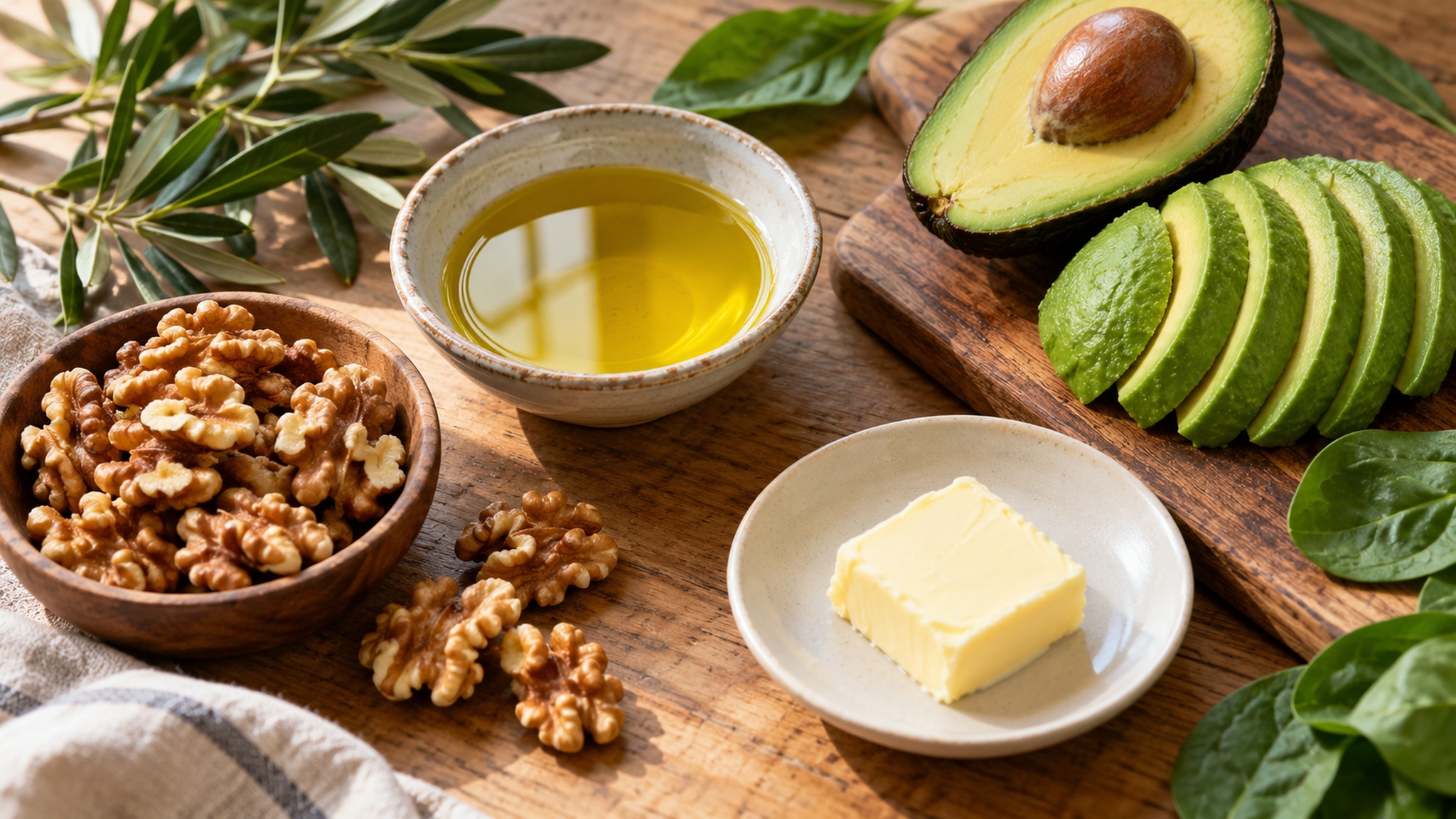
Olive oil is predominantly a source of monounsaturated fat, with oleic acid making up much of that profile. It still contains other fatty acids, including some saturated fat, so it should be understood as a mixture. The relevant nutritional question is often whether it replaces a cooking ingredient richer in saturated fat. Changing a recurring cooking habit can be more meaningful than adding a small amount to meals solely because the ingredient has a favorable reputation.
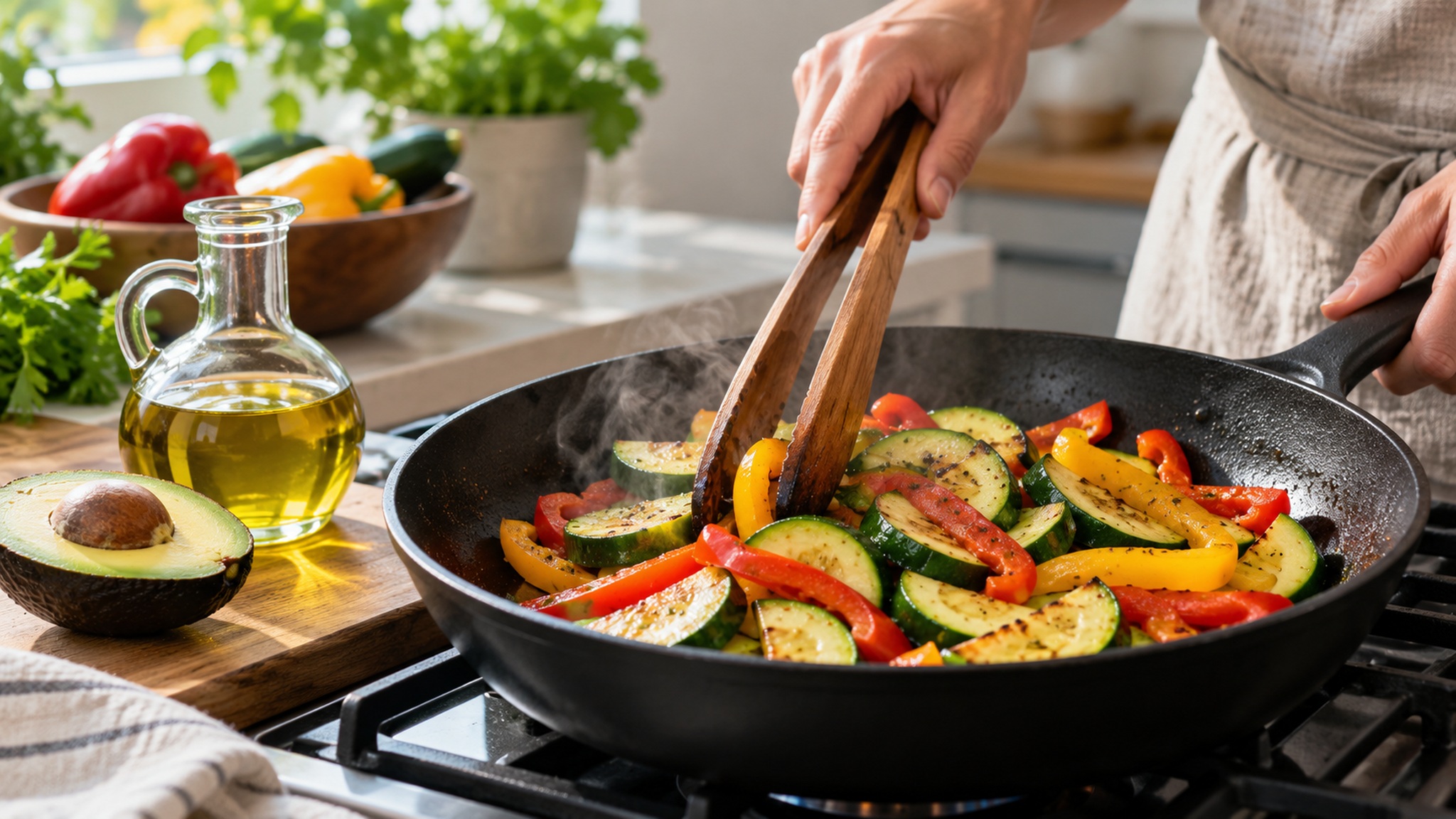
That distinction is easy to see in a pan of vegetables. If olive oil takes the place of the butter normally used, the source of fat changes. If it is poured onto the vegetables after the same butter-heavy preparation, it mainly adds another ingredient. Either dish may be enjoyable, but only the first is the direct substitution people usually mean when discussing improved fat quality. Knowing the purpose helps you choose an amount that fits.
Olive oil is also not the only useful unsaturated oil. A household can build a favorable dietary pattern using other appropriate plant oils, whole nuts, seeds, and other foods. Its prominent place in research and cuisine makes it a dependable option, but superiority should not be assumed in every comparison. Choose it because its flavor, composition, and practical role suit your meals rather than because all alternatives have been declared inadequate.
Extra-Virgin and Refined Oils Offer Different Experiences
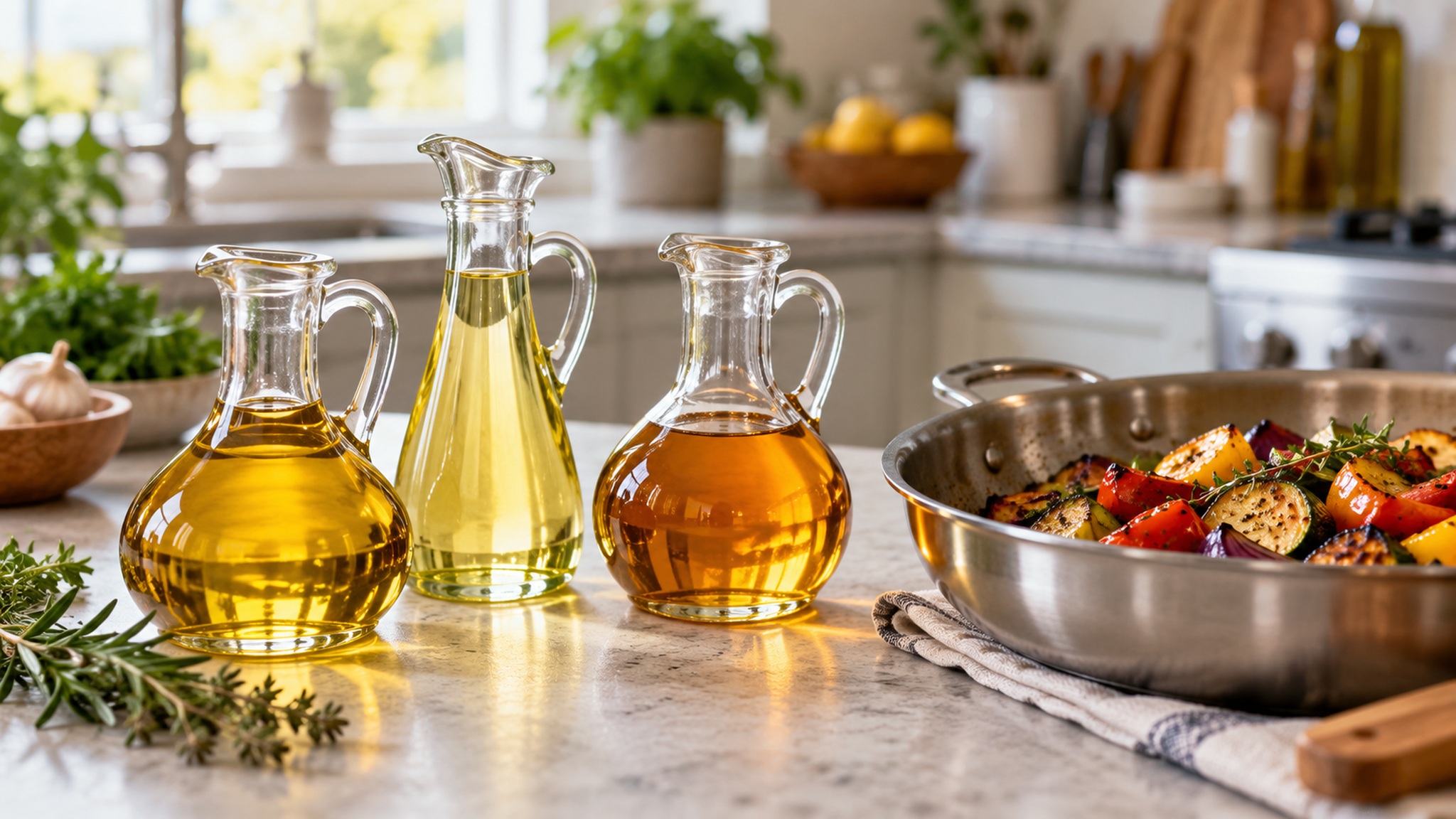
Extra-virgin olive oil is valued for the character retained through its production and its quality requirements. Refined olive oils usually have a milder flavor, and products sold as ordinary olive oil may combine refined oil with virgin oil. These distinctions help explain why two bottles can behave differently at the table even when both are chiefly sources of monounsaturated fat. Read the product name carefully, then choose according to the task: an assertive finishing drizzle and a neutral-tasting dish do not necessarily need the same bottle.
The Mediterranean Evidence Supports a Pattern
One of the best-known trials is PREDIMED, which studied older adults at high cardiovascular risk in Spain. Participants assigned to Mediterranean diets supplemented with extra-virgin olive oil or nuts experienced fewer major cardiovascular events than the control group. Allocation problems led to a corrected publication and revised analyses. The finding supports the dietary intervention rather than isolating olive oil as the sole cause. Corrected PREDIMED report.
That context matters when a headline turns a trial into advice to drink oil by itself. Participants were receiving dietary guidance within an eating pattern, and the intervention involved more than a morning spoonful. You can use the result to support making vegetables, beans, and other suitable foods easier to enjoy with olive oil. It does not require copying a study intake without considering your own energy needs, preferences, or medical situation.
Observational Findings Add Support, With Limits
Research following people over time has also linked olive-oil consumption with favorable health outcomes. Such studies can track ordinary diets in large populations, but they cannot remove every difference between people who use different ingredients. Olive-oil users may differ in cooking habits, food choices, activity, and other factors. That makes observational findings useful as part of the evidence picture while leaving uncertainty about how much of an association belongs to the oil itself.
An American Heart Association report on U.S. cohort research describes lower cardiovascular risk associated with replacing certain fats with olive oil. It also notes that olive oil was not significantly better than other plant oils in that analysis. AHA report on olive-oil substitution research. The sensible application is to make useful substitutions, not to promise a precise personal risk reduction from one kitchen change.
When comparing claims, ask what outcome was measured and what food served as the comparison. A change in a laboratory marker, an association with disease, and a clinical trial result are different kinds of evidence. They may point in a similar direction without supporting identical conclusions. This is especially important when a product advertisement uses the language of disease prevention while the underlying study only measured a short-term biomarker.
Polyphenols Explain Interest, Not a License for Exaggeration
Extra-virgin olive oil contains plant compounds often discussed under the broad heading of polyphenols. Their amounts vary with the fruit, production, storage, and other conditions. That variability is one reason a bottle name cannot tell you the exact physiological effect of a serving. Laboratory work on individual compounds can help explain possible mechanisms, but it does not establish that every commercially available oil delivers an identical benefit in everyday use.
It is also easy to confuse a distinctive taste with a complete health test. Bitterness and pungency may be welcome sensory characteristics, but they do not allow a home cook to measure every compound or verify all aspects of authenticity. Buy an oil you enjoy using on actual food. If an intensely flavored bottle makes you avoid salads or beans, a milder option used consistently may be the more practical purchase.
Use Olive Oil to Make Plant Foods More Appealing
A useful benefit can be culinary and behavioral: olive oil helps build dishes that you want to repeat. Toss cooked white beans with tomatoes, herbs, lemon, and a small amount of oil, or finish a vegetable soup just before serving. The resulting flavor and texture can make those foods feel complete rather than dutiful. This is a practical inference about meal preparation, not proof that the drizzle independently creates a clinical outcome. The food pattern still deserves the credit.
Cooking With Olive Oil Does Not Require Ritual
Ordinary home cooking should begin with the recipe’s needs. Olive oil can be used in many vegetable, bean, fish, and grain dishes, but flavor preference and heat control remain relevant. Do not leave an empty oily pan heating indefinitely, and lower the heat if smoking develops. A gentle sauté or a roasting recipe does not need to be turned into a debate about whether a bottle deserves to be heated at all.
Heating can alter an oil’s composition, just as cooking changes many foods. A food-science study comparing cooking methods found changes in extra-virgin olive oil, including degradation and oxidation products under conventional heating conditions. That is a laboratory observation about processing rather than direct proof of a particular health outcome from one homemade dinner. Research on olive oil during cooking. Sensible technique remains more useful than assuming an oil is either unchanged by heat or unusable whenever heated.
Buy for Freshness and Realistic Use
Start with the quantity your household can use. A large tin may be economical for a family cooking daily, while a smaller bottle can be more sensible for someone who cooks occasionally. The better purchase is not always the lower price per liter if a substantial amount sits open too long. Think about your actual meal routine before buying enough oil for an imagined version of your cooking life.
Useful label information may include the oil type, producer, origin, and harvest or best-before details. None of those features should be treated as a perfect standalone guarantee. They can help you compare products and understand what you are purchasing, especially when a bottle otherwise relies on romantic imagery or vague quality language. Prefer information that answers a practical question over language that simply makes the product feel luxurious.
Keep the oil closed and protected from light and heat. A dark cupboard away from the stove is a practical location, and pouring directly from the original container avoids maintaining multiple poorly labeled open vessels. Follow any producer instructions relevant to the product. If its smell or flavor becomes unexpectedly stale, reassess it instead of assuming the date means it must still be in good condition.
Portions Should Serve the Dish and the Person
A healthy ingredient can still be used in an amount that is unnecessary for the dish. Start with enough oil to carry flavor or coat the food, then adjust after tasting. If you tend to pour generously without noticing, measure your usual amount once to calibrate your eye. You may discover that a smaller amount distributed well gives the same cooking result, or that the original amount is appropriate for a larger shared recipe.
Different people may use oil for different reasons. Someone with a low appetite may need energy-dense additions, while another person may want a lighter sauce that uses oil alongside lemon juice, yogurt, or water. Neither goal is resolved by declaring a universal number of spoonfuls that everyone should consume. Your overall intake, meal size, appetite, and health context determine the appropriate role. General education should help you make that distinction rather than prescribe one serving rule.
What Olive Oil Cannot Promise
Olive oil cannot guarantee weight loss, cure a chronic condition, replace medication, or make every meal balanced. It also cannot undo the rest of an eating pattern simply because it appears in a recipe. Be skeptical when a product is presented as a cleanse, a treatment, or a reason to ignore established care. An ingredient may have a strong nutritional role while still requiring realistic expectations about what a food can accomplish.
Turn a Good Ingredient Into a Dependable Habit
Choose one place where olive oil improves a food you already enjoy. A lemony bean dressing, a drizzle over roasted carrots, or a simple tomato sauce can be enough to establish a repeatable use. Keep the recipe uncomplicated while learning the flavor, then vary the herbs or vegetables as confidence grows. The benefit of a reliable ingredient is that it reduces friction around cooking, not that it makes every meal an exercise in nutritional optimization.
After a few weeks, assess whether the bottle is helping you prepare varied meals and whether the cost fits your household. If it does, there is little reason to search continually for a supposedly superior product. If the flavor or expense creates difficulty, another suitable plant oil may serve you better. Olive oil earns its reputation through composition, research, and culinary usefulness; the strongest version of that reputation leaves room for ordinary preferences and a whole diet that remains enjoyable.
One final test is whether the ingredient remains useful when a week becomes busy. If you can open a can of beans, chop a tomato, and make a quick dressing you like, the bottle has a practical role beyond its reputation. If it mostly sits untouched while you worry about using it correctly, simplify the recipe or choose another option. The evidence should support confident food choices, and the kitchen habit should make those choices easier to carry out.