A Useful Oil Ranking Starts With Your Cooking
The best cooking oil is not necessarily the bottle with the longest list of claims or the highest price. It is an oil with a favorable fat profile that performs well in the dishes you prepare, stays fresh in your kitchen, and fits the grocery budget. Ranking oils by nutrition can help narrow the choices, but it should not suggest that research has assigned every bottle a precise health score. Extra-virgin olive oil is a strong everyday option, canola is a useful affordable alternative, and several other plant oils have legitimate roles. The order below weighs composition, the strength of relevant evidence, and practical versatility. It also explains when an oil lower on the list may be the better choice for a particular recipe, because a sensible cupboard serves your cooking instead of collecting trophies.
A: No. It is an editorial comparison of composition, evidence, and practical usefulness.
A: Its mild flavor, accessibility, and useful fat profile make it versatile for ordinary households.
A: It describes a higher proportion of oleic acid; check the label for the source oil.
A: Yes. Recipe preferences and reliable usage can justify that choice.
A: Usually as a flavor ingredient alongside a more versatile cooking base.
A: No. Specialty oils are optional, and whole foods offer other ways to build variety.
A: Only if you can use it while it remains in good condition.
A: This comparison prioritizes oils richer in unsaturated fats for habitual use.
A: Keep the cooking method and other ingredients consistent, then judge the finished result.
A: When it distracts from freshness, affordability, allergy needs, or the meals you actually cook.
What This Ranking Can and Cannot Measure
This is an editorial comparison, not the result of a trial in which all cooking oils were tested against one another under identical conditions. Studies differ in the foods participants eat, the amounts used, their baseline health, and the outcomes measured. Some report blood-lipid changes; others examine dietary patterns or associations with disease. Those findings cannot honestly be collapsed into a decimal-point score that identifies a universally healthiest bottle.
The ranking therefore favors oils rich in unsaturated fats that are convenient for ordinary cooking. It also gives weight to recognizable evidence, flavor flexibility, and price. Your own order may change if you need a neutral baking ingredient, dislike olive flavor, have an allergy, or use very little oil. Treat the list as a way to make a shortlist, then match the final choice to the food in front of you.
First Choice: Extra-Virgin Olive Oil for Everyday Meals
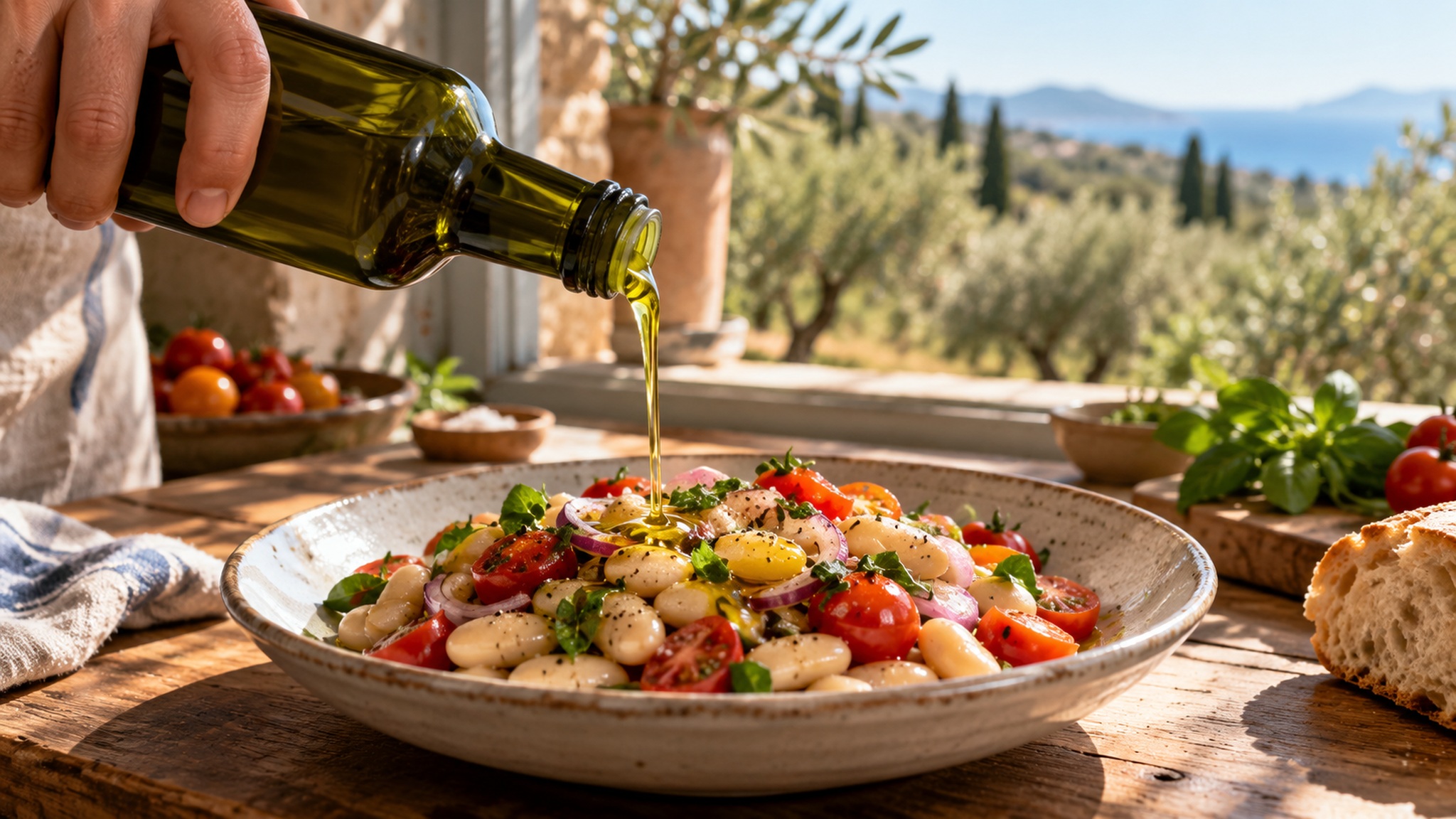
Extra-virgin olive oil takes the leading position here because it combines a predominantly monounsaturated fat profile with a distinctive culinary role and research within Mediterranean-style eating. That does not prove it beats every other unsaturated oil in every situation. The corrected PREDIMED trial evaluated a whole dietary intervention supplemented with olive oil or nuts, rather than isolated bottle comparisons. PREDIMED research. In a kitchen, its biggest practical strength may be that one ingredient can dress a bean salad, finish soup, and cook vegetables, making flavorful meals easier to repeat.
Second Choice: Canola Oil When Neutral Flavor Matters
Canola earns a high place through practicality. Its mild flavor suits baking, quick pan cooking, and dressings where you want the herbs, citrus, or main ingredient to lead. It is often easier to find at an approachable price than specialty oils. A bottle that makes useful meals affordable deserves serious consideration, especially when the alternative would be routinely cooking with a fat higher in saturated fatty acids.
The American Heart Association includes canola among suitable cooking-oil staples. Its advice also favors buying amounts you can use before they become stale. AHA pantry guidance. Processing terms on the label can describe manufacturing, but they should not replace evaluation of the actual ingredient, storage, and dietary role. An ordinary bottle can be useful without presenting itself as a boutique health product.
For a beginner, canola also reduces the pressure to purchase separate oils for every task. Try it in a recipe that calls for a neutral liquid oil, keeping the amount and method consistent. Judge texture and taste in the finished dish before changing several other ingredients. If the result works, you have gained a reliable option rather than a rule that every meal must use the same fat.
Third Choice: Soybean, Corn, and Conventional Sunflower Oils
These oils belong in the conversation because affordable unsaturated oils do not lose their nutritional relevance when the ingredient comes from a seed. They differ in fatty-acid proportions, but none should be dismissed solely because it appears in some highly processed foods. The American Heart Association explains that seed oils can fit ordinary cooking and that replacing saturated fat with unsaturated fat is the relevant comparison. AHA review of seed-oil concerns.
Use them where their flavor and price make sense, such as a mixed vegetable dish or a homemade dressing. The same oil can appear in a balanced dinner and in a frequent fried-snack habit, but the meals differ in much more than the oil. Evaluate the complete recipe, cooking frequency, and portion. Replacing one bottle while leaving every other eating habit untouched may produce less improvement than strengthening the meal around it.
Fourth Choice: Avocado Oil for Specific Kitchen Preferences
Avocado oil is a reasonable option for cooks who like its behavior and can afford it. Refined versions are usually selected when a mild flavor is desired, while unrefined products may bring a more noticeable character. Its predominantly monounsaturated profile is useful, but the fruit origin does not by itself establish superiority over other liquid plant oils. A premium price should purchase a feature you value rather than a promise you cannot verify.
Quality deserves attention in this category. University of California, Davis researchers have documented purity and freshness problems in sampled avocado oils, including store-brand products. Their findings are a reason to seek transparent sourcing and sensible storage, not a basis for declaring every bottle suspect. UC Davis avocado-oil research. Look for useful information about the product instead of assuming that an expensive label establishes authenticity.
If avocado oil becomes your choice, buy a quantity you will use regularly. There is little practical benefit in keeping a large open bottle for rare occasions because it sounds more specialized. Try it in a familiar vegetable or poultry dish where the cooking method stays the same. That comparison tells you whether the flavor, cost, and kitchen convenience justify a permanent place in your cupboard.
Fifth Choice: Peanut and High-Oleic Oils for Suitable Recipes
Peanut oil and products labeled high-oleic can be helpful when their flavor and intended cooking use match the recipe. High-oleic refers to a higher proportion of oleic acid rather than a separate fruit or seed; the source still needs to be read on the label. Peanut-related allergy questions require individual care, because refining and product type matter and broad household assumptions are unsafe. Choose an ingredient that everyone eating the meal can use appropriately, and do not treat suitability for a cooking task as proof that more oil is automatically better.
Sixth Choice: Sesame Oil as a Flavor Ingredient
Sesame oil is especially valuable when the goal is flavor. A small amount of toasted sesame oil can give a noodle dish, vegetable bowl, or dressing a recognizable aroma. Because that role differs from a neutral cooking base, it makes little sense to rank the two only by asking which is best for every pan. You might keep an everyday oil for cooking and use sesame oil when the recipe benefits from its character.
Pay attention to the version you buy. Toasted and untoasted products differ in flavor, and a dish designed for one may taste quite different with the other. Start with the recipe’s intended amount, then adjust after tasting the finished mixture. Sesame is also an allergen, so ingredient transparency matters when cooking for others. An oil can be useful in your own kitchen while being unsuitable for a shared meal.
Finishing Oils Have a Different Job
Walnut and flaxseed oils are examples of products often chosen for cold or finishing applications. They can contribute flavor to foods that do not need intense heating, such as a dressing or a completed grain bowl. That role is enough to justify them if you enjoy the result. A specialty oil does not have to become your main frying ingredient to be worthwhile, and there is no advantage in forcing every bottle into the same task.
Read the producer’s storage instructions, especially for oils sold with refrigeration guidance. Purchase smaller quantities if you use them occasionally. A carefully stored finishing oil that tastes good is more useful than a collection of neglected bottles bought to satisfy a nutrient checklist. You can obtain a varied diet through whole nuts, seeds, and other foods as well; owning several specialty oils is optional.
A useful first test is one simple dish with few competing flavors. Add a little of the chosen oil to cooked beans or a salad dressing, then decide whether you actually want that flavor again. Avoid judging solely from a promotional description such as nutty or delicate. Your palate, menu, and frequency of use determine whether the ingredient belongs in the routine.
Why Coconut Oil and Butter Rank Lower Here
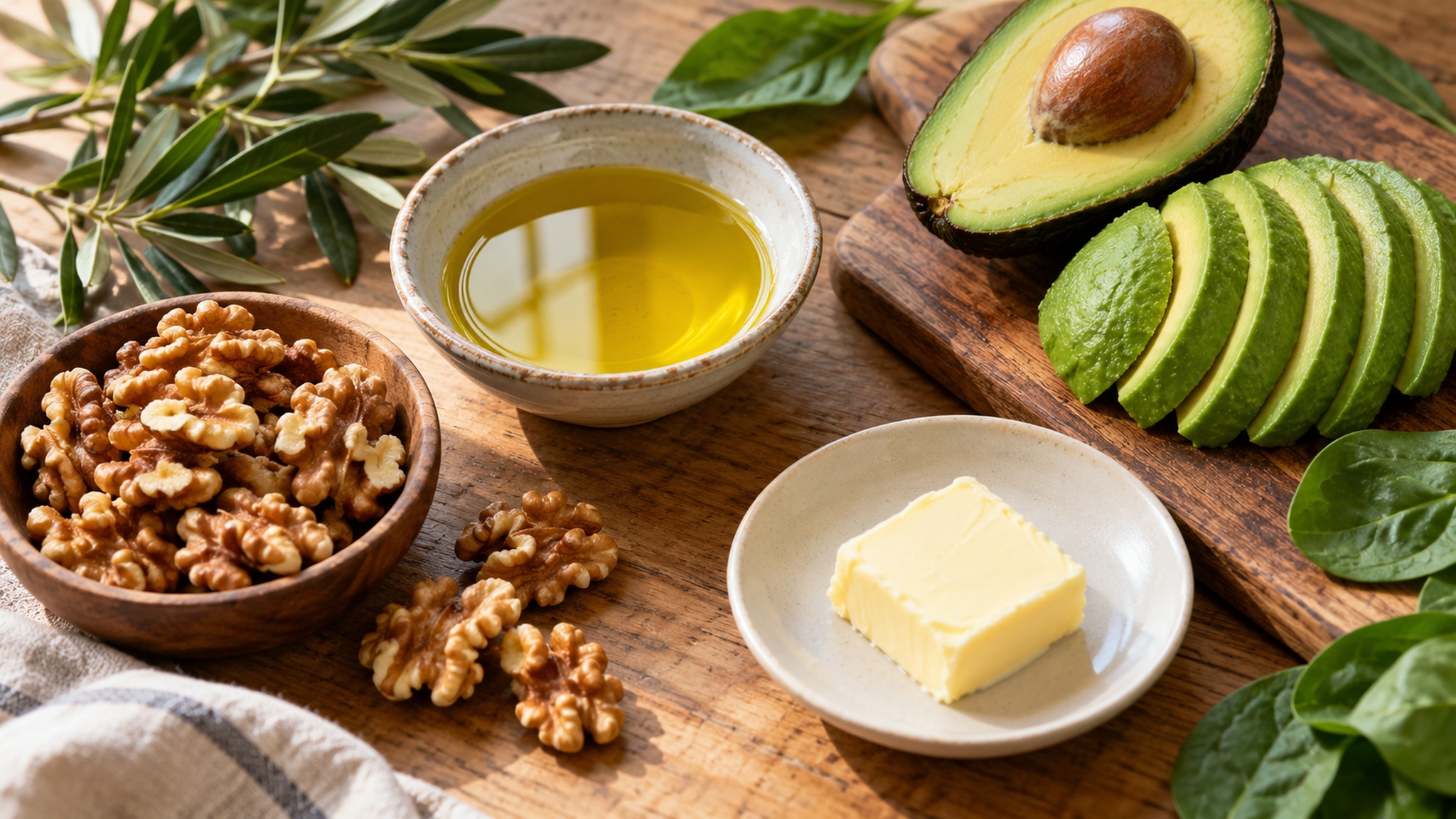
This ranking gives priority to liquid oils rich in unsaturated fats, so coconut oil and butter sit below those choices for routine use. That does not erase their culinary properties or require banning a favorite recipe. It means their substantial saturated-fat contribution should be considered when they become the default cooking base. A small amount used for a particular flavor is a different habit from choosing them for nearly every meal.
When replacing saturated fat, identify the exchange you are making. WHO guidance supports replacement with unsaturated fats or carbohydrate from naturally fiber-rich foods. WHO fat guidance. A practical example might be changing the cooking fat in a vegetable dish while keeping the vegetables, serving size, and meal structure intact. That gives the change a clear purpose and makes it easier to assess whether it remains enjoyable.
Use Heat and Freshness to Refine the Shortlist
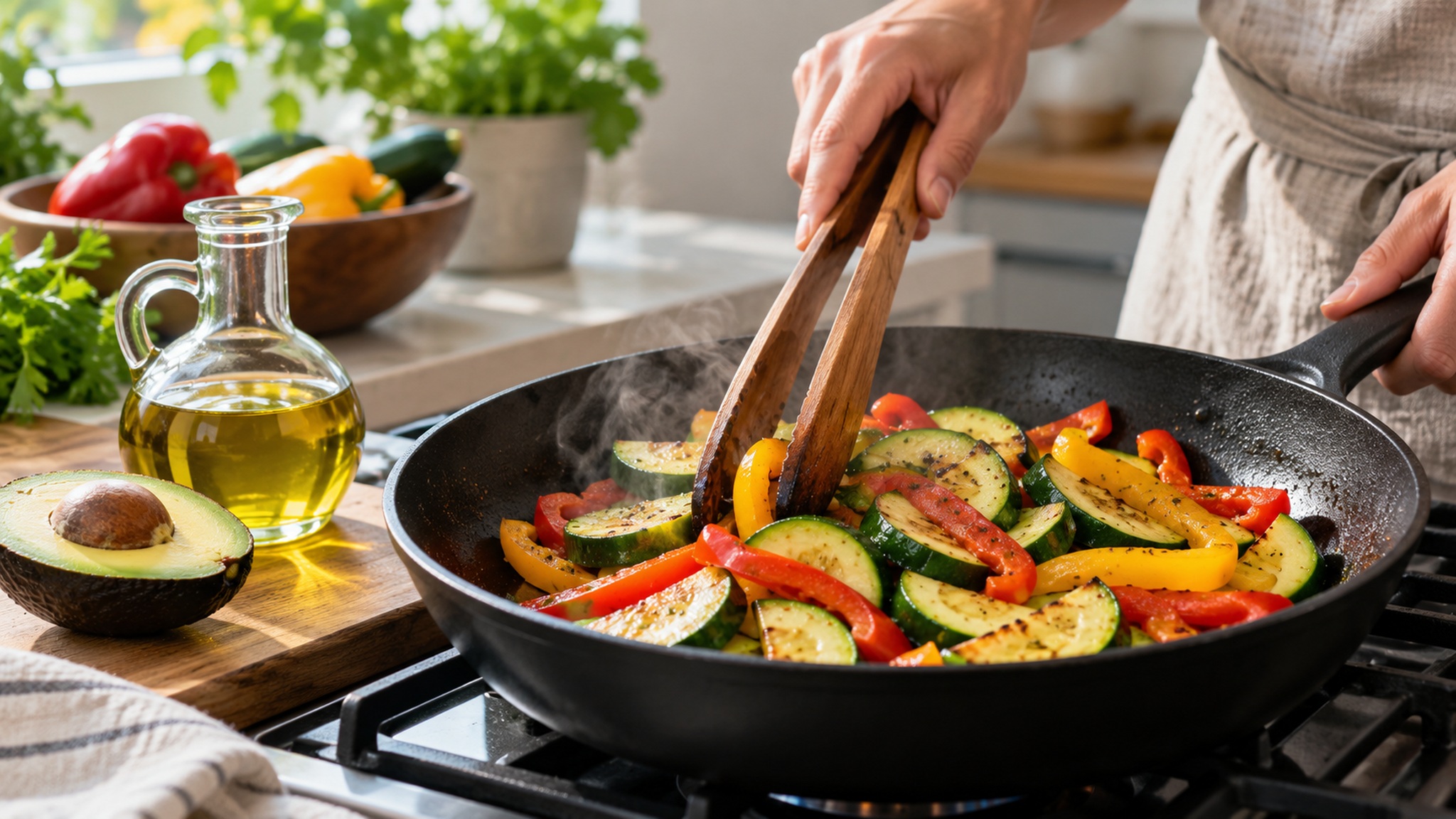
Choose a cooking method before choosing a bottle. Brief sautéing, oven roasting, cold dressing, and prolonged frying create different demands, and smoking oil is a signal to reduce heat rather than a badge of effective cooking. Keep the bottle closed and away from direct light and stove heat. If an oil smells unexpectedly stale or has been repeatedly overheated, reconsider using it. A supposedly superior variety cannot overcome deterioration, poor handling, or a cooking method that does not suit the dish.
A Two-Bottle Cupboard Can Be Enough
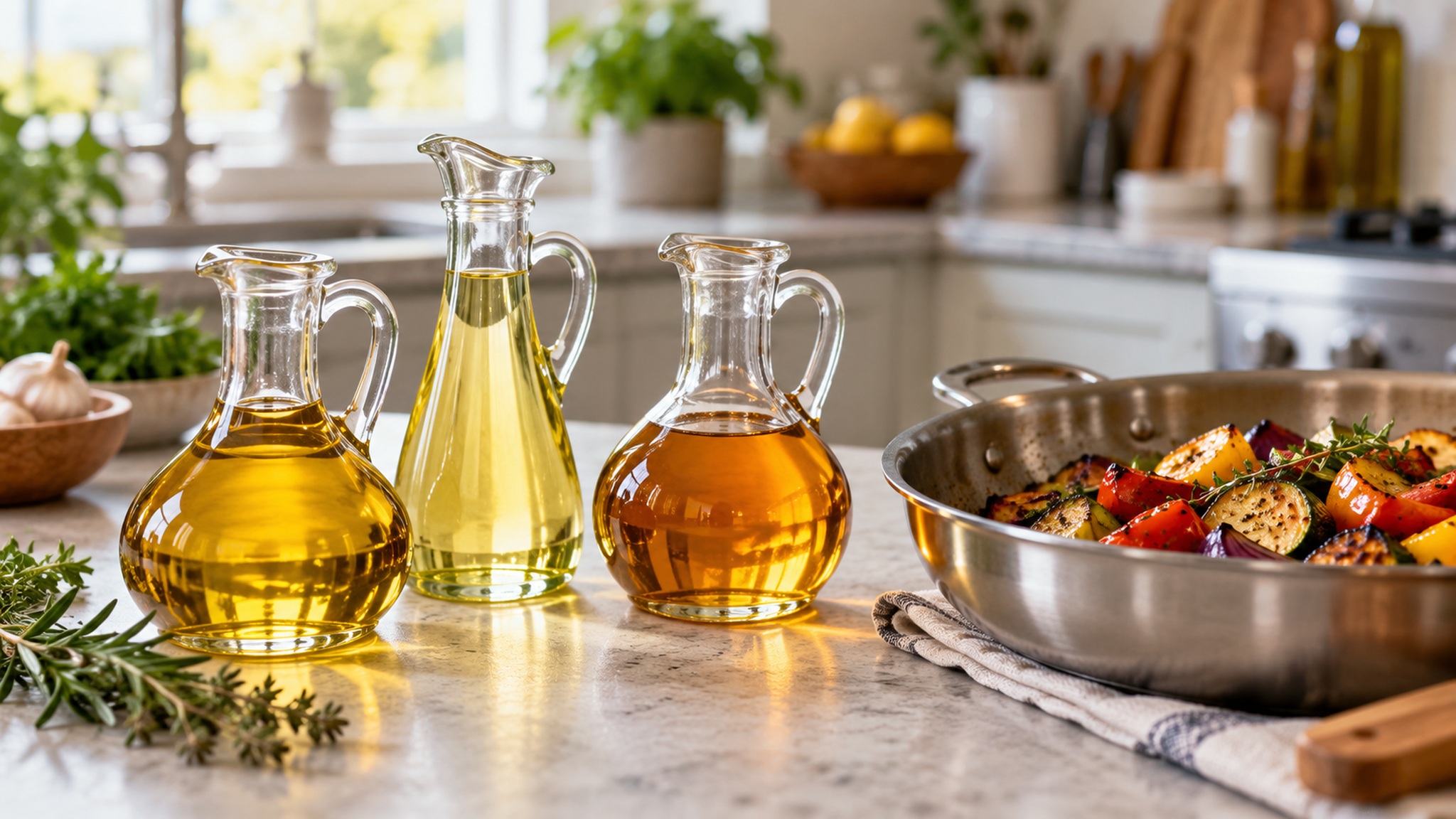
For many households, an everyday olive or neutral plant oil plus one optional flavor oil is a workable starting point. Choose the everyday bottle according to the meals you cook most often, not the most elaborate recipe you might prepare once. If you bake frequently and dislike strong olive flavor, a neutral oil may deserve the central position. If most meals are vegetables, beans, soups, and salads that welcome olive flavor, olive oil may be the simpler choice.
Revisit the ranking when your cooking changes rather than whenever a new online argument appears. Ask whether the current bottle tastes good, stays fresh, fits the budget, and replaces a less useful default. If it does, the decision is already doing its job. Better nutrition does not require continually upgrading to the newest oil; it requires an ingredient that helps you prepare the varied meals you want to keep eating.
Keep the Shortlist, Release the Scoreboard
Write down the two cooking jobs you use most often and assign an oil to each. For example, a household might want one mild baking oil and one flavorful dressing ingredient, while another needs only an everyday cooking bottle. Recheck the choice when a product runs out or the menu changes, rather than buying a replacement every time a new ranking appears. A sensible shortlist makes the aisle easier to navigate and protects the budget from unnecessary duplication. It also gives the rest of the meal room to matter, which is where an oil ranking should ultimately lead.