High Protein Is a Relative Term, Not One Universal Number
A high-protein diet supplies more protein than a person’s usual intake or more than the standard adult minimum, but definitions vary. The Recommended Dietary Allowance for most healthy adults is 0.8 grams per kilogram of body weight per day, a level designed to cover basic needs for nearly all healthy adults rather than optimize every goal. Older adults, athletes, people losing weight, and those recovering from illness may benefit from higher individualized amounts. Protein supports muscle, enzymes, hormones, immune function, tissue repair, and fullness, yet more is not automatically better. Source quality, total energy, fiber, fat type, hydration, kidney and liver health, and what protein replaces all matter. A high-protein pattern built from fish, beans, tofu, yogurt, and vegetables differs from one dominated by processed meat and supplements. It also differs from a ketogenic diet: protein can increase while carbohydrate remains sufficient for fruit, legumes, grains, and training. Before changing intake, clarify the goal, estimate the present pattern, and identify any low-protein meals. Review recent kidney information when risk factors exist, and consider whether counting grams would support or worsen your relationship with food. Cost, cooking access, allergies, culture, and environmental values deserve space in the decision because a mathematically impressive target that cannot fit ordinary life has little value. This guide explains targets, benefits, risks, and a practical starting method while keeping protein inside the larger job of nourishing a whole person.
A: It depends on body size, baseline intake, goal, and the definition used.
A: It covers the adult RDA, while some groups may benefit from more.
A: Moderate higher intake has not been shown to cause kidney disease in healthy people.
A: No, total energy and adherence still matter.
A: Yes, with varied protein-dense foods and sufficient portions.
A: No, supplements are optional convenience tools.
A: No, training, energy, distribution, and a sufficient total matter.
A: It can improve distribution and make the meal more sustaining.
A: A low-fiber implementation can, so preserve plant foods and fluid.
A: Stop when needs and goals are met and additional intake adds no benefit.
Understand the Basic Requirement
The adult RDA is calculated from body weight, but needs change with age, activity, pregnancy, illness, energy restriction, and medical conditions. An 0.8-gram target is not a ceiling. Many active or older adults use ranges around 1.0 to 1.6 grams per kilogram under appropriate guidance.
Very high intakes are not necessary for most goals. Use body weight carefully when obesity, edema, pregnancy, or clinical conditions make a simple calculation misleading. A dietitian can select an appropriate reference weight.
Convert pounds to kilograms by dividing by 2.2, then remember that the multiplication is only an estimate. A calculated total does not reveal whether the diet supplies enough energy or whether a medical condition changes the target.
Food records also contain uncertainty. Restaurant portions, mixed dishes, and database entries differ, so use the estimate to guide decisions rather than treating a single gram as a pass-or-fail boundary.
Potential Benefit: Fullness
Protein tends to be satiating and may reduce hunger between meals. It also has a higher thermic effect than carbohydrate or fat, meaning digestion and metabolism require more energy. These effects can support weight management but do not override total intake.
A high-protein food can still be calorie-dense or easy to overeat. Cheese, fatty meat, nuts, and restaurant portions bring protein plus substantial energy. Pair protein with fiber-rich produce and suitable carbohydrate.
Food form changes the effect. Chewing fish, tofu, eggs, or legumes generally creates a different experience from drinking the same protein quickly. A shake can be useful, but liquid convenience may not control appetite as well as a complete meal with volume and fiber.
Potential Benefit: Muscle Maintenance
Protein supplies amino acids needed for muscle protein synthesis. During weight loss, adequate protein and resistance exercise help preserve lean mass. Older adults may need more protein per meal because the anabolic response becomes less efficient.
Protein alone does not build meaningful strength without training stimulus, total energy, and recovery. Spreading protein across meals may be more useful than concentrating most at dinner.
Potential Benefit: Exercise Recovery
Athletes need protein for repair and adaptation, but carbohydrate remains important for many forms of training. Endurance and high-intensity athletes should not let protein displace fuel needed for performance.
Whole foods can meet needs. Supplements offer convenience when appetite, travel, or timing makes food difficult; they are not inherently superior.
Timing becomes most relevant when training sessions are long, closely spaced, or performed with limited food beforehand. For ordinary recreational exercise, a balanced meal within a few hours is usually practical. The daily pattern matters more than chasing a narrow anabolic window.
Animal Protein Sources
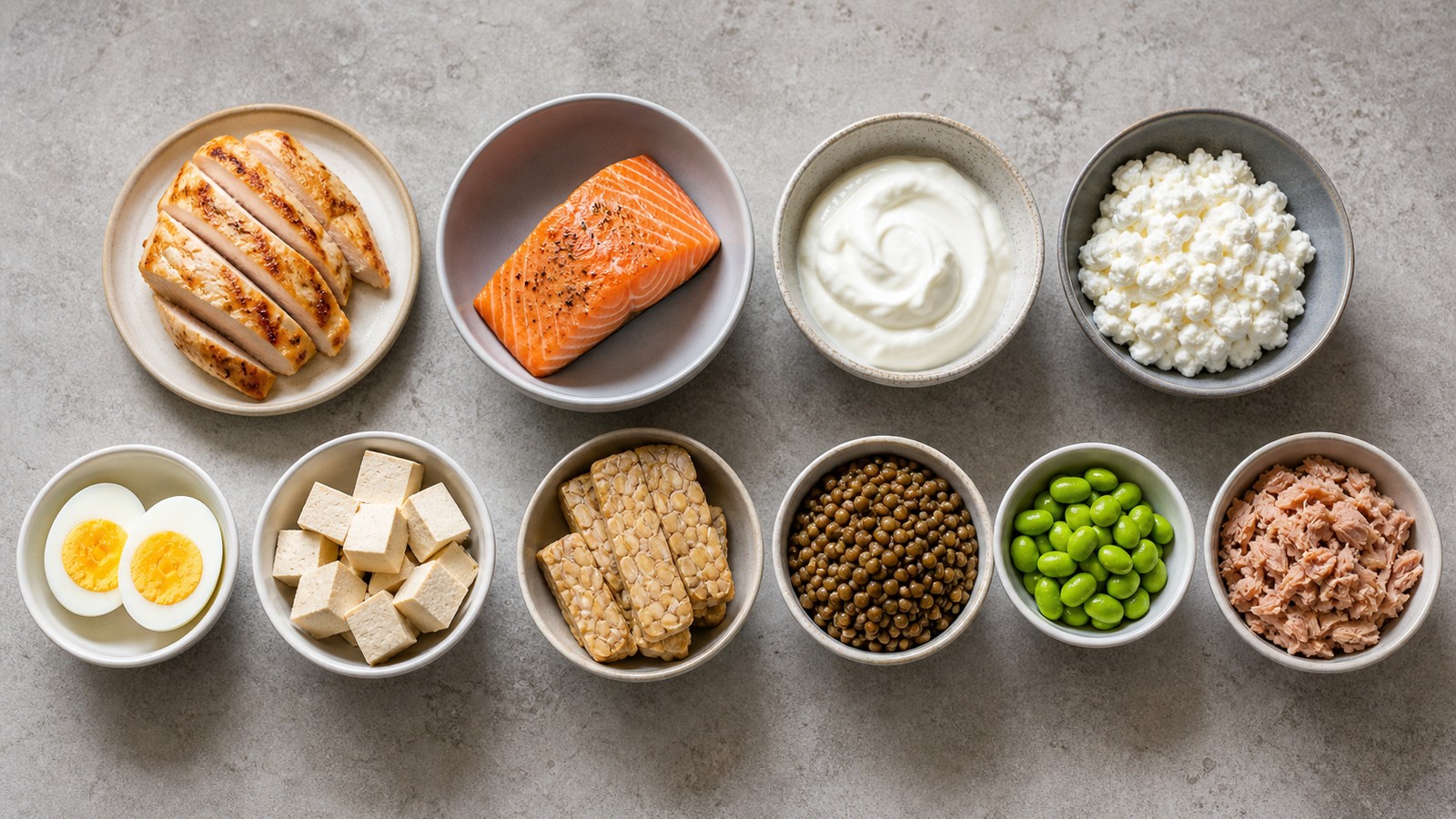
Fish, poultry, eggs, dairy, lean meat, and seafood provide complete protein and nutrients such as B12, iron, calcium, iodine, or omega-3 fats depending on the food. Choose varied sources and preparation methods.
Processed meat is associated with health risks and often high in sodium. Frequent fatty red meat can raise saturated-fat intake. A high-protein plan should not become a bacon-and-steak plan.
Fish species differ in mercury, omega-3 fat, price, and sustainability. Dairy foods differ in lactose, sodium, and saturated fat. Meat cuts differ substantially even when they share an animal source, which makes broad labels less informative than the actual food.
Cooking at home gives more control over breading, frying, and sauce. Restaurant protein portions may be much larger than needed while vegetables and whole grains remain small.
Plant Protein Sources
Beans, lentils, tofu, tempeh, edamame, seitan, peas, soy milk, nuts, seeds, and whole grains contribute protein. Soy and several other foods provide high-quality amino-acid profiles; varied intake covers needs.
Plant proteins also add fiber and can reduce saturated fat. Their protein density varies, so portions and combinations matter for high targets.
Plant-based eaters can raise density by combining foods rather than depending on tiny additions. A bowl with tofu, edamame, and rice is different from one with vegetables and a teaspoon of seeds. Fortified soy milk can raise breakfast protein without greatly increasing preparation.
Protein Quality and the Whole Food
Amino-acid digestibility is one aspect of quality, but the full food carries fats, fiber, sodium, micronutrients, and processing. Lentils provide less protein per ounce than chicken but add fiber and potassium. Salmon provides protein plus omega-3 fats.
Evaluate what the food replaces. Beans replacing processed meat likely improve the pattern; adding protein powder to an already adequate diet may provide little benefit.
How to Distribute Protein
Include a meaningful source at breakfast, lunch, and dinner. Breakfast can use eggs, Greek yogurt, cottage cheese, tofu, soy milk, or a protein-rich grain-and-seed combination. Lunch can include beans, fish, poultry, tofu, or leftovers.
Exact per-meal targets depend on total need and body size. A practical approach is to avoid meals with only a few incidental grams, then adjust using a dietitian or sports professional when performance or clinical goals are precise.
Distribution does not require identical numbers at every meal. It means avoiding a day in which almost all meaningful protein arrives late. A larger lunch and smaller breakfast may fit one schedule, while an early-shift worker may prefer the opposite.
Kidney Health and Protein
Healthy kidneys generally adapt to higher protein, and evidence does not show that moderately high intake causes kidney disease in healthy people. Existing chronic kidney disease is different: protein targets may need restriction or adjustment by disease stage and treatment.
Anyone with kidney impairment, protein in urine, reduced filtration, diabetes complications, or kidney-stone history should seek individualized advice. More water is not a universal fix for inappropriate intake.
Kidney function is commonly estimated with blood creatinine and other clinical information, but interpretation depends on age, muscle mass, medications, and health. A person can have early impairment without obvious symptoms, particularly with diabetes or high blood pressure.
Do not respond to uncertainty by ordering random supplement-store tests or forcing excessive water. Use established medical assessment and a target matched to the diagnosis.
Other Risks and Tradeoffs
Protein-heavy eating can crowd out vegetables, fruit, whole grains, and legumes, reducing fiber and micronutrient variety. Constipation may follow. High saturated fat and sodium can rise when sources are poorly chosen.
Very restrictive plans can become expensive and socially difficult. Excess supplements may add contaminants, sweeteners, or nutrients beyond need. Protein metabolism produces nitrogen waste, but healthy physiology handles ordinary higher intakes.
Source selection also affects environmental impact and food access. Beans, lentils, eggs, canned fish, tofu, and milk can be more affordable than premium meat or branded snacks. A sustainable plan uses foods a person can buy, store, prepare, and enjoy repeatedly.
Who Needs Extra Caution
Kidney or liver disease, pregnancy, eating-disorder history, gout, certain metabolic disorders, and complex medication plans deserve clinical guidance. Children need age-appropriate nutrition rather than adult bodybuilding targets.
Older adults with low appetite may benefit from protein-rich foods but also need sufficient energy. People recovering from surgery or illness should follow the care team’s plan.
Set a Beginner Target
Estimate current intake before changing it. Add a clear protein source to low-protein meals rather than doubling every portion. A breakfast with 5 grams may benefit more from adjustment than a dinner already containing 60 grams.
Choose a target consistent with body size and goal. Increase over a week or two so digestion, shopping, and meal preparation can adapt.
Use labels and a short food record for several representative days, including a weekend. Estimate rather than pursuing false precision. Once you recognize which meals routinely fall short, meal structure can replace continuous tracking for many people.
Build a Balanced High-Protein Plate
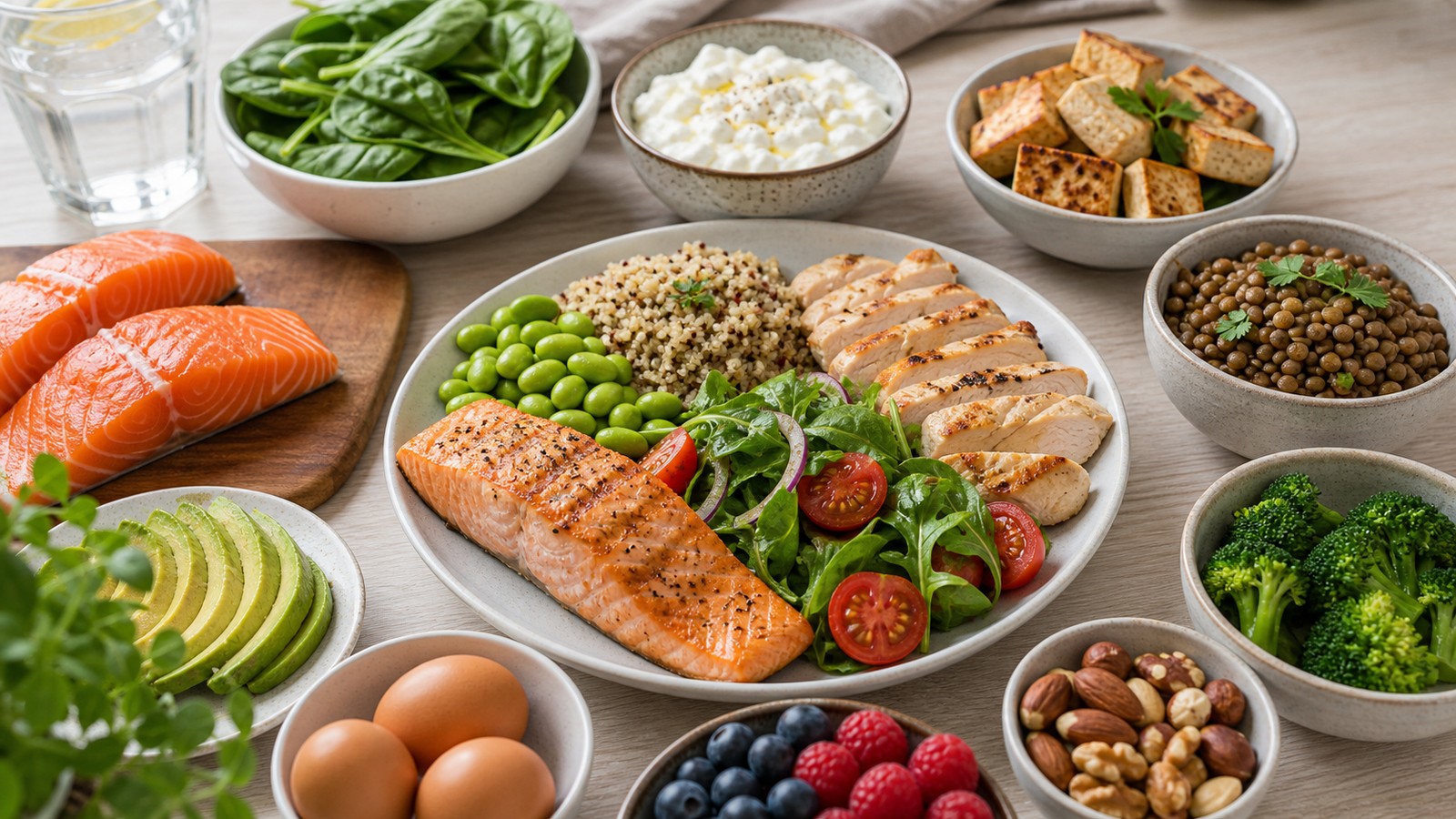
Use a quarter to a third of the plate for protein, abundant vegetables, and a suitable grain or starchy food. Add unsaturated fat and fruit or dairy as useful. This keeps protein within a complete meal.
Examples include salmon, potatoes, and broccoli; tofu, rice, vegetables, and peanuts; or chicken, lentils, salad, and whole-grain bread.
Plate proportions are visual starting points, not prescriptions. An endurance athlete may need more grain, an older adult with low appetite may need a smaller but denser meal, and someone managing glucose may use an individualized carbohydrate amount.
Flavor keeps the structure repeatable. Herbs, spices, citrus, salsa, yogurt sauce, tahini, and modest oils can make lean or plant proteins appealing without turning every meal into a packaged product.
Use Supplements Wisely
Whey, casein, soy, pea, rice, and blended powders can help when food is inconvenient. Check third-party testing, protein per serving, allergens, added sugar, stimulants, and total supplement use.
A shake should solve a need, not replace varied meals automatically. People with medical conditions should review ingredients and doses.
Protein products may contain sugar alcohols, gums, herbs, caffeine, creatine, or large vitamin doses. Those extras can affect digestion, sleep, medications, and total supplement exposure. A shorter ingredient list is often easier to evaluate.
Evaluate the Results
Track the outcome tied to the goal: hunger, strength, lean-mass preservation, recovery, or clinical nutrition. Also track bowel health, food cost, meal variety, and saturated fat.
If no benefit appears, more protein is unlikely to be the answer. The effective amount is enough to support the goal while leaving room for the rest of a healthy diet.
Keep the Target in Proportion
Protein is one requirement among many. A successful plan also supplies enough energy, essential fats, carbohydrate suited to activity, fiber, vitamins, minerals, fluid, and enjoyable food. Review the whole pattern after the novelty of tracking fades. If meals become monotonous, constipation develops, grocery spending rises sharply, or social eating becomes difficult, revise the implementation rather than defending the number.
Once the original goal is met, reassess. Recovery from surgery, an athletic block, active weight loss, and ordinary maintenance do not necessarily need the same intake. The best target remains high enough to do its job and low enough to leave generous room for the rest of a varied diet.
Use outcomes, health information, and ordinary meals to guide that reassessment rather than protein marketing.