Protein Can Support Weight Loss, but It Does Not Create It by Itself
A higher-protein diet can make weight loss easier for some people because protein often improves fullness, requires more energy to digest than fat or carbohydrate, and helps preserve lean tissue during an energy deficit. Those advantages are meaningful, but they are not a metabolic exemption. Weight changes still depend on average energy intake, activity, sleep, medication, health, and whether the plan can be repeated. A menu of lean fish, yogurt, tofu, beans, vegetables, fruit, and whole grains may support both appetite and health; a menu dominated by bacon, cheese, bars, and enormous portions may supply plenty of protein while frustrating the goal. The useful question is therefore not whether protein burns fat, but whether a moderate increase helps you eat a satisfying, nutritionally complete pattern with an achievable energy deficit. The answer may also change over time as body size, training, appetite, and maintenance needs change. Personal preference matters as well, because no theoretical advantage survives a plan that feels punishing. This guide explains the mechanisms, practical targets, food choices, common mistakes, and evidence-based ways to judge your own response without mistaking a macro target for a complete weight-management strategy.
A: No, it may support a deficit but does not target stored fat independently.
A: Only when it helps the overall pattern and energy balance.
A: Look for a trend across several weeks rather than daily certainty.
A: Yes, with soy foods, legumes, dairy, eggs, seitan, and planned portions.
A: No, suitable portions can support satisfaction and activity.
A: Timing matters less than total intake, distribution, and individual comfort.
A: Sodium, carbohydrate storage, bowel contents, and portions can shift water.
A: Often, especially with resistance exercise and individualized protein.
A: Usually not; counting can teach portions before simpler meal patterns take over.
A: Raise energy toward maintenance while preserving useful protein and training habits.
How Protein May Reduce Hunger
Protein tends to produce stronger satiety than an equal amount of energy from many carbohydrate or fat sources. It can influence digestive hormones, slow the return of hunger, and make a meal feel more complete. The effect varies by person, food texture, meal size, fiber, and expectations.
A high-protein breakfast may prevent a midmorning search for snacks, while a protein-rich lunch may make an afternoon deficit easier to tolerate. These benefits disappear if added protein simply sits on top of the previous diet. Replace something rather than automatically enlarging every meal.
Fullness also comes from volume and fiber. Pairing chicken with vegetables and potatoes usually offers more staying power than drinking a protein shake beside an unchanged meal.
Notice whether a change affects the next eating decision, not merely how full you feel immediately. The useful breakfast is the one that supports a calm lunch, while the useful lunch makes dinner portions easier to choose. Individual testing matters because some people experience little appetite difference.
Why Lean-Mass Preservation Matters
Weight loss includes varying amounts of fat, water, and lean tissue. Adequate protein plus resistance training helps protect muscle, which supports strength, function, and long-term health. The goal is not merely a lower scale number.
Protein cannot fully protect muscle when the deficit is extreme, training is absent, sleep is poor, or total nutrition is inadequate. Slower loss and progressive strength work often matter as much as adding another scoop of powder.
Older adults have an especially strong reason to protect function while losing weight. Rapid loss that reduces strength can make stairs, carrying groceries, and recovery from illness harder. Clinical goals should balance metabolic benefit with mobility and independence.
The Thermic Effect Is Real but Modest
The body uses energy to digest, absorb, and metabolize food. Protein has a higher thermic effect than carbohydrate or fat, so replacing some energy with protein can slightly increase daily expenditure. Marketing often exaggerates this into a fat-burning switch.
The difference is helpful at the margins, not large enough to cancel frequent excess intake. A high-protein restaurant meal can still contain more energy than intended through oils, sauces, cheese, and portions.
Treat thermogenesis as a secondary advantage. Appetite control and muscle retention are usually more practical reasons to raise protein during weight loss.
Highly processed products do not gain unlimited value from their thermic effect. A protein cookie may still be less filling and more costly than yogurt and fruit. Compare the complete eating experience, not a single metabolic fact.
Choose a Target That Fits the Person
The adult protein RDA of 0.8 grams per kilogram is a baseline for healthy adults, not a universal weight-loss prescription. Many weight-loss and exercise plans use higher ranges, often around 1.2 to 1.6 grams per kilogram, but an appropriate target depends on body size, age, training, kidney function, and total calories.
Using current body weight can overstate needs for some people at higher weights. A registered dietitian can choose an adjusted or goal weight when appropriate. More than the useful range rarely creates proportionally better results.
Protein goals should be reviewed when body weight, training, kidney function, or health status changes. A target chosen during active loss may not be necessary forever. Maintenance can preserve a useful distribution without continuing the most aggressive number.
Distribute Protein Across the Day
Many people eat little protein at breakfast, a moderate amount at lunch, and most of it at dinner. Moving some toward earlier meals can improve satisfaction and provide repeated opportunities for muscle protein synthesis. Eggs, Greek yogurt, cottage cheese, tofu, soy milk, or leftovers can change breakfast substantially.
Lunch should contain an identifiable source rather than incidental crumbs of cheese or a few nuts. Try lentil soup with yogurt, a chicken-and-bean salad, tuna with whole-grain bread, or tofu in a grain bowl.
Dinner does not need to become larger. Redistribute the daily total so each main meal carries part of the work.
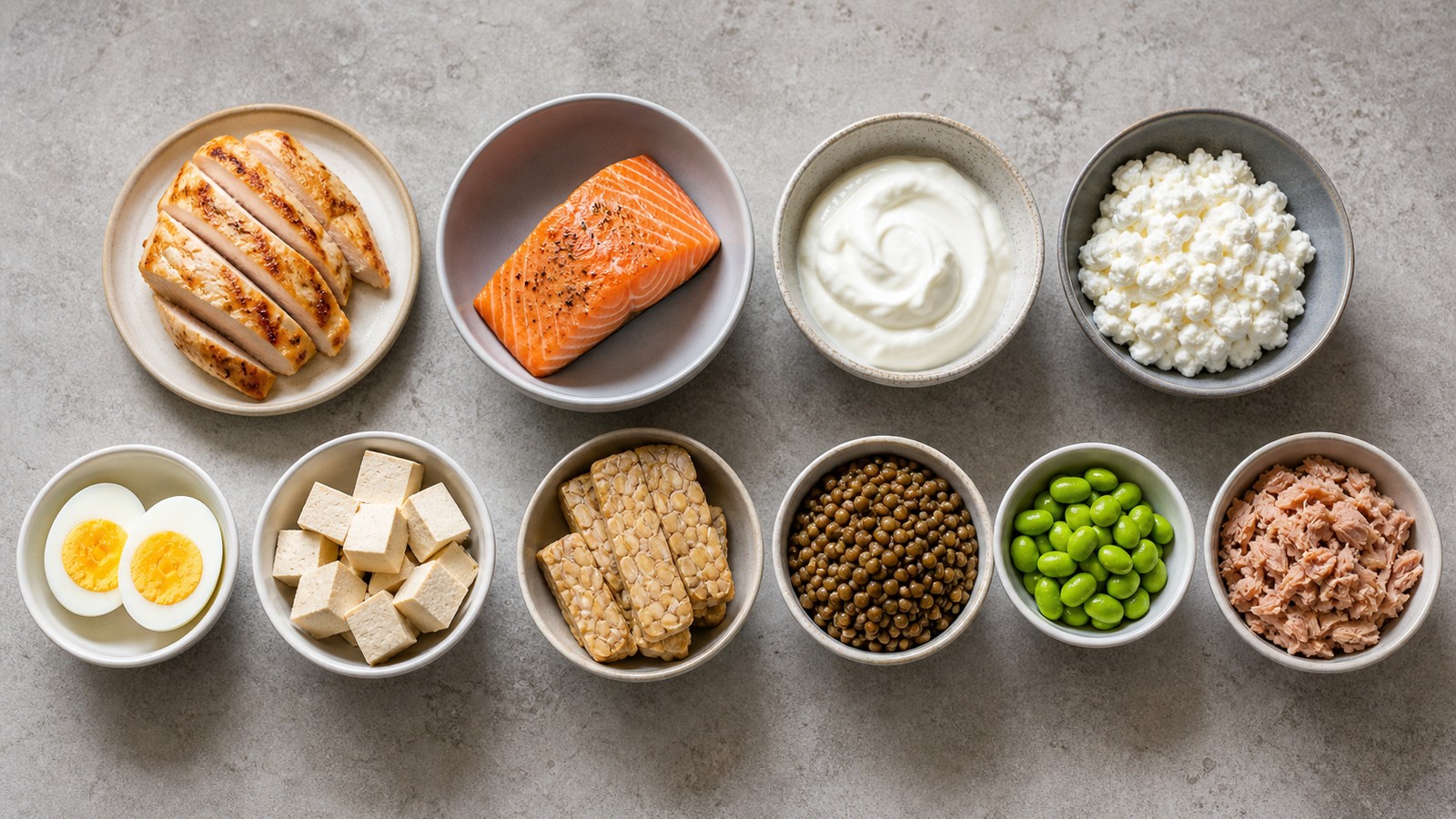
Batch cooking makes distribution easier. Prepare chicken, lentils, tofu, eggs, or fish once and assign portions to later breakfasts and lunches. Without prepared options, a carefully calculated target often collapses during busy workdays.
Use Foods That Bring More Than Protein
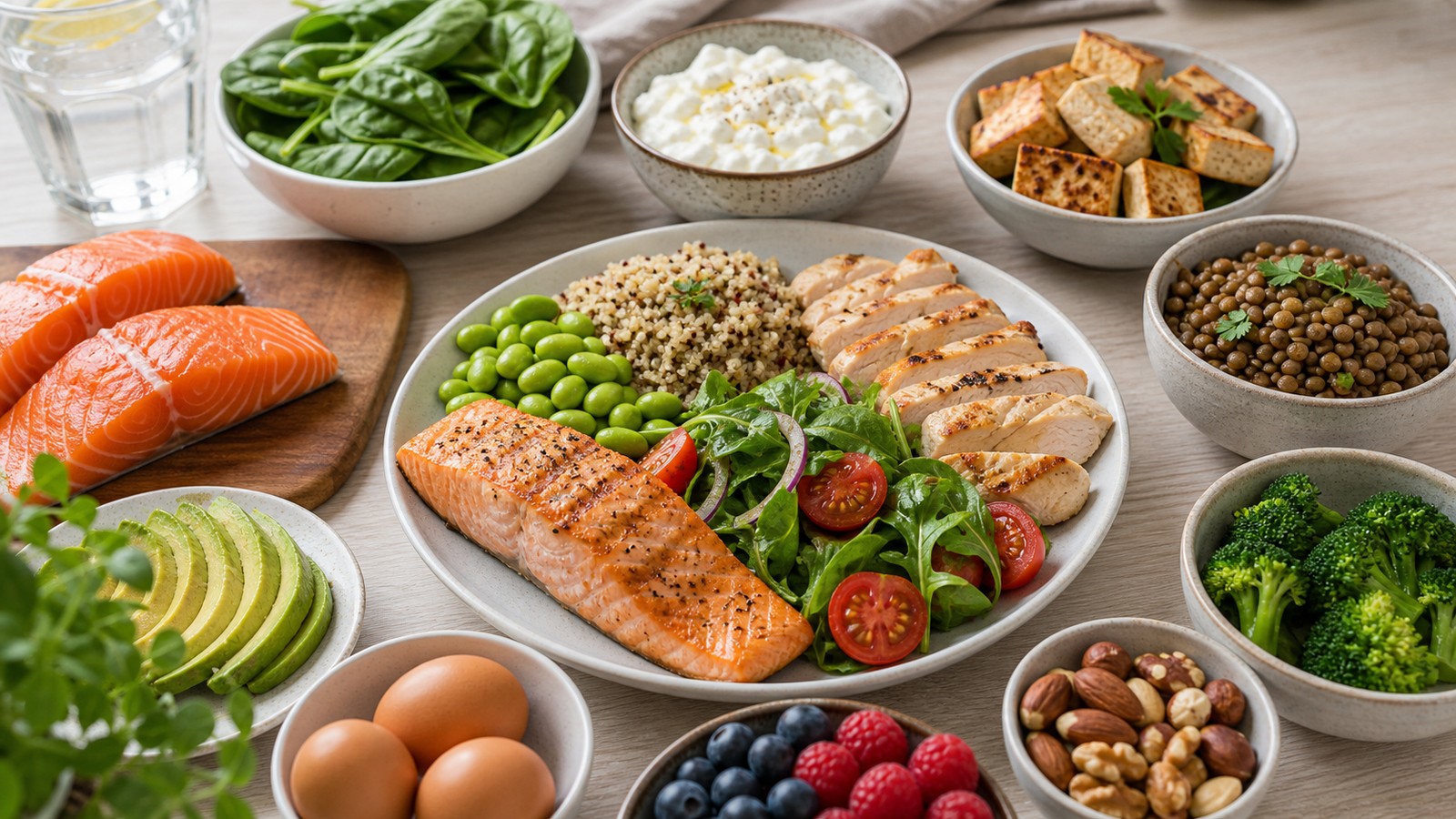
Fish provides protein with varying amounts of omega-3 fats. Yogurt can contribute calcium. Beans and lentils add fiber, potassium, and iron. Tofu can provide calcium when made with calcium salts. Food choice changes the whole diet, not just one macro.
Lean poultry, eggs, seafood, soy foods, low-fat dairy, legumes, seitan, and selected lean meats can all fit. Rotate sources so a protein target does not narrow the menu.
Variety also limits the tradeoffs of any one source. Alternating seafood, legumes, soy, eggs, dairy, and poultry can spread nutrient strengths while reducing dependence on processed meat, mercury-prone fish, or high-sodium convenience foods.
Keep Fiber and Carbohydrate in the Plan
Very-low-carbohydrate eating is not required for protein-assisted weight loss. Whole grains, potatoes, fruit, and legumes support training, bowel regularity, and meal satisfaction. Their portions can be adjusted without treating them as failures.
Vegetables and fruit add volume for relatively little energy, while legumes combine protein and fiber. A plan that removes these foods to make room for meat may worsen constipation and reduce micronutrient variety.
Athletes and people with physically demanding jobs may need substantial carbohydrate. Judge the plan by performance and recovery as well as the scale.
Increase fiber gradually if the previous diet contained little. Sudden large portions of bran, beans, and raw vegetables can create discomfort that is wrongly blamed on carbohydrate generally. Cooked produce, oats, lentils, and steady hydration may be gentler starting points.
Create an Energy Deficit Without Tiny Meals
Start by replacing low-satiety extras with food that has protein, fiber, or volume. Examples include replacing a pastry-only breakfast with yogurt, fruit, and oats, or replacing part of a takeout portion with vegetables and a lean protein.
Cooking methods and sauces matter. Grilled chicken can become energy-dense when combined with creamy dressing, cheese, fried toppings, and a large wrap. Measure calorie-dense additions long enough to learn realistic portions.
Preserve foods that bring pleasure. A planned dessert or restaurant meal can fit when average portions support the goal. Removing every preferred food often makes the plan feel temporary and increases the appeal of abandoning it.
Recognize Common High-Protein Traps
Protein bars, shakes, chips, cereals, and cookies can be convenient, but the label may create a health halo. Compare protein with calories, added sugar, saturated fat, fiber, cost, and the likelihood that the product actually satisfies you.
Nuts and cheese are nutritious but energy-dense. They work better as deliberate portions than unlimited protein foods. Processed meat can raise sodium and should not become the primary method.
Another trap is eating too little overall during the week and rebounding on weekends. A smaller, consistent deficit usually outperforms an aggressive cycle.
Watch for arithmetic that counts every trace gram as though it were a meal anchor. Broccoli, bread, and nuts contribute protein, but relying on incidental totals may leave main meals weak. Identify one substantial source first, then let supporting foods add to it.
Pair Protein With Resistance Training
Strength training tells the body that muscle is useful. Two or more appropriately designed sessions per week can complement higher protein, although individual ability and medical status determine the program.
Progressive overload may involve weights, machines, bands, or body-weight movements. Beginners benefit from instruction and gradual increases. Protein supports adaptation after the stimulus; it does not replace the stimulus.
Recovery also requires enough sleep and total energy. Persistent soreness, declining performance, and irritability may reflect an oversized deficit rather than insufficient discipline. Training quality should inform the pace of loss.
Understand Who Needs Medical Guidance
People with chronic kidney disease, reduced kidney function, protein in the urine, liver disease, gout, kidney stones, pregnancy, eating-disorder history, or complex medication plans should ask a qualified clinician before pursuing a high target.
Diabetes can coexist with silent kidney impairment, so current laboratory information matters. Children and adolescents should not use adult weight-loss macro plans without pediatric guidance.
New swelling, persistent nausea, severe weakness, major bowel changes, or rapid unintended weight change deserves assessment rather than another dietary adjustment.
Medication can influence appetite and weight independently of protein. Glucagon-like peptide-1 drugs, stimulants, steroids, insulin, and several psychiatric medicines change the planning problem. Coordinate nutrition with the prescriber when intake or weight shifts rapidly.
Measure Whether the Approach Is Working
Follow a multiweek weight trend under reasonably consistent conditions. Also track waist measurement if appropriate, hunger, strength, bowel regularity, mood, sleep, food cost, and whether meals remain socially workable.
If weight is unchanged but strength improves and measurements shift, body composition may be changing. If hunger remains high, examine meal volume, fiber, sleep, and deficit size before raising protein indefinitely.
Use the same scale, similar clothing, and a consistent time when weighing is appropriate. Do not respond to one high reading by skipping meals. A trend becomes useful only when measurement noise is allowed to remain noise.
Build a Repeatable Weight-Loss Pattern
Choose two protein-rich breakfasts, three lunches, and four dinners you genuinely like. Keep emergency options available and use planned leftovers. Repetition creates consistency without requiring identical meals.
The most effective high-protein diet is neither the highest-protein diet nor the fastest plan. It is the one that preserves health and strength while helping you sustain a modest deficit long enough to reach and maintain a useful result.
Practice maintenance before the final goal if the process is long. A short period at stable weight tests whether meals, movement, and protein habits work without a deficit. It can also reduce diet fatigue.
When the desired loss is reached, add food gradually and monitor the trend. Keep strength training, sufficient protein, vegetables, and the meal routines that made the process manageable rather than returning immediately to the old structure.
Maintenance is part of the result.