A Month Is Long Enough to Learn, Not Long Enough to Prove Everything
A 30-day vegan challenge can reveal how plant-based meals fit your schedule, digestion, budget, energy, and social life. It can also prompt useful changes such as eating more legumes, vegetables, whole grains, fruit, nuts, and seeds. But thirty days cannot prove that every excluded animal food caused a symptom, guarantee lasting weight loss, or predict long-term nutrient status. The challenge should therefore be designed as a supported experiment rather than a purity contest. Secure vitamin B12 before day one, plan protein and calcium sources, eat enough energy, and define what you will track. Decide whether the experiment includes restaurant cross-contact, honey, medications in gelatin capsules, and products processed on shared equipment so small uncertainties do not dominate the month. Shop for familiar staples before specialty substitutes, tell household members what support would help, and preserve foods connected to culture by adapting them thoughtfully. This guide divides the month into four phases: establishing complete meals, expanding variety, navigating real life, and reviewing results. It also treats an early stop as useful information when symptoms, inadequate intake, or food anxiety emerge. People who are pregnant, growing, managing kidney disease, taking glucose-lowering medication, recovering from an eating disorder, or facing other complex health needs should obtain individualized guidance first.
A: No, the liver, kidneys, lungs, and gut already handle normal waste processes.
A: Results vary with energy intake, water shifts, activity, and baseline habits.
A: No, fortified and convenience foods can be useful.
A: A reliable source should be established from the beginning.
A: Learn from it and continue without fasting or punishment.
A: Often, because fiber and food choices change, but responses vary.
A: Yes, with careful energy, protein, carbohydrate, and recovery planning.
A: Testing depends on risk, symptoms, and clinical guidance.
A: Examine hunger and preference, then decide without moral panic.
A: No, use the results to choose the next sustainable pattern.
Before Day 1: Record a Useful Baseline
Write down why you are trying the challenge and what result would matter. Possible outcomes include cooking more, reducing animal-food intake, improving bowel regularity, exploring ethics, or observing hunger and energy. “Detox” is not a measurable outcome and is not a medically meaningful process created by vegan eating.
Record a typical week of meals, grocery spending, digestive symptoms, energy, training, and weight only if weighing is appropriate. Note medications and relevant health conditions. This baseline helps distinguish real change from expectation.
Choose a reliable vitamin B12 supplement or fortified-food schedule before animal foods disappear. Thirty days is not permission to ignore B12 simply because body stores can last longer.
Build a Challenge Pantry
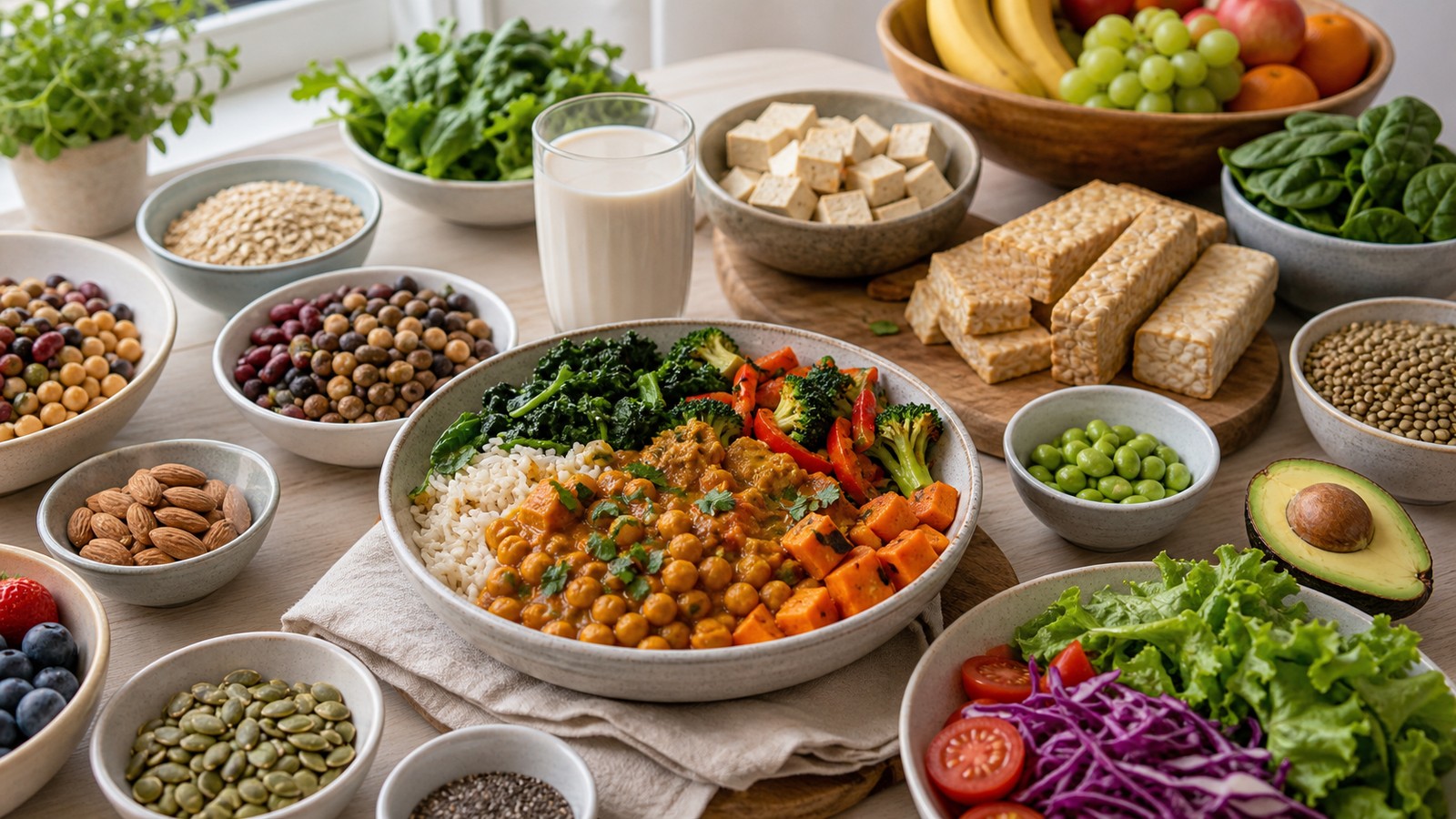
Stock beans, lentils, tofu, tempeh, edamame, textured vegetable protein, grains, potatoes, frozen vegetables, fruit, nuts, seeds, tahini, fortified plant milk, sauces, and spices. Add three emergency meals that need little preparation.
Do not buy every vegan substitute. Choose one or two that solve specific needs, such as a social burger or fast breakfast. Ordinary staples should carry most meals.
Week 1: Learn Complete Meal Structure
For the first week, focus on protein, produce, carbohydrate, and fat at each main meal. Breakfast might be oats with fortified soy milk, berries, chia, and walnuts. Lunch could be lentil soup with bread and fruit. Dinner could be tofu stir-fry with rice and vegetables.
Repeat meals freely. Familiarity reduces decision fatigue and allows you to notice portions. If hunger is constant, enlarge meals rather than viewing discomfort as evidence that the challenge is working.
Increase fiber gradually. Use tofu, refined grains, cooked vegetables, and smooth soups if a sudden influx of beans and raw produce causes bloating.
Week 2: Expand Protein and Cuisine Variety
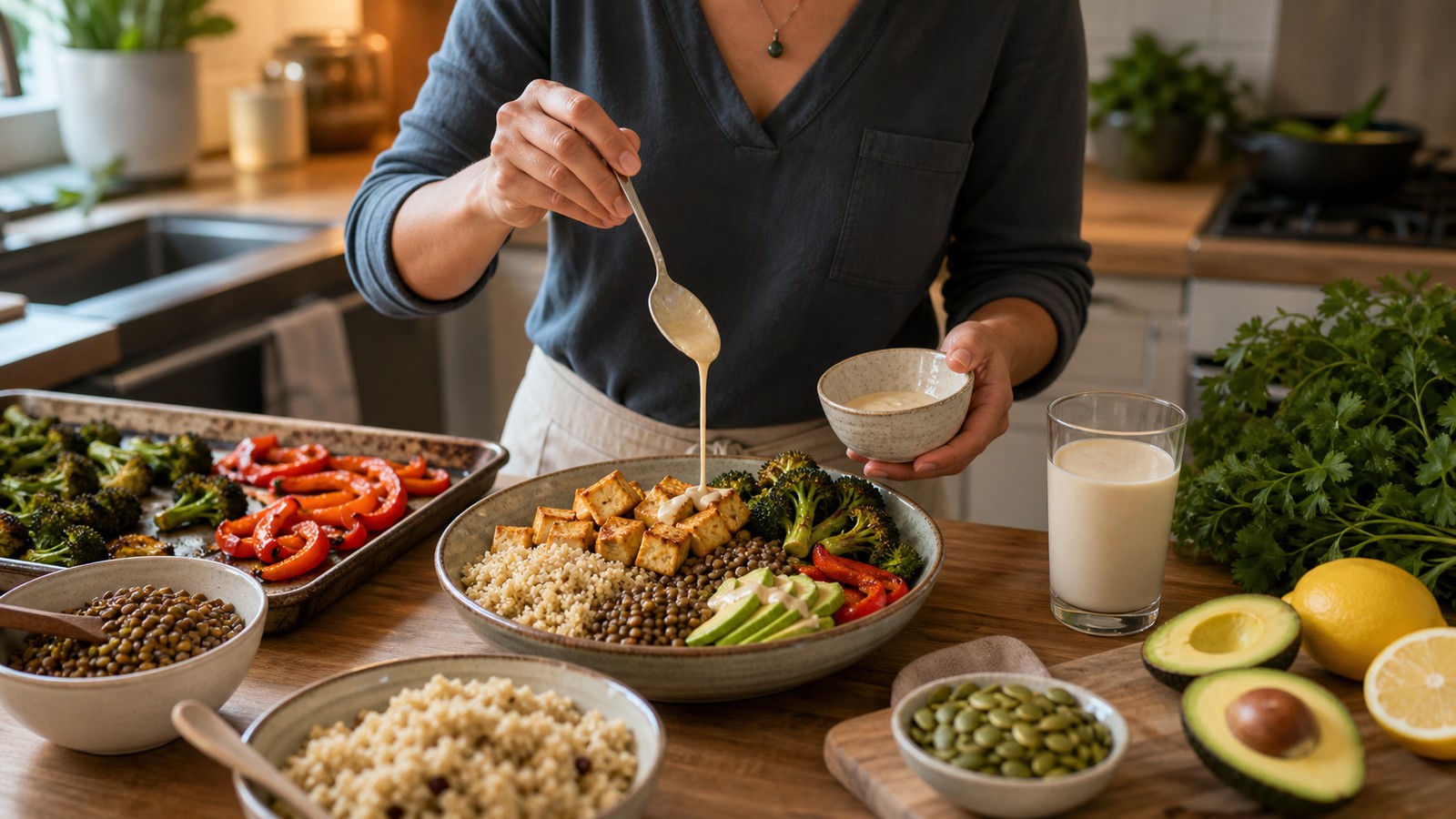
Add tempeh, edamame, seitan if gluten is safe, chickpea flour, or another legume. Try cuisines where plant proteins already belong: dal, bean tacos, falafel, peanut noodles, tofu curry, or pasta e fagioli.
Learn two flavor systems, such as tahini-lemon-herb and ginger-garlic-sesame. Flavor competence matters more for adherence than collecting recipes.
Check calcium, vitamin D, iodine, iron, zinc, and omega-3 sources across the week. Use fortified plant milk, calcium-set tofu, iodized salt when appropriate, vitamin C with iron-rich meals, and flax, chia, hemp, or walnuts.
Use the second week to compare textures as well as nutrient totals. Crispy baked tofu, creamy white beans, chewy tempeh, and soft red lentils solve different culinary problems. If one preparation disappoints, change the method before deciding an entire ingredient category is unsuitable.
Week 3: Test Restaurants, Work, and Social Events
Preview menus, identify likely vegan options, and ask focused questions about broth, dairy, egg, fish sauce, and honey. Carry a snack when travel or meetings may delay meals.
At social events, bring a substantial dish when appropriate. One imperfect ingredient inquiry should not turn the challenge into fasting. Ethical preference and severe allergy require different levels of cross-contact control.
Notice whether rules create anxiety, isolation, or binge-restrict behavior. A challenge intended to teach should not override mental health.
Separate inconvenience from nutritional inadequacy when reviewing a difficult day. A restaurant may have offered only fries, or a meeting may have eliminated lunch; neither proves that planned vegan meals cannot work. Identify the operational failure and create a specific safeguard for the next similar event. That might mean calling the restaurant, eating beforehand, bringing a complete dish, or keeping a protein-rich snack in a bag. The purpose of the week is to discover friction while the experiment is still temporary, not to demonstrate endurance by remaining hungry.
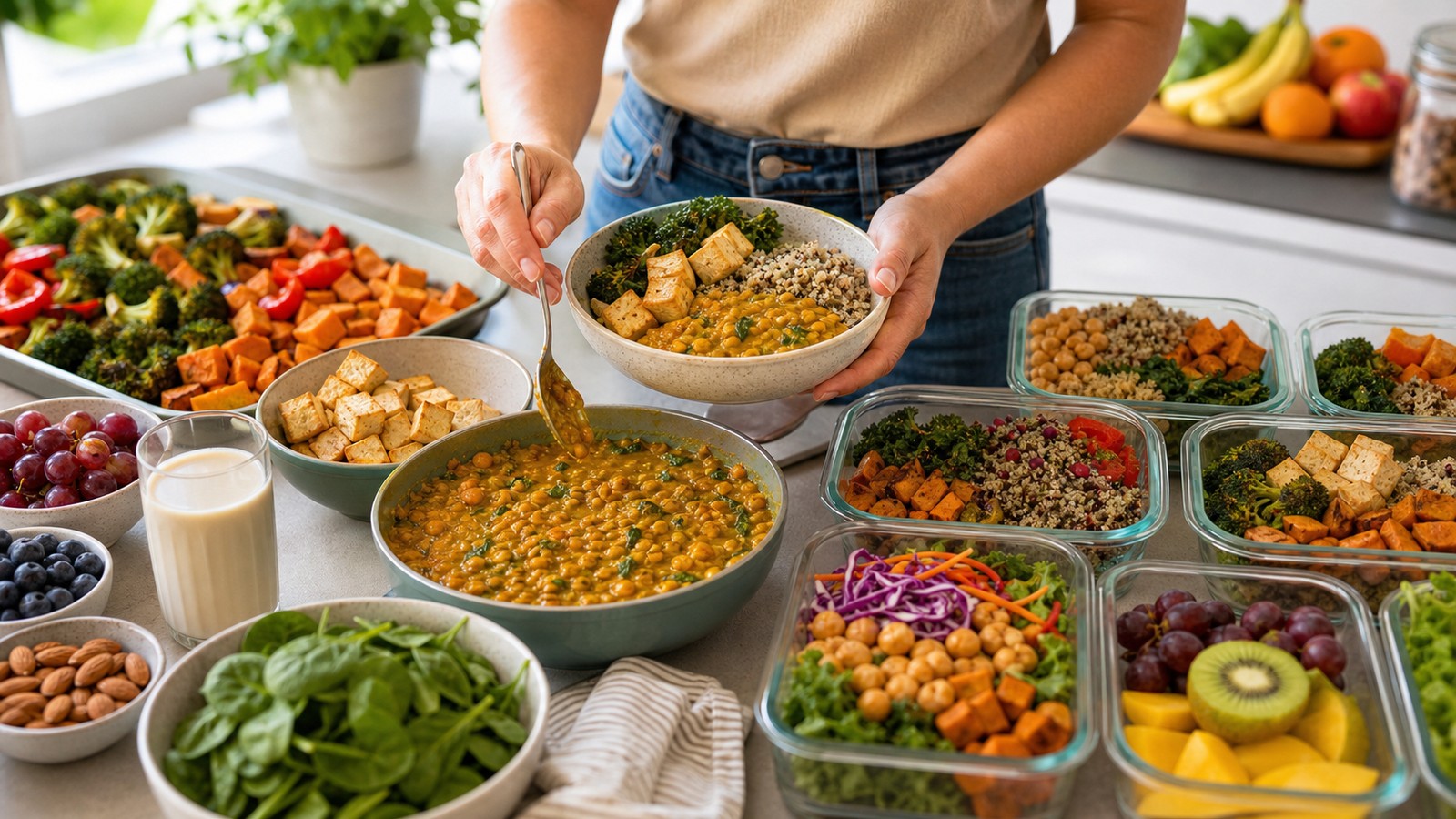
Pack meals that remain satisfying after several hours, such as lentil grain salad, tofu wraps, bean chili, or pasta with white beans. A piece of fruit alone may be vegan but is rarely an adequate lunch. Keep shelf-stable backup food at work when refrigeration or restaurant options are uncertain.
Week 4: Reduce Dependence on Novelty
Use the meals that proved easiest rather than escalating complexity. Repeat a dependable breakfast, portable lunch, and low-effort dinner. The final week tests whether the pattern works after initial enthusiasm declines.
Review food waste and spending. Replace expensive products with beans, lentils, tofu, oats, potatoes, rice, frozen vegetables, and seasonal fruit where helpful.
Plan what happens on day 31 before the challenge ends. Options include continuing vegan, becoming flexitarian, remaining vegetarian, or keeping selected vegan meals.
A Simple Seven-Day Menu to Repeat and Adapt
Day one can use oatmeal, chickpea salad, and tofu curry. Day two might include tofu scramble, leftover curry, and black-bean tacos. Day three can use fortified cereal, lentil soup, and tempeh stir-fry.
Later days might include overnight oats, hummus sandwiches, white-bean pasta, edamame bowls, vegetable chili, chickpea curry, or baked potatoes with beans and tahini. Repeat leftovers and vary sauces.
Snacks are optional: fruit with nut butter, soy yogurt, edamame, vegetables with hummus, fortified cereal, or roasted chickpeas.
Scale each meal to appetite and activity. A smaller person with a desk job and a larger endurance athlete should not use identical portions merely because the menu title is the same. Add grains, bread, potatoes, tofu, beans, nuts, seeds, or oils when the listed combination does not provide enough energy.
Potential Benefits You May Notice
Higher fiber can improve bowel regularity after adaptation. Meals rich in legumes and produce may improve fullness. Reducing processed meat, cheese-heavy meals, and sugary convenience food can lower saturated fat or improve overall diet quality.
Some people lose weight because food choices and energy intake change. Others maintain or gain, especially when portions, oils, nuts, sweets, and substitutes provide ample energy. Vegan status does not bypass calorie balance.
Blood pressure, cholesterol, or glucose may change, but thirty days and uncontrolled home conditions cannot establish causation. Medication changes belong with clinicians.
Common Problems and Corrections
Constant hunger calls for more protein, carbohydrate, fat, or food. Fatigue requires review of energy, sleep, iron, B12, training, and medical causes. Bloating may improve through gradual legumes, smaller portions, tofu, lentils, and cooked vegetables.
Expensive shopping suggests too many specialty products. Social difficulty calls for menu research, portable food, clearer communication, or a more flexible endpoint.
Numbness, severe weakness, major weight loss, persistent vomiting, blood in stool, or other concerning symptoms require medical care.
Cravings deserve a precise response. Wanting a familiar cheese dish may reflect flavor, fat, salt, nostalgia, convenience, or social meaning rather than a nutrient deficiency. Recreate the desired role where useful, or decide that the challenge is teaching you which foods you genuinely want to retain. Do not diagnose a vague craving from social media. If appetite becomes unusually intense across the day, first check total energy, protein, carbohydrate, fat, sleep, and meal spacing. Persistent or concerning symptoms belong with a healthcare professional.
How to Track Results Without Manufacturing Them
Use consistent measures and avoid changing every lifestyle variable simultaneously if you want to understand the diet. Record hunger, energy, bowel patterns, sleep, training, cost, and meal satisfaction weekly rather than hourly.
Weight fluctuates with sodium, carbohydrate storage, bowel contents, and menstrual cycles. Compare trends, not day-one and day-thirty single readings. Laboratory testing should be interpreted by professionals and may not be necessary for every short trial.
Review Nutritional Adequacy
Confirm that B12 was taken consistently. Review protein at meals, fortified calcium and vitamin D, iodine, iron sources paired with vitamin C, zinc, and omega-3 fats. A month of vegan eating does not automatically provide these.
Pregnancy, childhood, adolescence, older age, athletic training, and low appetite require additional precision. A registered dietitian can assess portions and supplements.
Iodine deserves particular attention because sea salt, kosher salt, and many specialty salts are not iodized. Seaweed contains unpredictable amounts and kelp can supply excessive iodine. Use an evidence-based source rather than assuming any ocean-derived ingredient is automatically appropriate.
Decide What the Results Mean
Separate benefits from the broad bundle of changes. If digestion improved, was it more fiber, less dairy, fewer restaurant meals, or regular meal timing? The challenge alone cannot identify one excluded food as the cause.
Keep changes that improved life. If strict veganism created unacceptable burden, a plant-forward or vegetarian pattern can retain legumes and vegetables without turning the month into failure.
Day 31 Is a Decision Point, Not a Finish Line
Continue only with a reliable nutrition plan and sustainable routines. Reintroduce animal foods deliberately if desired, observing relevant symptoms without assigning moral meaning to the choice.
The best result is useful knowledge: meals you can repeat, nutrients you understand, and a clearer relationship between values and daily practice.
If you continue, convert the temporary challenge into a maintenance system. Reorder B12 before it runs out, preserve emergency meals, rotate protein sources, and review fortified-food labels when brands change. Long-term success depends on routine coverage, not the intensity of the first month.
Turn the Month Into Evidence You Can Use
At the end, compare the baseline with the final week using the same questions. Which meals were easiest, which nutrients required deliberate attention, and which situations repeatedly failed? Look for several observations pointing in the same direction rather than elevating one energetic afternoon or one uncomfortable dinner into a conclusion. Record recipes, brands, restaurant orders, and preparation methods worth keeping. Ask household members what changed for them, because shared cooking labor and meal satisfaction are part of sustainability. Review unopened products and wasted produce as honestly as the successful recipes.
Then write a short next-month plan. It might preserve vegan breakfasts and lunches, continue fully vegan with a dietitian-reviewed supplement routine, or reintroduce selected animal foods while retaining legumes and produce. Include one shopping day, one preparation block, and a backup strategy for the first week. Recheck the plan after another month instead of assuming the first decision must be permanent. A clear next step prevents the challenge from becoming an isolated event whose useful lessons disappear.