Vegan Food Is Broader Than Salad and Meat Substitutes
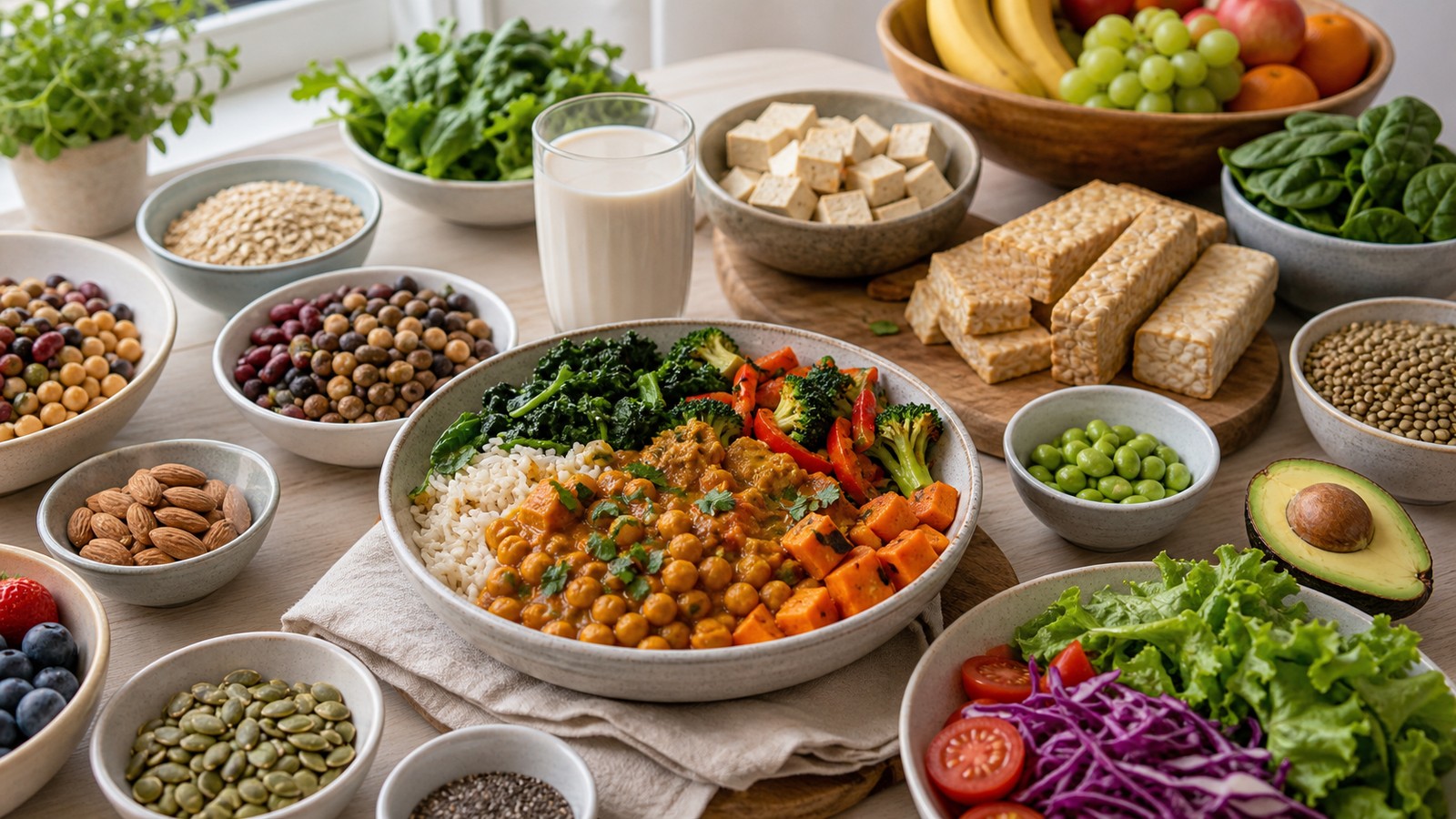
Vegans eat foods that do not contain animal-derived ingredients, including vegetables, fruit, grains, beans, lentils, soy foods, nuts, seeds, herbs, spices, oils, and an expanding range of fortified and convenience products. Everyday vegan meals may be bean tacos, tofu stir-fry, lentil soup, oatmeal with soy milk, vegetable curry, pasta with white beans, or a peanut noodle bowl. The diet excludes meat, fish, dairy, eggs, gelatin, and usually honey, but exclusion alone does not build a nutritionally complete menu. Reliable vitamin B12, sufficient protein and energy, calcium, iron, zinc, iodine, vitamin D, and omega-3 fats require attention. This food list organizes options by their role in actual meals, explains where labels can mislead, and shows how to combine staples into satisfying breakfasts, lunches, dinners, and snacks.
A: No, some contains milk, egg, honey, or animal-derived additives.
A: Most dried pasta is vegan, while fresh pasta often contains egg.
A: Yes, soy provides all essential amino acids.
A: Vegan status does not determine nutrition quality.
A: Yes, yeast is a fungus rather than an animal.
A: Only when protein and fortification match the intended role.
A: No, they are optional convenience foods.
A: Yes, pea, soy, rice, and blended plant proteins are available.
A: Vitamin B12 requires a reliable source.
A: Combine protein, carbohydrate, produce, and flavorful fat.
Beans, Lentils, and Peas
Black beans, kidney beans, chickpeas, cannellini beans, pinto beans, mung beans, lentils, split peas, and many regional varieties provide protein, fiber, iron, zinc, potassium, and carbohydrate. They can anchor chili, curry, soup, tacos, salads, dips, and grain bowls.
Dried legumes are economical; canned versions are fast. Rinsing reduces some sodium. Introduce larger portions gradually if fiber intake was previously low.
Different legumes serve different textures. Red lentils dissolve into sauces, black lentils hold in salad, chickpeas roast crisply, and white beans blend into creaminess. Learning those differences prevents the category from feeling repetitive.
Gas can improve through gradual portions, thorough cooking, rinsing canned beans, and regular exposure. Severe symptoms deserve individualized assessment rather than indefinite avoidance of every legume.
Tofu, Tempeh, and Edamame
Tofu ranges from silken to extra-firm. Silken tofu works in sauces, desserts, and smoothies; firm tofu suits stir-fries, roasting, scrambles, and grilling. Calcium content depends on the coagulant.
Tempeh is fermented whole soybeans with a firm texture. Edamame are young soybeans useful in bowls, noodles, and snacks. Soy foods provide complete protein and are safe for most people in ordinary amounts.
Soy allergy requires alternatives such as legumes, seitan, pea protein, nuts, and seeds.
Seitan and Other Protein Foods
Seitan is made from wheat gluten and provides concentrated protein with a chewy texture. It is unsuitable for celiac disease or wheat allergy. Textured vegetable protein, often soy-based, stores well and rehydrates for tacos, chili, and sauce.
Pea-protein products, mycoprotein products, lupini beans, and meat alternatives broaden options. Verify that a vegetarian product is vegan because some contain egg or dairy. Compare sodium, saturated fat, protein, fiber, and cost.
Mycoprotein products may contain egg, so vegetarian branding is not enough. Lupini products can trigger legume allergy, and pea protein can appear in unexpected formulations. Ingredient suitability remains personal.
Protein powders are optional. They can support athletes, older adults, or low-appetite eaters, but ordinary meals can meet needs for many people.
Whole and Refined Grains
Rice, oats, barley, wheat, rye, corn, millet, sorghum, quinoa, buckwheat, amaranth, and products made from them can fit. Whole grains provide more fiber and nutrients, while refined grains remain useful for preference, culture, digestion, and quick energy.
Bread, pasta, tortillas, cereal, crackers, and baked goods require label checks for milk, egg, honey, whey, casein, or animal-derived conditioners. Many ordinary products are vegan without special branding.
Some wine, beer, and juice processing uses animal-derived fining agents even when none remains in the final ingredient list. People who avoid processing aids can consult vegan certification resources; others focus on declared ingredients.
Potatoes and Other Starchy Foods
White and sweet potatoes, cassava, plantains, taro, yams, winter squash, and corn supply energy, potassium, fiber, and varied textures. They help make vegan meals substantial.
Preparation matters more than the fact that a food is starchy. A baked potato with beans, broccoli, and tahini differs from fries serving as the entire meal.
Starchy foods are often the affordable energy backbone of a vegan meal. Pair potatoes with beans, pasta with lentils, or plantains with tofu. Eliminating both animal foods and staple carbohydrates can make adequate intake unnecessarily difficult.
People with diabetes can adjust amounts and combinations with clinical guidance without treating all starch as incompatible with vegan eating.
Vegetables
All vegetables can appear: leafy greens, cruciferous vegetables, mushrooms, peppers, tomatoes, carrots, cabbage, eggplant, zucchini, onions, and many others. Use fresh, frozen, canned, fermented, raw, and cooked forms.
Vegetables provide important nutrients but little protein in typical servings. Pair them with legumes, soy, seitan, grains, nuts, or seeds rather than assuming a large salad is complete.
Sea vegetables can add iodine, but amounts vary dramatically. Kelp can provide excessive iodine and should not be used casually as a supplement.
Fruit
Berries, citrus, apples, pears, bananas, grapes, melons, mangoes, stone fruit, and tropical fruit all fit. Fruit contributes fiber, vitamin C, potassium, hydration, and convenient sweetness.
Dried fruit and juice are concentrated and easier to consume quickly. They can still fit, particularly for portable energy, but whole fruit is generally more filling.
Fruit also improves iron absorption when paired with meals or snacks containing legumes and seeds. An orange after lentil soup or berries on fortified cereal serves more than a decorative role.
Frozen fruit can be cheaper, last longer, and work well in oats, smoothies, sauces, and desserts. Choose unsweetened forms for maximum flexibility.
Nuts, Seeds, and Butters
Walnuts, almonds, cashews, pistachios, pecans, peanuts, pumpkin seeds, sunflower seeds, sesame, chia, flax, and hemp contribute fats, minerals, fiber, and some protein. Tahini and nut butters become sauces, spreads, and snack components.
Ground flax and chia provide alpha-linolenic acid, a plant omega-3 fat. Store nuts and seeds to prevent rancidity. Allergy-safe households can use seeds where nuts are unsafe.
Plant Milks and Yogurts
Soy, pea, oat, almond, coconut, rice, and other beverages differ in protein, carbohydrate, fat, calcium, vitamin D, B12, iodine, and added sugar. Fortified soy or pea milk often provides more protein than other types.
Plant yogurts also vary. Some are protein-rich and fortified; others are primarily starch or coconut fat. Choose according to the meal role and shake fortified beverages before use.
Homemade plant milk is usually unfortified and may contain much less protein than commercial soy milk. It can be a beverage or recipe ingredient, but should not automatically be treated as a nutritional dairy replacement.
Infants require breast milk or appropriate infant formula, never ordinary plant beverages as the primary drink. Pediatric vegan feeding needs professional guidance.
Fats, Oils, and Avocado
Olive, canola, avocado, sesame, and other plant oils are vegan. Avocado, olives, nuts, and seeds provide whole-food fat sources. Coconut oil and palm oil are high in saturated fat.
Fat supports flavor, energy, and nutrient absorption. Quantity matters for weight goals, but extremely low-fat vegan diets are not required for general health.
Whole-food fat sources bring fiber and minerals, while oils concentrate energy and culinary function. Both can fit. People with low appetite may benefit from oil and nut butter; those pursuing weight loss may use deliberate portions.
Herbs, Spices, and Aromatics
Garlic, ginger, onions, chiles, herbs, spice blends, citrus, vinegar, and toasted aromatics make basic staples distinctive. Vegan cooking is easier when flavor does not depend on cheese or meat.
Seasoning blends and bouillon may contain milk powder, fish, chicken fat, or other animal ingredients. Check labels when the product is not clearly vegan.
Umami can come from mushrooms, tomatoes, miso, soy sauce, nutritional yeast, browned onions, and toasted ingredients. Combining acidity, salt, heat, sweetness, and savoriness prevents plant meals from tasting one-dimensional.
Check sodium in miso, bouillon, soy sauce, and seasoning blends, especially when several appear together.
Sauces and Condiments
Mustard, ketchup, salsa, hot sauce, hummus, tahini, many pestos, soy sauce, miso, curry paste, barbecue sauce, and mayonnaise alternatives can fit. Traditional pesto contains cheese, some curry pastes contain shrimp, and Worcestershire sauce commonly contains anchovy.
Use sodium- and sugar-rich sauces strategically. They can make beans, tofu, vegetables, and grains enjoyable without needing to dominate the meal.
Fortified Foods and Supplements
Fortified plant milk, cereal, nutritional yeast, and meat alternatives may provide vitamin B12, calcium, vitamin D, iron, or iodine. Fortification is useful, but amounts and serving assumptions differ.
Every vegan needs a reliable B12 strategy. Other supplements depend on food intake, health, life stage, sun exposure, and professional advice. Algae oil provides vegan EPA and DHA.
Keep a simple record of supplement brand, dose, and frequency. Products change and duplicate ingredients across a multivitamin, B12, vitamin D, and fortified foods. Review the combined plan rather than assuming more coverage is safer.
Iron should not be supplemented routinely without assessing need. Excess iron is harmful, and fatigue has many causes.
Vegan Convenience Foods
Frozen meals, canned soup, veggie burgers, vegan nuggets, protein bars, instant noodles, and dairy alternatives improve access and convenience. Vegan status says nothing about sodium, protein, saturated fat, fiber, or added sugar.
Use convenience products where they solve a real problem. A frozen meal can become more complete with vegetables, fruit, or beans. A burger can support a social event without becoming the foundation of every day.
Convenience foods can teach texture and flavor preferences. A favorite veggie burger may inspire a homemade bean patty, while a frozen curry may reveal which spices make lentils appealing. They need not be viewed only as compromises.
Sweets, Snacks, and Desserts
Dark chocolate, cookies, chips, popcorn, pretzels, fruit desserts, sorbet, baked goods, and dairy-free ice cream may be vegan. Labels are needed because milk, whey, gelatin, egg, and honey appear in unexpected products.
Vegan sweets remain discretionary foods. Ethical compatibility and nutrition quality answer different questions.
Gelatin-free does not guarantee vegan if dairy, egg, honey, confectioner’s glaze, or certain colorings are present. Certification helps when ingredient origins are difficult to determine.
Snacks can also carry nutrition: roasted chickpeas, soy yogurt, edamame, fruit with peanut butter, or fortified cereal can support protein and micronutrients.
Everyday Breakfasts
Oatmeal with fortified soy milk, fruit, chia, and walnuts offers protein and several planned nutrients. Tofu scramble with vegetables and toast provides a savory option. Smoothies should include a protein source such as soy milk, tofu, or protein powder.
Other breakfasts include bean tacos, peanut-butter toast with fruit, fortified cereal, chickpea-flour omelets, or leftovers. Morning food does not need a special vegan imitation.
Everyday Lunches and Dinners
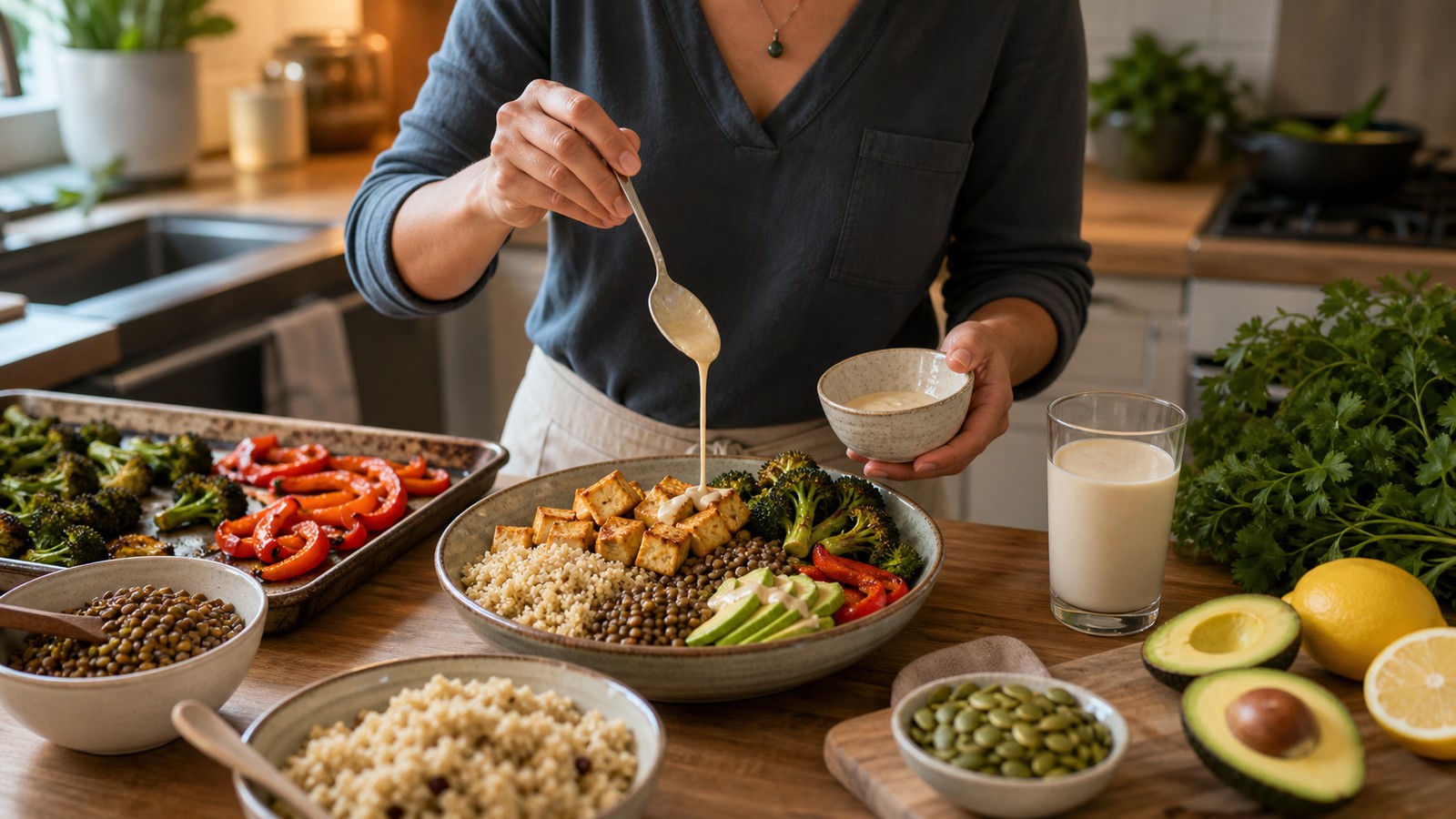
Combine protein, produce, carbohydrate, and fat: lentil soup with bread and salad; tofu curry with rice and broccoli; black-bean tacos with cabbage and avocado; or pasta with white beans, spinach, tomato, and olive oil.
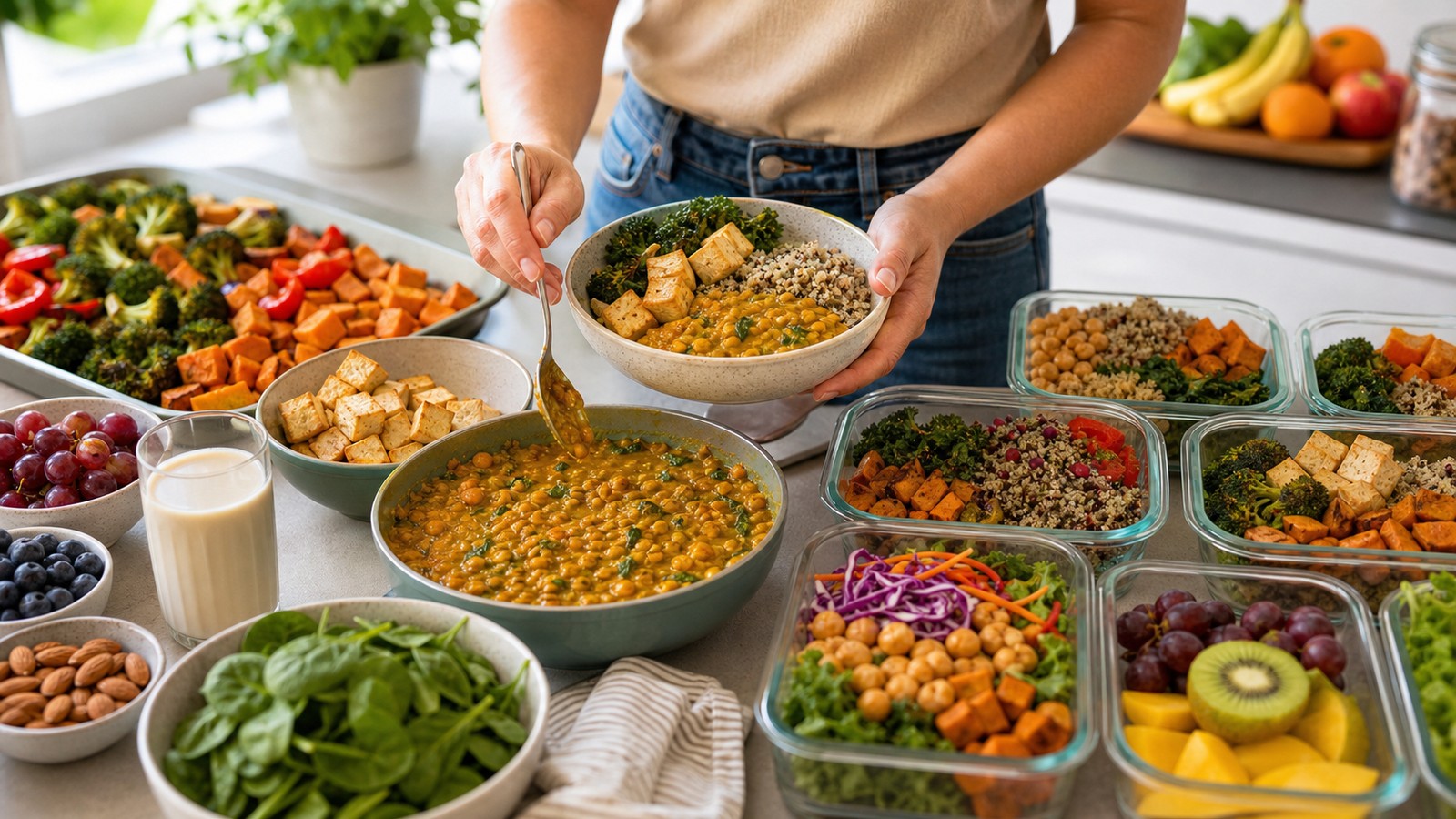
Batch components can create variety. Cooked chickpeas become curry, salad, hummus, and roasted snacks. Brown rice becomes a bowl, stir-fry, soup addition, or side.
Keep emergency options such as canned beans, frozen vegetables, microwaveable grain, tofu, and sauce. Complete vegan food is often ordinary food assembled with intention.
Organize the List Into a Working Kitchen
Keep one protein in the refrigerator, one in the freezer, and one in the pantry; do the same for vegetables and grains. This creates meals even when shopping is delayed. Add two sauces and fruit, and the system can produce many combinations.
A complete vegan kitchen is not the one with the most specialty products. It is the one where reliable B12, useful staples, and familiar meals make nourishment easier on ordinary busy working weekdays consistently.