Vegan Eating Requires Both a Values Decision and a Nutrition Plan
A vegan diet excludes meat, poultry, fish, dairy, eggs, and other animal-derived foods. People choose it for ethics, environmental concerns, health, religion, or a combination. A well-planned vegan diet can provide adequate protein, fiber, iron, zinc, calcium, iodine, and many vitamins, but vitamin B12 requires a reliable fortified food or supplement, and several other nutrients deserve deliberate attention. Beginners often focus on identifying hidden animal ingredients while overlooking whether meals contain enough energy and protein. The easiest transition replaces each animal-food role rather than simply removing it: beans or tofu replace protein, fortified plant milk replaces some milk nutrients, and satisfying sauces and fats preserve pleasure. This guide moves from motivation to meal structure, supplementation, shopping, social eating, and health monitoring without treating every processed food as bad or every plant food as automatically complete.
A: A reliable fortified or supplemental source is essential.
A: Moderate soy-food intake is safe for most people.
A: Yes, when varied protein foods and sufficient energy are planned.
A: No, and many products provide little protein.
A: They can with careful professional planning for growth and nutrients.
A: Most vegans exclude it, though personal definitions vary.
A: No, energy balance and food choices still determine weight change.
A: Yes, with ingredient questions and realistic option planning.
A: Needs vary for vitamin D, iodine, omega-3, iron, and others.
A: Use the pace that allows nutrition and practical systems to stay intact.
Step 1: Define the Scope and Pace
Decide whether you will transition immediately or change one meal category at a time. A gradual approach might begin with vegan breakfasts, then lunches, then home dinners. An immediate approach can work when meals, supplements, and shopping are planned before animal foods disappear.
Clarify how you will handle medications, supplements, restaurant cross-contact, honey, shared kitchens, and products processed with animal-derived ingredients. Ethical boundaries are personal, while allergy safety follows stricter medical rules.
Use the transition period to eat down animal foods already purchased if that aligns with your values, donate suitable unopened items, or let household members use them. Avoid turning the change into unnecessary waste.
Create a first-week menu before announcing a permanent identity. Practical confidence grows from meals you can actually prepare.
Step 2: Secure Vitamin B12 Immediately
Vitamin B12 is not reliably supplied by unfortified plant foods. Use a dependable supplement or regularly consumed fortified foods in amounts that meet current guidance. Product dose and frequency vary, and absorption is limited at higher doses.
Nutritional yeast contains B12 only when the label confirms fortification. Spirulina, fermented vegetables, mushrooms, and seaweed are not reliable substitutes. Deficiency can damage nerves and blood cells, and symptoms may appear late.
Discuss testing and dosing with a clinician when pregnant, older, taking certain medications, or managing absorption disorders.
Step 3: Replace Protein at Every Main Meal
Use beans, lentils, chickpeas, tofu, tempeh, edamame, seitan, textured vegetable protein, soy milk, pea-protein foods, nuts, and seeds. A salad with only vegetables is not a protein replacement.
Build meals such as tofu stir-fry with rice, lentil pasta with tomato sauce, chickpea curry, bean tacos, tempeh sandwiches, or oatmeal made with soy milk and seeds. Varied protein across the day supplies essential amino acids.
Athletes, older adults, pregnancy, and people eating fewer calories need more deliberate protein amounts and distribution.
Estimate protein in several typical days until portions become familiar. A few tablespoons of hummus or scattered nuts may add flavor without providing the anchor you assumed.
Step 4: Eat Enough Energy
Whole plant foods can be bulky and high in fiber. New vegans sometimes fill up before consuming enough energy, leading to fatigue, hunger, unintended weight loss, or poor recovery. Include grains, potatoes, bread, pasta, avocado, nuts, seeds, tofu, and oils according to need.
Smoothies, nut butter, tahini, dried fruit, and higher-energy snacks can help people with low appetite. Those pursuing weight loss still need adequate protein and nutrients rather than relying on tiny vegetable meals.
Fiber can rise abruptly when beans, whole grains, vegetables, and fruit all increase. Scale portions gradually and use tofu, refined grains, oils, smoothies, and cooked vegetables when fullness becomes excessive.
Children and athletes may need especially energy-dense snacks and meals. Large raw salads are not a universal symbol of healthy vegan eating.
Track unintended loss over several weeks rather than relying on appetite alone. High-volume meals can suppress hunger temporarily while total intake remains inadequate.
Step 5: Plan Iron and Zinc
Lentils, beans, tofu, tempeh, pumpkin seeds, cashews, quinoa, and fortified cereal provide iron and zinc. Pair iron sources with vitamin C from peppers, tomatoes, citrus, berries, or broccoli.
Tea and coffee near meals can reduce nonheme iron absorption. Menstruation, pregnancy, blood donation, gastrointestinal disease, and past deficiency raise concern. Test and supplement according to professional guidance.
Soaking, sprouting, fermenting, and leavening may improve mineral absorption, but varied regular intake matters most.
Step 6: Cover Calcium and Vitamin D
Choose fortified plant milk or yogurt, calcium-set tofu, tahini, beans, almonds, and calcium-containing greens. Fortification varies; check the label and shake beverages before pouring.
Soy milk commonly offers protein closer to dairy milk than almond, oat, or coconut drinks. Vitamin D depends on fortification, sun exposure, geography, skin, age, and health. A supplement may be appropriate.
Check whether tofu is set with calcium sulfate; not all tofu provides the same amount. Greens such as kale and bok choy offer more absorbable calcium than high-oxalate spinach, although both are nutritious.
Bone health also depends on resistance or weight-bearing movement, adequate protein, and sufficient energy. Supplements cannot compensate for chronic under-eating.
Step 7: Include Iodine
Iodized salt is a predictable source when used within health needs. Seaweed iodine varies from modest to excessive, and kelp supplements can provide dangerously high amounts. Some plant milks are fortified, but many are not.
People limiting salt, avoiding fortified foods, or pregnant should review iodine with a professional. Thyroid conditions require individualized advice.
Specialty sea salts are often not iodized. If sodium must be limited, a clinician can help identify an iodine strategy that does not depend on increasing salt. Do not combine kelp supplements with frequent seaweed casually.
Iodine needs are particularly important in pregnancy and lactation because thyroid hormones support development.
Check multivitamin labels before adding a separate product. Iodine may already be present, and stacking supplements can overshoot the intended amount.
Step 8: Plan Omega-3 Fats
Ground flax, chia, hemp, walnuts, and canola oil provide alpha-linolenic acid. Include a regular source and store seeds properly. Grinding flax improves access to its nutrients.
Algae-derived EPA and DHA supplements offer direct long-chain omega-3 fats without fish. They may be considered during pregnancy or for specific health goals with clinical guidance.
Use a tablespoon of ground flax or chia in a familiar meal rather than collecting numerous superfoods. Consistency is more valuable than occasional large doses.
Step 9: Build a Complete Vegan Plate
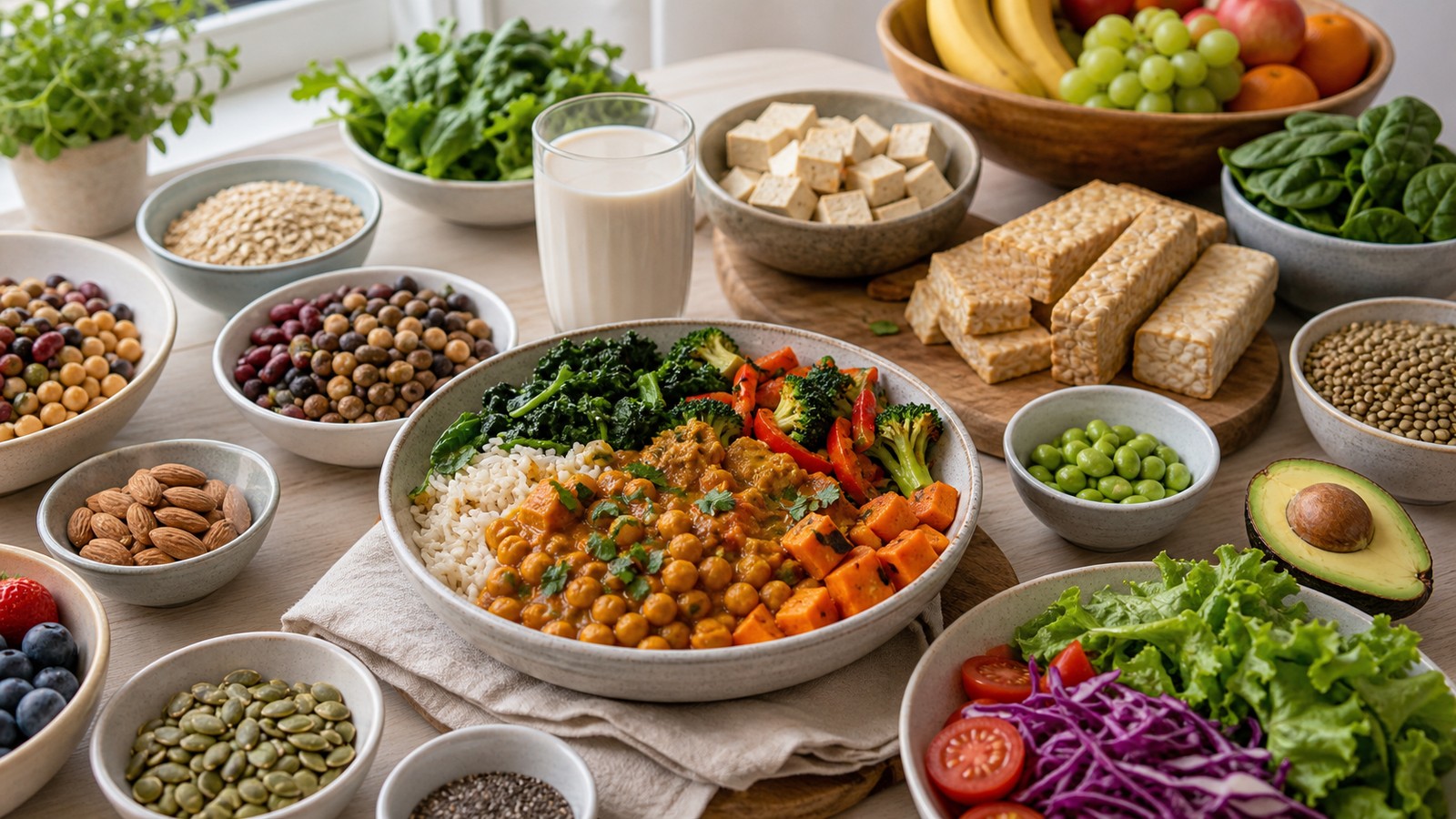
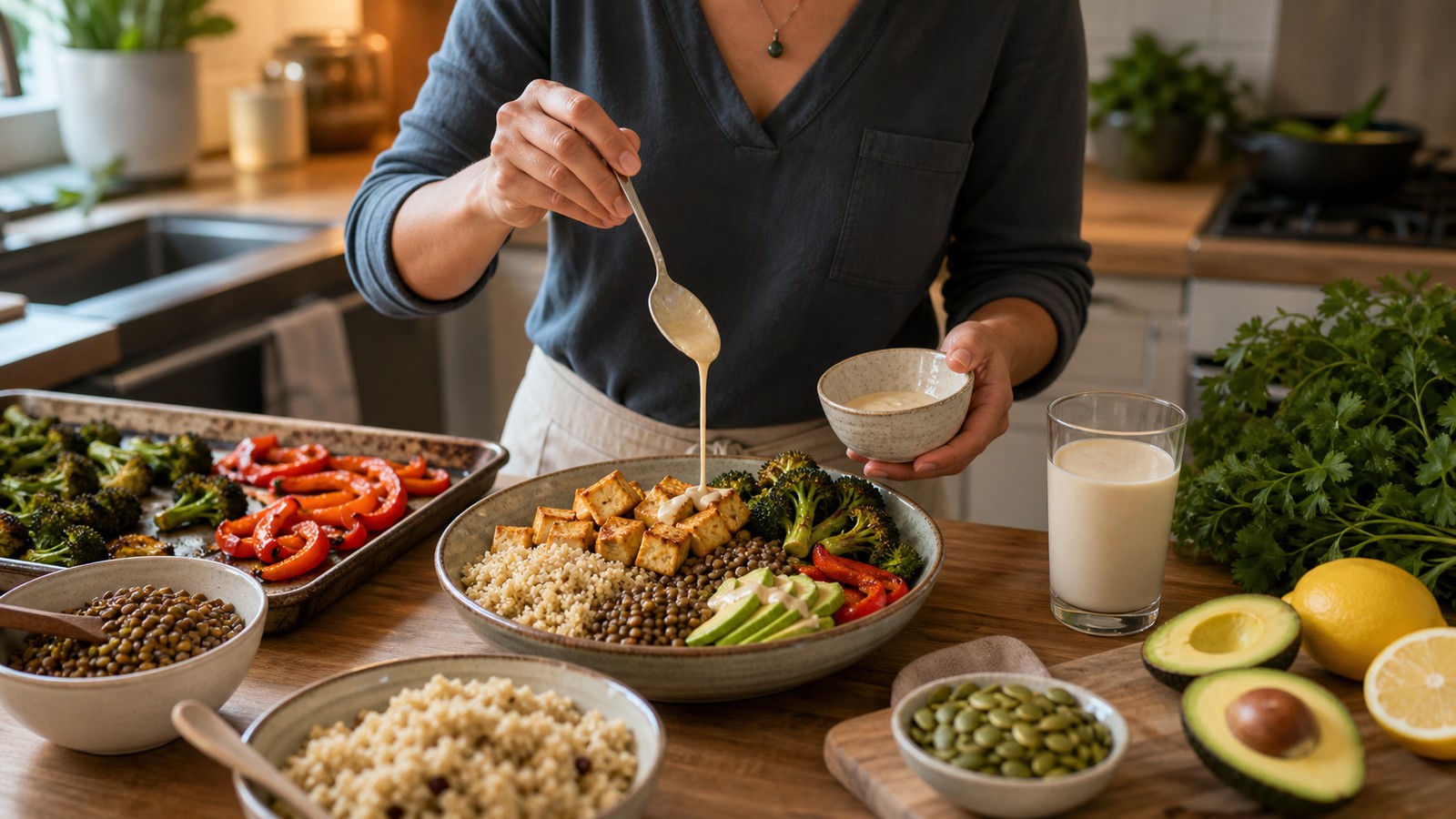
Combine a protein, vegetables or fruit, a grain or starchy food, and a flavorful fat or sauce. Examples include tofu, quinoa, broccoli, peppers, and tahini; or black beans, corn tortillas, cabbage, avocado, and salsa.
Breakfast can use oats with fortified soy milk, berries, walnuts, and chia. Lunch can be lentil soup with bread and fruit. Dinner can be tempeh curry with rice and vegetables.
Plate models are flexible. Portions should reflect body size, activity, age, goals, and health.
Color is useful but not enough. A beautiful bowl can still lack protein or energy. Check the functional components before judging the appearance.
Step 10: Replace Dairy and Eggs by Function
Use fortified soy milk for nutrition, plant yogurt for breakfast or sauces, tahini or blended cashews for richness, and nutritional yeast for savory flavor. Vegan cheese varies in protein and saturated fat and is not a nutritional replacement for dairy by default.
In baking, flax or chia gel, applesauce, aquafaba, commercial replacers, or bananas can replace eggs depending on their role. Tofu scrambles replace an egg dish more nutritionally than a starch-based substitute.
One substitute rarely performs every role. Soy milk replaces protein and calcium more effectively than coconut milk, while coconut cream may replace culinary richness. Choose according to function rather than loyalty to one product.
Vegan baking improves when you identify whether egg supplied binding, moisture, lift, or structure. A flax egg cannot recreate every recipe.
For cheese flavor, nutritional yeast, miso, fermented sauces, nuts, and acidity can help. Vegan cheese remains an option, but its protein and saturated fat vary.
Step 11: Learn Label and Allergen Basics
Milk, egg, fish, and shellfish are major allergens and are declared on many packaged-food labels, but vegan concerns also include gelatin, honey, whey, casein, certain flavorings, and processing aids. Certification can simplify ethical screening.
“Plant-based” does not always mean vegan. It may describe a product containing some plant ingredients. Recipes and suppliers change, so recheck familiar products.
People with allergies need cross-contact precautions beyond vegan labeling. A vegan bakery may still handle nuts, wheat, or soy.
Step 12: Use Convenience Foods Selectively
Canned beans, frozen vegetables, microwaveable grains, tofu, tempeh, fortified cereal, plant milk, frozen meals, and meat alternatives make the diet practical. Compare protein, sodium, saturated fat, fiber, and cost.
Mock meats can ease transition and support social events, but they need not appear daily. Whole and minimally processed foods can share the pattern with useful processed products.
Keep one freezer meal, one shelf-stable meal, and one five-minute fresh meal. This layered backup system prevents a demanding day from becoming chips and an inadequate side salad.
Price convenience against restaurant alternatives. A higher-cost frozen bowl may still save money and improve nutrition when it replaces delivery.
Step 13: Prepare for Restaurants and Travel
Look for beans, tofu, lentils, vegetable curries, falafel, pasta, pizza without cheese, grain bowls, and side combinations. Ask about broth, fish sauce, dairy, eggs, and cooking fats when needed.
Carry nuts, fruit, bars, roasted chickpeas, or shelf-stable soy milk when options may be limited. A basic grocery store can often provide bread, hummus, fruit, vegetables, nuts, and ready grains.
Confirm whether a menu’s “vegetable” dish uses butter, cheese, egg, fish sauce, or meat broth. Ask concise questions focused on the likely ingredients rather than requesting a complete kitchen audit.
Travel internationally with an allergy-style translation card only if it accurately reflects your needs; ethical preference and life-threatening allergy should not be represented as identical.
When choices are limited, eat enough from available vegan staples and restore variety later. One airport meal does not need to represent the ideal diet.
Step 14: Monitor Health, Not Just Rule Compliance
Review energy, digestion, strength, menstrual health, mood, weight trend, and food variety. Relevant laboratory assessment may include B12 status, iron, vitamin D, and other markers based on risk.
Persistent fatigue, numbness, weakness, unintended weight loss, or major digestive changes deserve medical evaluation. Do not assume every symptom is detoxification or adaptation.
Schedule a routine review after several months when the diet is established. Bring supplement doses, fortified-food labels, and a realistic food record. This gives a clinician or dietitian more useful evidence than the word vegan alone.
Make the Diet Sustainable
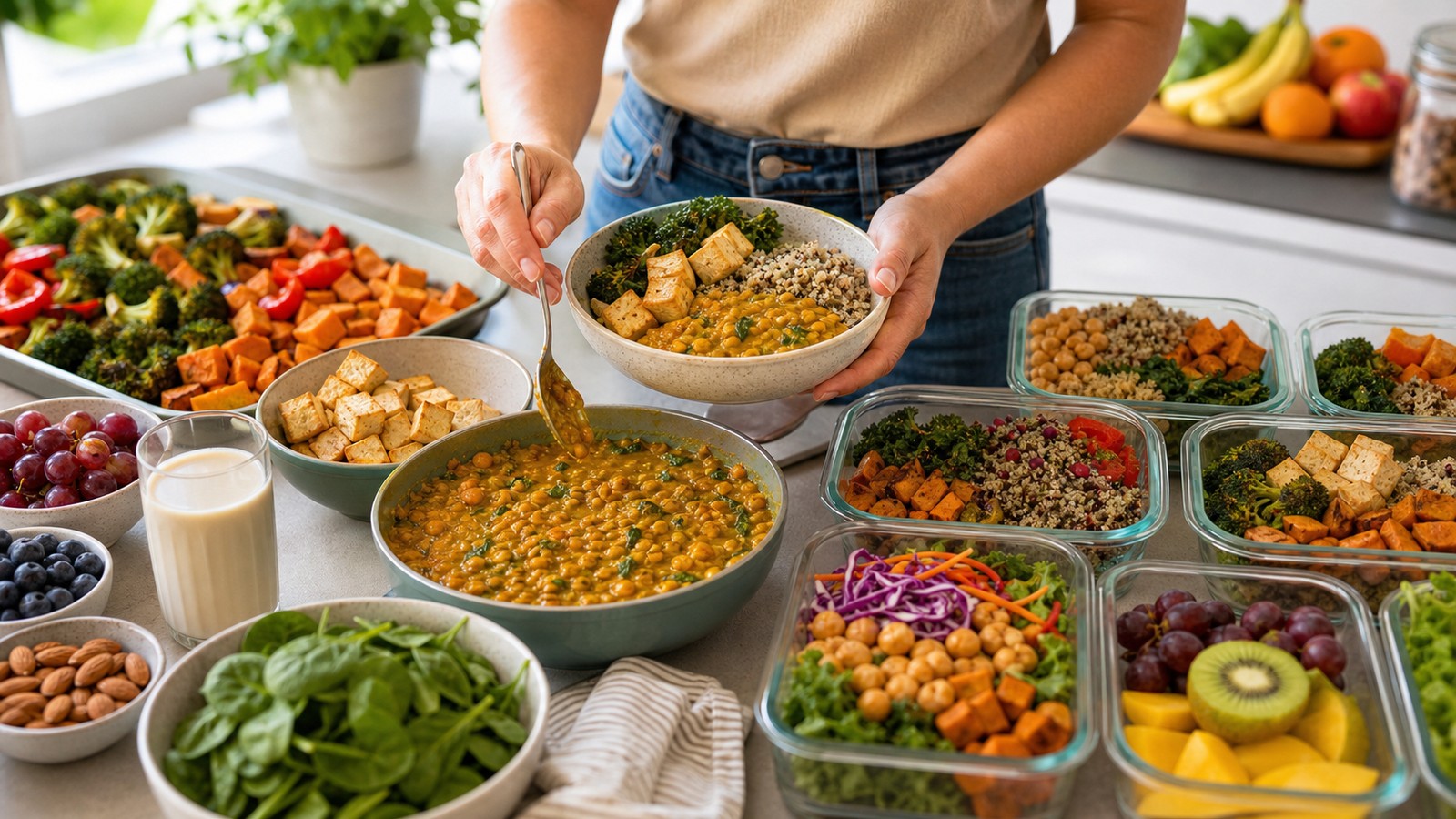
Keep three easy meals, batch-cook one legume dish, use fortified staples, and share cooking work. Learn several cuisines where beans, tofu, lentils, and vegetables already belong rather than recreating every meat dish.
Ethical commitment does not require nutritional perfection. Correct mistakes, maintain reliable B12, and broaden the diet over time. A sustainable vegan pattern nourishes the person living the values.
Let Skills Replace Transition Anxiety
Each new skill lowers the effort of the diet: pressing tofu, seasoning lentils, comparing plant milk, ordering at a restaurant, or packing a travel snack. Focus on one skill at a time instead of mastering veganism in a weekend.
Eventually, the routine should feel ordinary. Reliable B12 and nutrient planning remain nonnegotiable, but meals become familiar food rather than constant substitutions. That is the point at which the diet is most likely to support both values and health.
Teach one dependable meal to another household member. Shared competence keeps the diet from depending on one person’s constant planning and labor over time.