Seven Days Built for an Ordinary Kitchen
A useful Mediterranean meal plan should make the week easier, not require seven unrelated dinners and a cart full of ingredients that never meet again. This plan uses a small set of flexible foods in different ways: cooked grains become bowls and side dishes, roasted vegetables move from dinner to lunch, chickpeas appear in salad and stew, and one herb-rich sauce brightens several meals. The meals emphasize vegetables, fruit, legumes, whole grains, nuts, olive oil, and varied protein while leaving portions adjustable to appetite and individual needs. Fish appears twice, but alternatives are included for people who do not eat seafood. Snacks are optional rather than compulsory, and dessert is treated as part of a flexible pattern. This is a practical example, not a medically individualized prescription. People managing diabetes, kidney disease, food allergies, pregnancy, digestive conditions, or other nutrition concerns should adapt it with qualified guidance.
A: Yes; repetition can simplify mornings while other meals supply variety.
A: Reuse ingredients in new formats instead of reheating complete plates.
A: No; legumes and other proteins can carry the pattern.
A: Yes, especially when you add vegetables or another balancing component.
A: Use enough for cooking and flavor while considering your energy needs.
A: Prepare the component that removes your most common weeknight obstacle.
A: Absolutely; food safety and your schedule matter more than sequence.
A: Offer the same components with flexible portions of grain, protein, and fat.
A: No; fruit is common, and favorite sweets can fit intentionally.
A: Keep the successful defaults and redesign the inconvenient meals.
Prepare a Small Set of Building Blocks
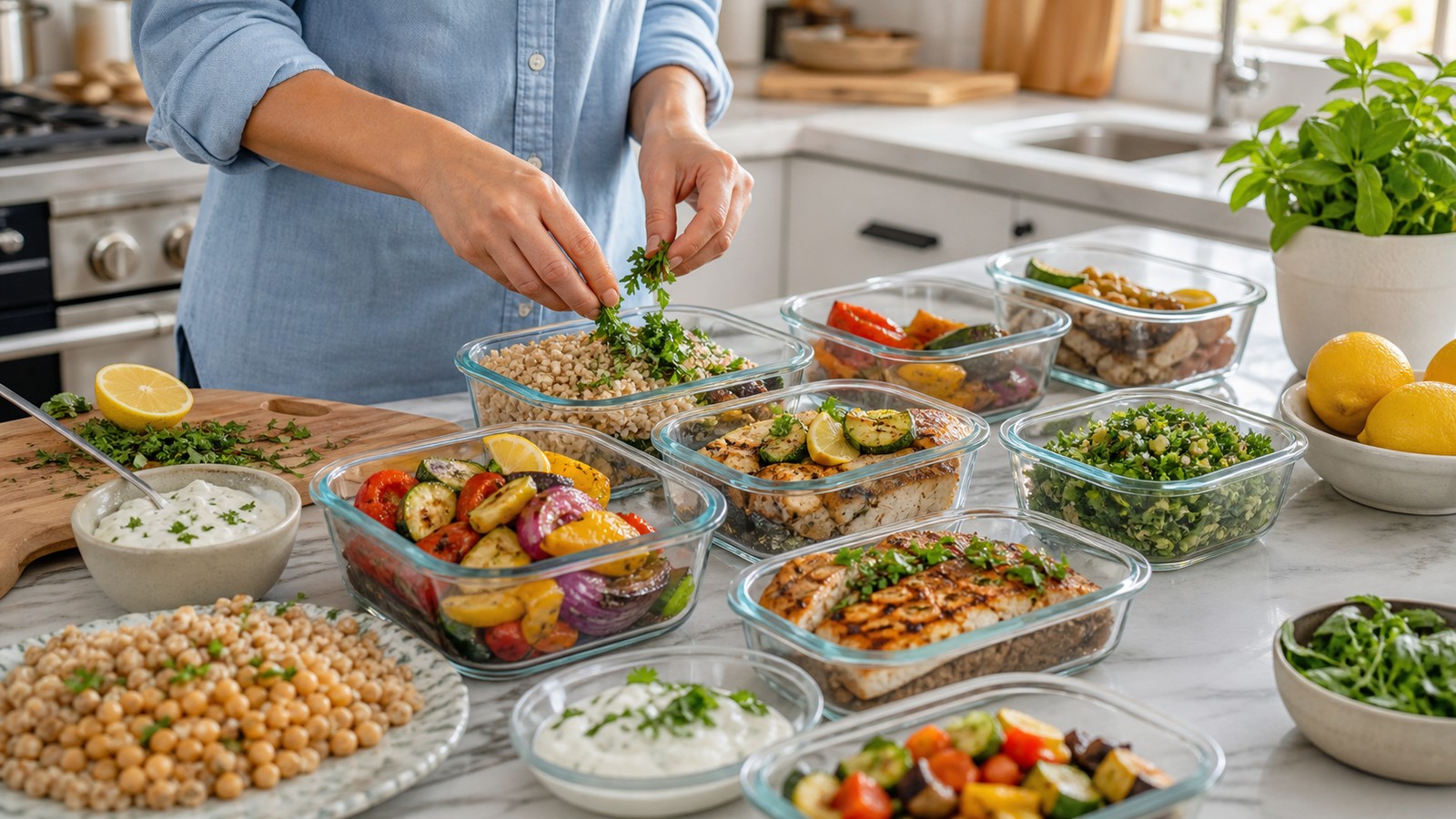
Before the week begins, cook a grain such as barley, farro, brown rice, or quinoa. Roast two sheet pans of vegetables, choosing sturdy options such as peppers, onions, zucchini, cauliflower, carrots, or broccoli. Rinse two cans of chickpeas, wash greens, and make a lemon-herb yogurt sauce or a tahini dressing. These tasks create options without assembling every meal in advance.
Also prepare one protein if that suits your schedule. Baked chicken, hard-cooked eggs, lentil patties, or marinated tofu can cover lunches and a dinner. Store cooked foods promptly in shallow containers, refrigerate within two hours, and use or freeze them within food-safe timeframes. Seafood is usually best cooked nearer to serving.
Keep bread, fruit, nuts, canned tomatoes, oats, and olive oil available. The plan assumes salt, pepper, garlic, vinegar, and a few herbs or spices are pantry staples. Replace any item you dislike with another from the same broad role rather than abandoning the whole schedule.
Day 1: Begin With Familiar Flavors
Breakfast is oatmeal cooked with milk or a fortified alternative, topped with berries, walnuts, and cinnamon. At lunch, combine chickpeas, cucumber, tomato, greens, herbs, and grain with lemon and olive oil. Add feta if desired. Dinner is sheet-pan chicken with roasted peppers and zucchini, served with grain and yogurt sauce.
The first day intentionally uses recognizable foods and the components you just prepared. Make extra chicken or tofu for tomorrow’s lunch. If you need a snack, choose fruit with a small handful of nuts. A few squares of dark chocolate after dinner can fit when wanted.
If mornings are rushed, make the oatmeal overnight and warm it or eat it cold. The lunch salad can be packed with dressing separate so the greens remain crisp. These details matter because a meal plan succeeds through ordinary logistics, not simply through appealing recipes.
For a larger appetite, increase grain at lunch and add bread or potatoes at dinner. For a smaller appetite, keep the same variety with reduced portions rather than deleting an entire food group. The structure should remain recognizable even when quantities differ.
Day 2: Turn Dinner Into Lunch
For breakfast, spread whole-grain toast with avocado and top it with an egg, tomato, or both. Lunch becomes a chicken-and-roasted-vegetable bowl with greens, grain, and the remaining yogurt sauce. A vegetarian version can use chickpeas or lentil patties.
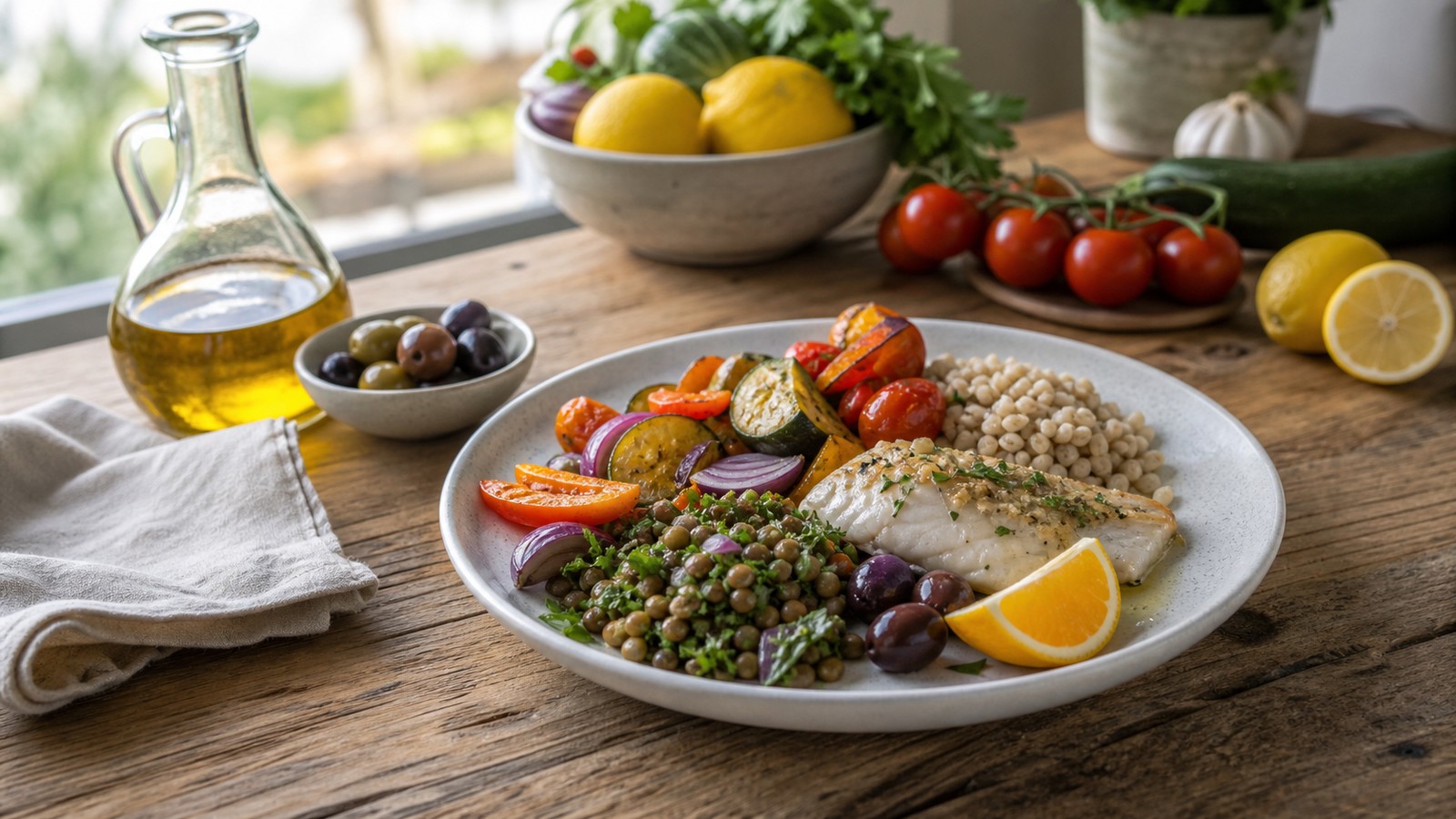
Dinner is baked salmon with broccoli and potatoes seasoned with lemon, garlic, and dill. Substitute trout, canned salmon patties, white beans, or tofu according to cost and preference. Roast enough broccoli for another use. Fresh fruit with plain yogurt provides an easy sweet finish.
Notice that the day includes carbohydrate from toast, grain, potatoes, fruit, and possibly yogurt. Mediterranean eating is not a low-carbohydrate plan. The quality, balance, and amount can be adjusted while those foods remain legitimate parts of the pattern.
Day 3: Make Legumes the Main Event
Breakfast combines plain yogurt with sliced pear, oats, pumpkin seeds, and cinnamon. If dairy is not suitable, use fortified soy yogurt or oatmeal. Lunch is leftover salmon or white beans over greens with potatoes, broccoli, capers, and a mustard-lemon dressing.
Dinner is a tomato-based chickpea and spinach stew. Simmer onion, garlic, canned tomatoes, chickpeas, spinach, and warm spices, then serve it with whole-grain bread or the cooked grain. A spoonful of yogurt, chopped parsley, or toasted seeds adds contrast. Prepare enough stew for one lunch later in the week.
Day 4: Use a Flexible Pasta Night
Start with eggs scrambled with spinach and mushrooms, accompanied by fruit and toast. Lunch can be leftover chickpea stew with bread and a crunchy cucumber salad. Dinner is whole-grain pasta with tomatoes, white beans, roasted vegetables, olive oil, herbs, and a moderate amount of Parmesan.
Pasta portions need not be tiny, but the vegetables and beans should be more than decoration. Reserve some pasta before combining everything if a family member prefers a simpler plate. Serve a green salad alongside when appetite calls for more volume.
A dessert such as berries with ricotta or yogurt can be satisfying, though no special dessert is required. If the meal includes wine for an adult who chooses to drink, keep alcohol optional, modest, and consistent with personal health guidance.
Day 5: Rely on Convenience Wisely
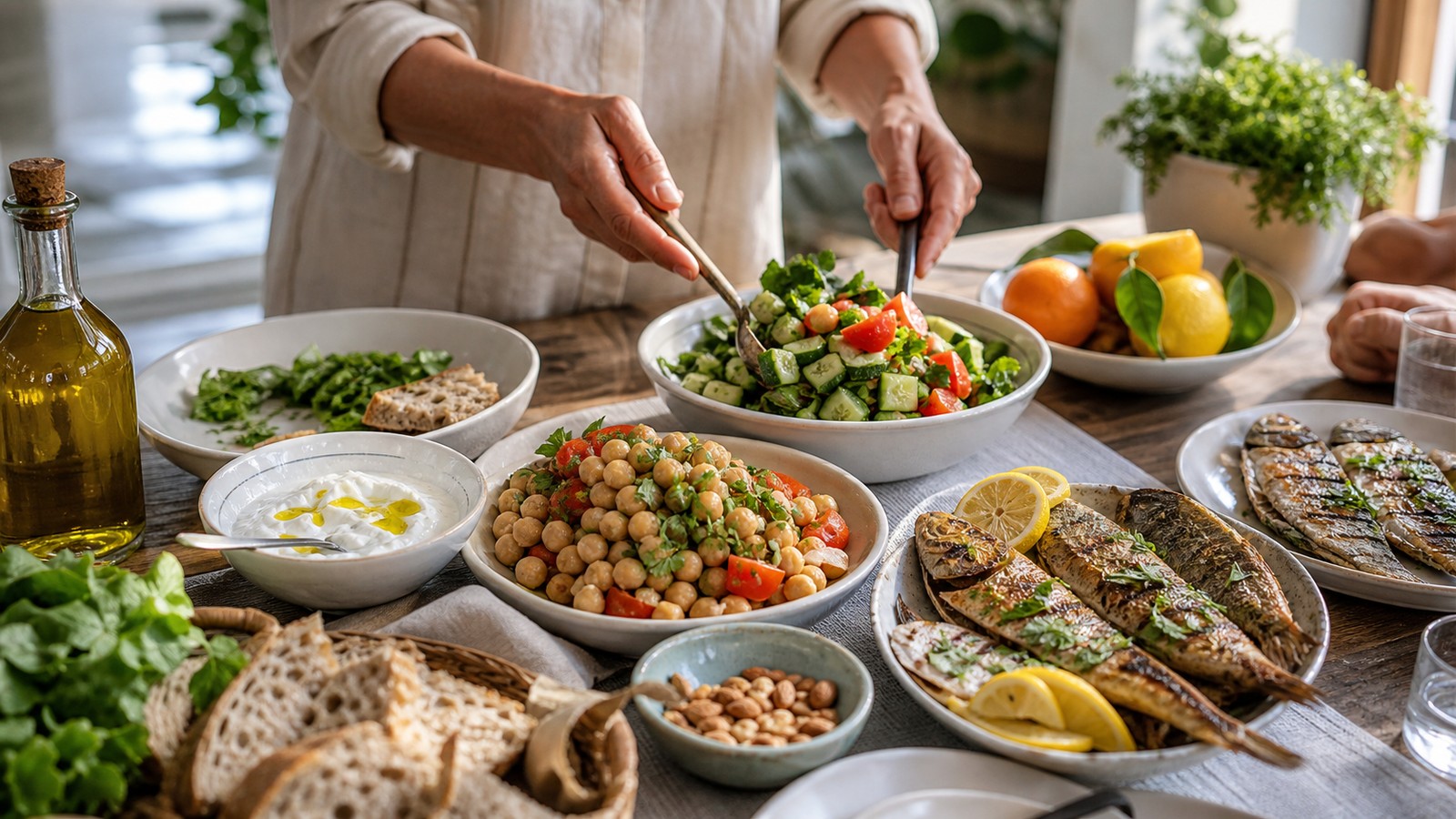
Breakfast is overnight oats with apple, chia seeds, and nut butter. Lunch uses leftover bean-and-vegetable pasta, with greens or fruit added if available. Dinner is a quick mezze-style plate: hummus, chopped salad, whole-grain pita, olives, roasted vegetables, and grilled chicken, boiled eggs, falafel, or tofu.
This meal demonstrates that assembling counts as cooking. Store-bought hummus, prewashed greens, frozen falafel, or rotisserie chicken can reduce effort. Compare sodium where practical, but do not let a convenience ingredient disqualify an otherwise nourishing meal.
Day 6: Cook Fish or a Plant Alternative
Breakfast can be plain yogurt with oranges, pistachios, and oats, or toast with nut butter and fruit. Lunch is a mezze wrap or bowl assembled from the previous night’s ingredients. Add chickpeas if the protein portion is small.
Dinner features shrimp sauteed with tomatoes, garlic, spinach, and olive oil over barley or brown rice. White fish works equally well. A plant-based alternative uses cannellini beans and artichokes with the same aromatics. Finish with lemon to brighten the dish without relying entirely on salt.
If seafood is expensive, frozen shrimp or fish can be portioned across several meals, while canned seafood offers another route. Seafood is not mandatory for following Mediterranean principles; legumes, soy foods, nuts, seeds, and other proteins can preserve the broader structure.
Day 7: Clear the Refrigerator
Use remaining fruit, yogurt, oats, eggs, or toast for breakfast. Lunch is a vegetable-and-grain soup made with leftover roasted vegetables, canned tomatoes, broth, beans, and cooked grain. Season it according to the ingredients on hand rather than following a fixed recipe.
Dinner is a build-your-own bowl using remaining greens, grains, vegetables, chickpeas or chicken, nuts or seeds, and dressing. This is not a lesser “leftover meal.” It is the planned endpoint that keeps produce and prepared food from being wasted.
Finish the week by identifying what remains. Freeze soup, grain, bread, or cooked legumes that will not be used promptly. Note which ingredients disappeared first and which were less popular; that information should shape next week’s shopping list.
Food safety sets the boundary for creative leftovers. Discard foods that have been held unsafely, show spoilage, or have exceeded recommended refrigerated storage. Saving money never requires eating questionable food, and freezing earlier is usually the better rescue strategy.
Adjust Portions Without Rewriting the Plan
Meal plans cannot predict individual energy requirements. Increase grain, bread, potatoes, protein, olive oil, or snacks for greater needs. Reduce energy-dense extras or choose smaller portions when weight loss is desired, while protecting protein, produce, and adequate nourishment.
Athletes, adolescents, pregnant people, and those with physically demanding work may need substantially more food. Older adults or people with low appetite may benefit from nutrient-dense smaller meals. Hunger, performance, health status, body-size goals, and clinician advice all belong in the decision.
Use Snacks as a Response to Hunger
Possible snacks include fruit and nuts, vegetables with hummus, yogurt and berries, whole-grain toast with nut butter, or cheese with fruit. Choose enough to bridge the time until the next meal. A snack should solve a practical hunger problem rather than appear because a printed plan says it is time.
If you are rarely hungry between meals, omit snacks. If intense evening hunger is common, examine whether lunch was too small or lacked protein, fiber, or carbohydrate. Moving food earlier can be more effective than repeatedly trying to resist hunger at night.
Children may need more frequent opportunities to eat than adults, and older adults with low appetite may benefit from compact snacks. A printed adult meal plan should not be imposed on everyone in a household. Keep the ingredients shared while allowing meal timing and portions to vary.
Shop From Roles, Not a Rigid List
Choose several vegetables for roasting and several for eating raw, three or four fruits, two legumes, one or two whole grains, nuts or seeds, olive oil, and preferred proteins. Add yogurt or an alternative, whole-grain bread, herbs, lemon, canned tomatoes, and flavorings. This role-based list adapts to sales and seasonal availability.
Frozen produce, canned beans, and shelf-stable grains prevent a busy day from breaking the plan. Buy only one or two delicate herbs and greens if they often spoil in your home. Repetition is efficient when seasonings and formats change.
Budget versions can lean more heavily on lentils, eggs, canned fish, oats, cabbage, carrots, frozen vegetables, and store-brand olive oil. Mediterranean-style eating is defined by proportions and patterns, not by imported products.
Check unit prices, but account for waste. A large bargain package is not economical when half spoils. Frozen vegetables, individually frozen fish, and canned legumes allow you to use only what the meal requires and preserve the rest.
Carry the Useful Parts Into Next Week
A seven-day plan is a trial, not a contract. Keep the breakfast that made mornings easier, the dinner that produced excellent leftovers, and the prep step that saved the most time. Replace meals that required too many dishes or ingredients your household did not enjoy.
The strongest plan gradually becomes less visible because its building blocks are familiar. A grain, vegetables, beans, a sauce, and one or two proteins can generate many meals without constant instructions. Use this week to learn that rhythm, then adapt it until healthy eating feels integrated rather than scheduled from the outside.
Write a short note before memories blur: which breakfast was fastest, which lunch traveled well, and which dinner everyone would repeat. Those answers create a personal menu library. Over several weeks, planning becomes selection from proven options rather than invention from scratch.
Make the Plan Easier Than the Alternative
The plan has done its job when opening the refrigerator presents a few appealing routes instead of a blank decision. Keep one sauce, one cooked staple, and one dependable protein available, then let fresh produce determine the details. This modest level of preparation can compete with takeout while preserving choice, which is more sustainable than trying to control every meal a week in advance.