Similar Names Describe Different Parts of the Food Story
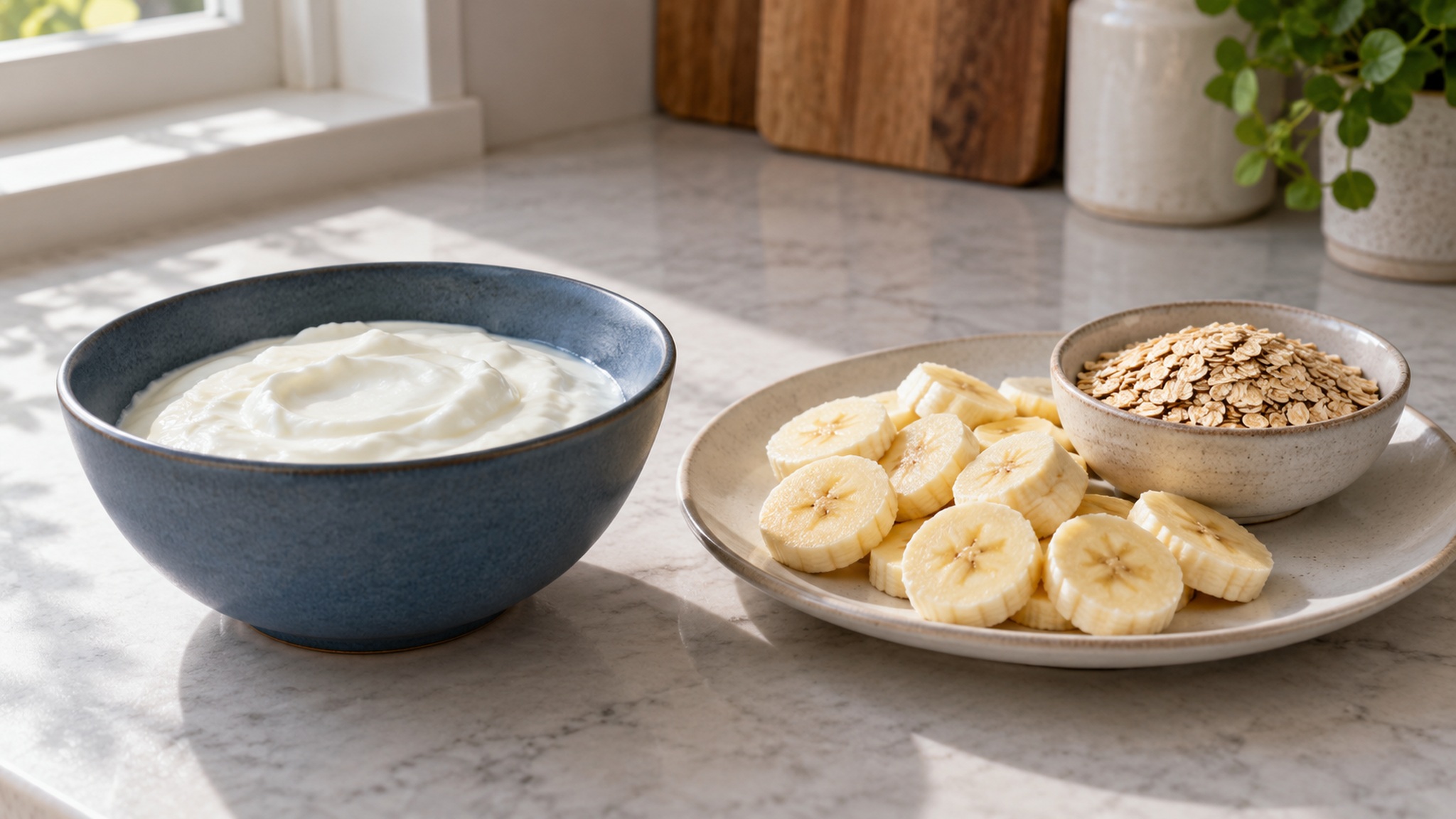
Plain yogurt beside oats and fruit can make an ordinary breakfast, but the labels probiotic and prebiotic invite a more technical question about what the ingredients provide. The first term concerns live microorganisms with a demonstrated health benefit in an adequate amount. The second concerns substances that particular microorganisms use in a way that benefits the host. Neither label should be assigned merely because a food looks wholesome or appears in a gut-health recipe. Fermented foods are not all proven probiotics, and dietary fiber is not automatically prebiotic. Understanding those distinctions makes the comparison more useful than a list of foods placed in two oversimplified columns. This guide explains the categories, how to assess common examples, and why the best choice depends on your eating needs and the evidence for a particular claim rather than the similarity of the words.
A: No. The term concerns qualifying live microorganisms, while fiber is a different food-component category.
A: No. The technical definition includes selective microbial utilization and a health benefit.
A: Yes. Processing such as heating can inactivate the organisms involved in production.
A: No. Taste cannot establish organism identity, adequate amount, or clinical evidence.
A: Their protein, fortification, ingredients, and microbial details may differ.
A: No. The full product composition still matters.
A: No. They have different food roles and compositions, as well as different category relationships.
A: No. An ordinary culinary pairing does not establish evidence for the mixture's particular benefit.
A: People with serious illness, compromised immunity, or other relevant medical concerns need appropriate clinical guidance.
A: The exact preparation, purpose, amount, duration, and method of assessing the response.
Probiotics Are the Microorganisms, Not a Food Group
The scientific definition connects live microorganisms with a demonstrated benefit when they are given in an adequate amount. The ISAPP probiotic consensus statement emphasizes those qualifying features. A food can be a vehicle for appropriate microorganisms, but the whole food is not itself a bacterium or yeast. This distinction helps when a label presents probiotic as though it described every fermented product equally.
Identity matters alongside viability. A product’s genus and species provide part of the description, while a strain designation can be important for linking a specific health claim to research. Familiar names do not make products interchangeable. A claim about one preparation needs evidence relevant to that preparation and intended outcome, not simply recognition of a broad bacterial group.
Adequate amount is also part of the definition, but it is not a universal instruction to choose the highest count on the shelf. The relevant quantity follows the evidence for the particular use. Comparing products solely by the largest number can ignore identity, storage, viability over shelf life, and whether the claimed benefit was actually tested.
When comparing two products, write down the precise question before looking at counts or names. You might be choosing a food for lunch or investigating a claim about a particular symptom. Those questions require different information, even if both products use probiotic language. Separating them prevents an ordinary food choice from borrowing the certainty of a clinical result that may not apply. It also makes an unclear label easier to recognize: if the information needed for the stated purpose is missing, avoid filling the gap with assumptions about the category.
Prebiotics Describe a Qualifying Substrate
A prebiotic is a substrate selectively used by host microorganisms in a way that confers a health benefit, according to the ISAPP prebiotic consensus. The term therefore involves more than simply saying that something feeds bacteria. Selective utilization and the health-related effect belong to the concept. Many familiar discussions concern certain fibers, but not every fiber meets the definition.
This distinction does not make other dietary fibers unimportant. A fiber-containing food can contribute to a useful dietary pattern even when a particular constituent has not been established as prebiotic. Avoid dividing foods into valuable and worthless according to that one label. The nutritional question about eating a pulse or whole grain is broader than whether every fiber it contains qualifies under the technical term.
Fermented Does Not Automatically Mean Probiotic
Fermentation describes how a food is made, while probiotic describes qualifying live microorganisms and benefit. The ISAPP fermented-food consensus explains why the categories cannot be used interchangeably. Some fermented foods are heated or otherwise processed so that the organisms involved in production are no longer alive at consumption. Others retain live microbes without sufficient characterization and evidence to support a particular probiotic claim. A fermented food can still have culinary and nutritional value; accurate classification simply prevents its manufacturing history from being treated as proof of a clinical effect.
Yogurt and Kefir Need Product-Level Attention
Yogurt and kefir are common starting points because they are recognizable fermented foods. Check the actual product rather than assuming every version contains the same microorganisms or supports the same benefit. A live-culture statement is relevant information, but a specific therapeutic promise needs appropriate evidence. The label, storage instructions, and intended serving all help identify what is being consumed.
Nutrition remains relevant even when microbial information is present. Compare added ingredients, serving size, and whether the product fits your dietary needs. Dairy and non-dairy versions can differ in protein, fortification, and other features. A familiar fermented name does not ensure nutritional equivalence across those products.
Choose a food because it suits your meals as well as any clearly supported claim. Plain yogurt may fit breakfast or a savory sauce, while kefir may appeal to someone who prefers its format. Neither is compulsory for everyone. Allergies, tolerance, preferences, and medical guidance can lead to other appropriate choices.
Fermented Vegetables Require the Same Precision
Kimchi and sauerkraut often appear on probiotic food lists, but processing and microbial characterization affect the description. A product may be fermented without establishing the identity, adequate quantity, and evidence needed for a specific probiotic benefit. Do not assume that every jar is equivalent or that a sour taste proves the presence of qualifying live organisms. Check what the producer actually states.
Also consider the vegetables as foods with their own complete composition. Salt content, other ingredients, serving size, and tolerance can influence whether they fit a meal. A small condiment portion has a different role from a substantial vegetable side. Fermentation should not cause the rest of the product label to disappear from the comparison.
Familiar Prebiotic-Containing Sources Are Food Options
Onions, garlic, bananas, chicory root, and Jerusalem artichokes appear in the ISAPP discussion of food sources of prebiotics. Amounts in foods may be modest, and these examples do not imply that every form or portion delivers the same exposure. A food’s relevance depends on its particular constituents and use. Choose a source that fits your meals and tolerance rather than buying an unfamiliar ingredient solely to complete a list.
Broader fiber-rich choices such as pulses and whole grains can also support a varied eating pattern without every constituent being assigned a prebiotic claim. Keep the terms accurate while leaving room for ordinary nutrition. A bowl of beans does not need to be described as a precision microbiome intervention to have a useful place at lunch.
Introduce unfamiliar or increased fiber-containing foods in manageable amounts if that helps you assess tolerance. A sudden overhaul involving several foods and supplements can make discomfort difficult to interpret. Individual digestive conditions may need tailored advice. The goal is a suitable food pattern, not consuming the greatest possible amount of any substrate described as microbiome-friendly.
Compare the Meal Roles Rather Than Declaring a Winner
A yogurt portion and an onion added to dinner are not interchangeable foods. They have different compositions, serving patterns, and culinary jobs, quite apart from their possible microbial relationships. Asking which is better without stating a purpose can therefore create a false competition. Define whether you are choosing breakfast, increasing appropriate plant-food variety, or evaluating a specific health claim before making the comparison. The answer may involve different foods at different meals rather than selecting one category and rejecting the other. Imagine a person choosing breakfast for convenience while also planning a vegetable-rich dinner. The relevant questions include preparation time, enjoyment, portion, and nutritional needs. Neither meal requires a category contest. If the same person later seeks relief from a persistent symptom, the decision has changed and needs evidence about that clinical purpose. Keeping the purpose visible helps avoid using a reasonable grocery choice as though it had already answered a treatment question.
A Combined Breakfast Is Not Automatically a Validated Synbiotic
Pairing a live-culture food with a source of fermentable material can be a reasonable culinary choice. That combination does not by itself establish a tested clinical product or guarantee a particular effect. A product-level benefit claim needs evidence about the relevant mixture and intended use. Do not let the presence of both broad categories replace that assessment.
For an ordinary breakfast, the simpler questions remain useful: do you enjoy it, does it meet your needs, and are the ingredients appropriate for you? Oats, fruit, and a suitable yogurt can fit together without promising a customized change in gut microbes. Appreciate the meal as food while keeping technical claims specific.
Read Labels in an Order That Matches Your Question
First identify the food and its full ingredient list. Then examine nutritional information and any dietary restrictions relevant to you. If a microbial claim is central to the purchase, look for the organisms identified, the wording of the benefit, and storage or shelf-life details. This order prevents a prominent gut-health slogan from overshadowing the actual product.
The NIH consumer probiotic guidance highlights identity, use-by information, and storage instructions. Such details matter more than a vague promise about good bacteria. If they are absent, be careful about drawing a product-specific conclusion from a general discussion of fermented foods.
For a prebiotic-containing product, distinguish the named ingredient from the finished food’s overall composition. An added fiber does not erase other ingredients or establish that the product meets every nutritional need. Assess the amount and evidence behind any particular benefit claim. Marketing language should not turn one constituent into a complete verdict on the purchase.
When the Goal Is a Medical Outcome, Ask a Different Question
Research and safety vary across probiotic preparations and people. A person with serious illness or a compromised immune system should seek appropriate clinical guidance rather than starting a live-microbe product from a food list. Likewise, a persistent digestive problem deserves assessment instead of repeated product experiments. Food choices and supplements should not delay needed care.
If a clinician recommends an intervention, clarify the exact product, intended benefit, amount, duration, and how the response will be assessed. That information makes the decision more concrete than choosing anything labeled probiotic. Follow the relevant guidance and report concerns. A general explainer cannot substitute for the details of an individual care plan.
Make the Difference Useful in Everyday Eating
Remember the core distinction: probiotics concern qualifying live microorganisms, and prebiotics concern qualifying substrates used by host microorganisms. Fermentation and fiber are related topics with broader meanings. These distinctions help you describe foods accurately without assigning a medical promise to every yogurt, jar of vegetables, or fiber-containing meal.
For daily choices, build enjoyable meals with foods that suit your needs and keep product claims in proportion. A suitable fermented food may fit one eating occasion while plant foods contribute elsewhere in the day. The best comparison connects the food to a real purpose, the label to the actual product, and any health claim to evidence relevant to the preparation.
You can use the comparison as a reading habit as well as a shopping aid. When an article lists a fermented food, check whether it means fermentation, live cultures, or a demonstrated probiotic effect. When it lists a plant food, check whether it means dietary fiber generally or a qualifying prebiotic substrate. These small distinctions keep the explanation accurate while allowing you to enjoy a broad range of foods. They also reduce the pressure to buy a product merely because its packaging borrows the language of microbiome research.