You Can Learn the Vocabulary Before Changing Your Diet
A shelf full of gut-health products can make a beginner feel that ordinary groceries are no longer enough. Labels mention probiotics, prebiotics, cultures, and fermentation, often without explaining how the words differ. You can slow the decision down. First learn the basic meanings, then consider whether a familiar food fits your meals and personal needs. Probiotics concern live microorganisms with a beneficial effect in an appropriate amount; prebiotics concern substances that particular microorganisms use in a beneficial way. Fermentation and fiber overlap with these subjects but have broader meanings. This guide takes a beginner through the grocery store and into an ordinary week of eating, with small practical changes instead of a complete dietary overhaul. The aim is confidence with food and labels, not a requirement to buy supplements or a promise that one breakfast will reset your microbiome.
A: No. You can begin by understanding ordinary foods and their labels.
A: Inspect a food already in your routine, such as your usual breakfast yogurt.
A: A single appropriate new food is enough for a manageable first step.
A: No. Significant symptoms should not be treated as evidence of effectiveness.
A: It makes the adjustment easier to organize and evaluate practically.
A: Yes. Choose forms that fit the meals and storage arrangements you actually use.
A: Follow your individual clinical guidance instead of generalized hydration advice.
A: No. Food production requires reliable safety guidance and suitable methods.
A: Review enjoyment, use, cost, preparation demands, and any relevant tolerance concerns.
A: When you seek treatment for persistent symptoms or need to assess a product's safety with a medical condition.
Learn Three Terms That Labels Often Blend Together
Keep probiotic, fermented, and fiber in separate mental boxes. Probiotic is a qualified description of live microorganisms and benefit, fermented describes a food-production process, and fiber describes food components. Prebiotic is another qualified term that applies to a substrate selectively used by host microorganisms with a health benefit. These short definitions prevent several shopping mistakes without requiring you to memorize microbial species. The important beginner’s habit is to avoid assuming that one word automatically proves the others: fermented does not guarantee a particular probiotic effect, and fiber-containing does not establish that every fiber is prebiotic.
Start in the Food Aisle With Your Usual Breakfast
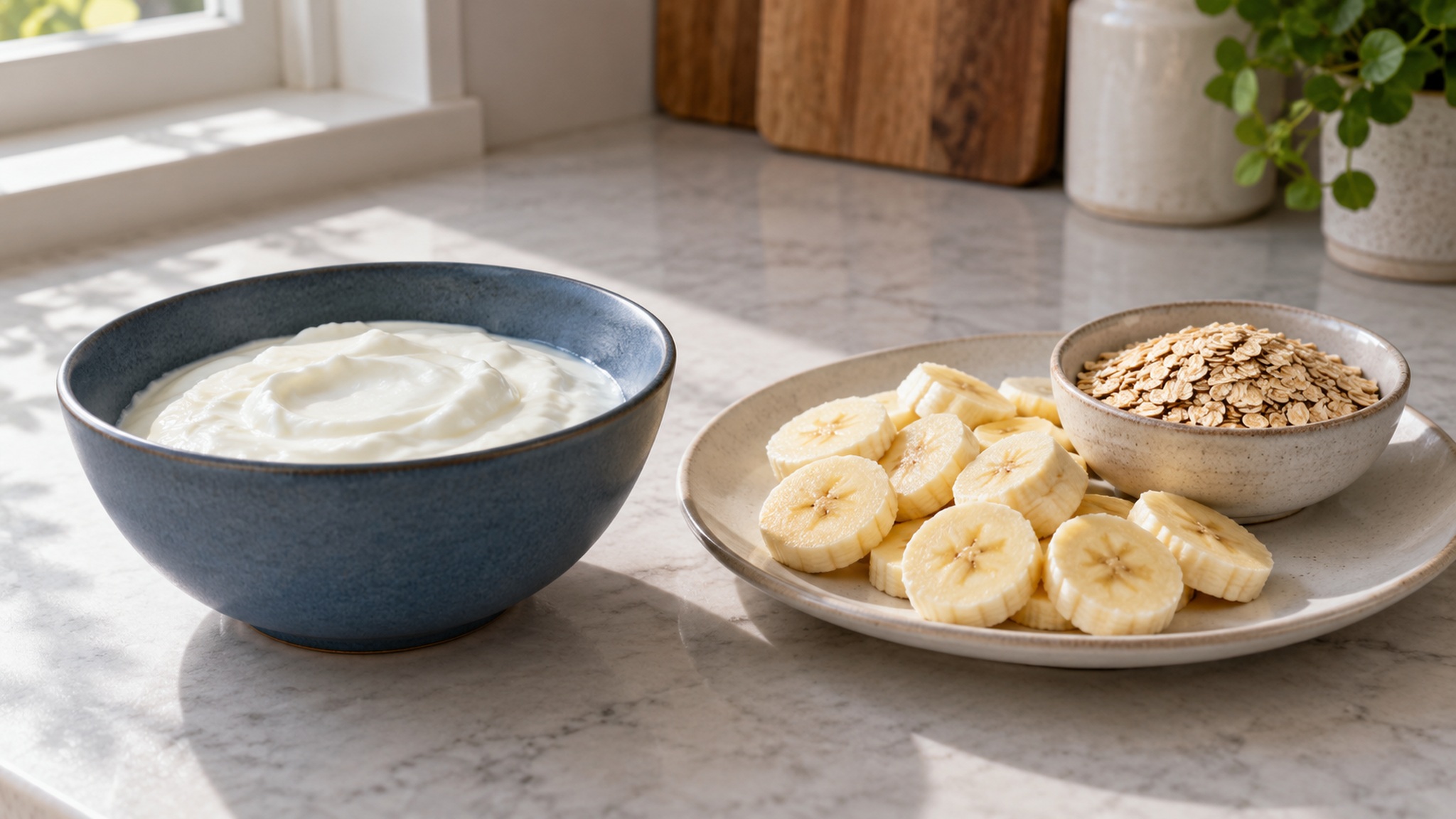
Look at what you already eat before buying anything new. If breakfast often includes yogurt, inspect that actual product’s ingredients and culture information. If it includes a grain and fruit, consider whether the meal already supplies some useful plant-food variety. This first inventory keeps the discussion connected to your life rather than to an idealized shopping list.
A food choice can have several reasons behind it. You may prefer a yogurt because it is enjoyable, convenient, or suits your nutritional needs. A specific probiotic claim is a separate reason that needs appropriate evidence. Do not feel that the food becomes worthless if its label does not establish every technical detail of a clinical intervention.
Equally, a prominent culture statement should not hide the full composition. Compare products according to the serving you eat and the ingredients important to your needs. Two containers with similar gut-health language can differ in protein, added sweeteners, fortification, and other features. Begin with the whole food rather than choosing only from the largest slogan.
Recognize a Culture Claim Without Overreading It
The NIH consumer probiotic fact sheet advises looking at organism identity, expiration information, and storage instructions. Those details help describe a product more precisely than good bacteria on the front. A beginner need not interpret every Latin name alone, but should understand that different preparations can have different evidence. Keep the label available if you want advice about a particular product.
Live cultures and a demonstrated benefit are related but distinct parts of the discussion. A statement about living organisms does not automatically prove that a food treats your symptom or prevents a disease. If the claim is specific, the evidence should also be specific. Ask what outcome was studied and whether the actual preparation matches the product you are considering.
Fermented Foods Can Be Enjoyed as Foods
Yogurt, kefir, and fermented vegetables may be familiar to some households and new to others. Their flavors, textures, and uses differ considerably. Choose one that already fits a meal or that you are curious to try in a modest culinary amount. There is no need to introduce several unfamiliar products merely because a wellness article groups them together.
A fermented food’s production history does not answer every question about the final product. Processing can change whether organisms remain alive, and a specific health benefit needs its own evidence. Taste and visible sourness cannot tell you all the microbial details. Read what the product actually states rather than assigning it a category from its flavor.
The finished food also deserves ordinary nutritional attention. Some fermented vegetable preparations supply salt; some dairy preparations include added sweeteners; different non-dairy products may have different nutritional compositions. Check the whole label and the portion you intend to eat. A manufacturing method should not make those details disappear.
Use the ingredient in a way that is comfortable and appropriate for you. A small condiment, a breakfast portion, and a drink occupy different places in a menu. Follow product directions and relevant dietary guidance. Choosing a familiar food first can make learning easier because you already know how it fits your eating day.
Plant-Food Variety Is Broader Than a Prebiotic Label
A beginner can include beans, whole grains, fruit, and vegetables without proving a technical prebiotic claim for every constituent. Those foods have broader nutritional roles. Some foods also contain recognized prebiotic substrates, but that does not require you to calculate a separate microbial feeding target at each meal. Consider your overall pattern and personal tolerance before searching for a concentrated ingredient. A suitable bowl of beans or a grain-based breakfast can be worthwhile as food, even when you describe it simply as part of a varied fiber-containing diet.
Increase Fiber With a Manageable Pace
Changing from very little fiber to several new fiber-rich foods at once can make a meal routine difficult to evaluate. The NIDDK dietary guidance recommends adding fiber gradually and considering appropriate fluid intake. Individual health needs affect that advice, particularly when a person has fluid restrictions or a digestive condition. A general guide should not replace relevant clinical instructions.
For a practical first change, add a modest portion of a familiar plant food at one eating occasion. Keep the rest of the menu reasonably stable while you see how the change fits. This is an organizational strategy rather than a diagnostic experiment. If significant symptoms occur, do not assume they must be endured to achieve a promised microbiome benefit.
Later, broaden another meal if the first change is useful. A pulse at lunch and a vegetable with dinner can be separate decisions rather than one dramatic overhaul. The pace should fit your needs and any professional guidance. Regular enjoyment matters because a routine that repeatedly feels uncomfortable is unlikely to become sustainable.
Use Portions to Keep the First Attempt Ordinary
A beginner may assume that more of a gut-health ingredient should work better. That assumption is unreliable. A culinary portion belongs within the food’s role and the person’s needs, while a studied supplemental amount belongs to a specific intervention. Avoid copying a dose from a product advertisement into a meal plan or increasing unfamiliar foods just because their label sounds beneficial.
Choose a portion you can comfortably incorporate and assess the whole meal. A fermented vegetable condiment does not need to replace every other vegetable, and a seed addition does not replace all the food beneath it. Keeping the portion ordinary prevents one fashionable ingredient from taking over a balanced plate.
One New Purchase Is Enough to Begin
Select a food with an obvious use rather than assembling a starter kit of powders, jars, and drinks. That could be a suitable yogurt for an existing breakfast or a pulse for a lunch recipe you already know. The purchase should fit your budget, available preparation time, and dietary needs. Starting this way gives you direct information about enjoyment and practicality. It also avoids the confusion of introducing several changes whose individual roles are difficult to recognize.
Build a Week Around Eating Occasions You Already Have
Write down the meals that reliably occur in your week. Someone who carries lunch to work needs different formats from someone who cooks at home midday. A breakfast eaten in a hurry may need a convenient food, while an evening pot meal may accommodate grains, pulses, and vegetables. Plan around those realities instead of an imagined routine that requires extra shopping and preparation every day.
Repeated ingredients can still support different meals. A cooked pulse may enter lunch one day and a soup another, while fruit can change the flavor of an otherwise familiar breakfast. You do not need a new gut-health product for every eating occasion. Let ordinary foods do ordinary jobs within a varied menu.
Review the plan after the week. Which purchases were used, which meals were enjoyable, and which ingredients remained untouched? These observations help refine the next shopping list. They are practical indicators of a workable routine rather than proof of a measured change in microbial composition.
Keep Food Safety and Storage in the Routine
Read and follow the storage directions on the product you buy. Refrigeration and shelf-life guidance are part of using perishable foods appropriately, and a live-culture claim is not a reason to improvise storage. If the product needs a cold environment, plan for it between purchase and use. Choose a package size that fits the time you expect to finish it. A larger container is useful only when the food has a regular place in meals. If an unfamiliar purchase has no clear use after the first tasting, a smaller quantity can make learning less costly. Match the storage space and household routine to the purchase rather than relying on enthusiasm alone.
Do not treat a home experiment as equivalent to a commercially described product or a clinical preparation. Fermentation involves food-safety questions beyond the terms in a beginner’s article. If interested in making fermented foods, use a reliable food-safety resource and an appropriate tested method. Learning the vocabulary does not itself provide instructions for safely producing a new food.
Know When a Shopping Question Has Become a Clinical Question
If you are trying to address a persistent symptom, the task extends beyond choosing groceries. The cause, appropriate assessment, and possible treatment need attention. Probiotic supplements are not a universal answer, and a food routine should not delay care. Bring the symptom history and any product details to a qualified clinician rather than relying on a broad label.
People with serious underlying illness or weakened immunity need particular care with live-microbe products. The NCCIH probiotic overview describes uncertainty about many uses and higher risks in some vulnerable groups. It is reasonable to seek individualized advice before starting a supplement. A general beginner’s menu is not designed to settle those safety decisions.
If a professional recommends a product, keep the instructions concrete. Ask about the exact preparation, purpose, and evaluation of the response. Avoid replacing it with a similarly named item without checking. Product-specific guidance is more useful than treating all probiotics or all fiber ingredients as one interchangeable category.
Leave the Store With Understanding and a Small Plan
Remember enough to describe what you are buying: the actual food, any live-culture information, its broader nutritional composition, and whether a specific health claim is supported. You can understand those features without memorizing every microbiology term. Keep technical language as a tool for clearer decisions rather than a source of pressure to buy more.
A manageable food change, repeated in meals you enjoy, is a good beginner’s starting point. Expand the plan when it makes sense and seek clinical advice when the purpose becomes medical. Probiotics and prebiotics describe different concepts, but ordinary shopping can remain straightforward once the labels are connected to real foods, realistic portions, and your own needs.