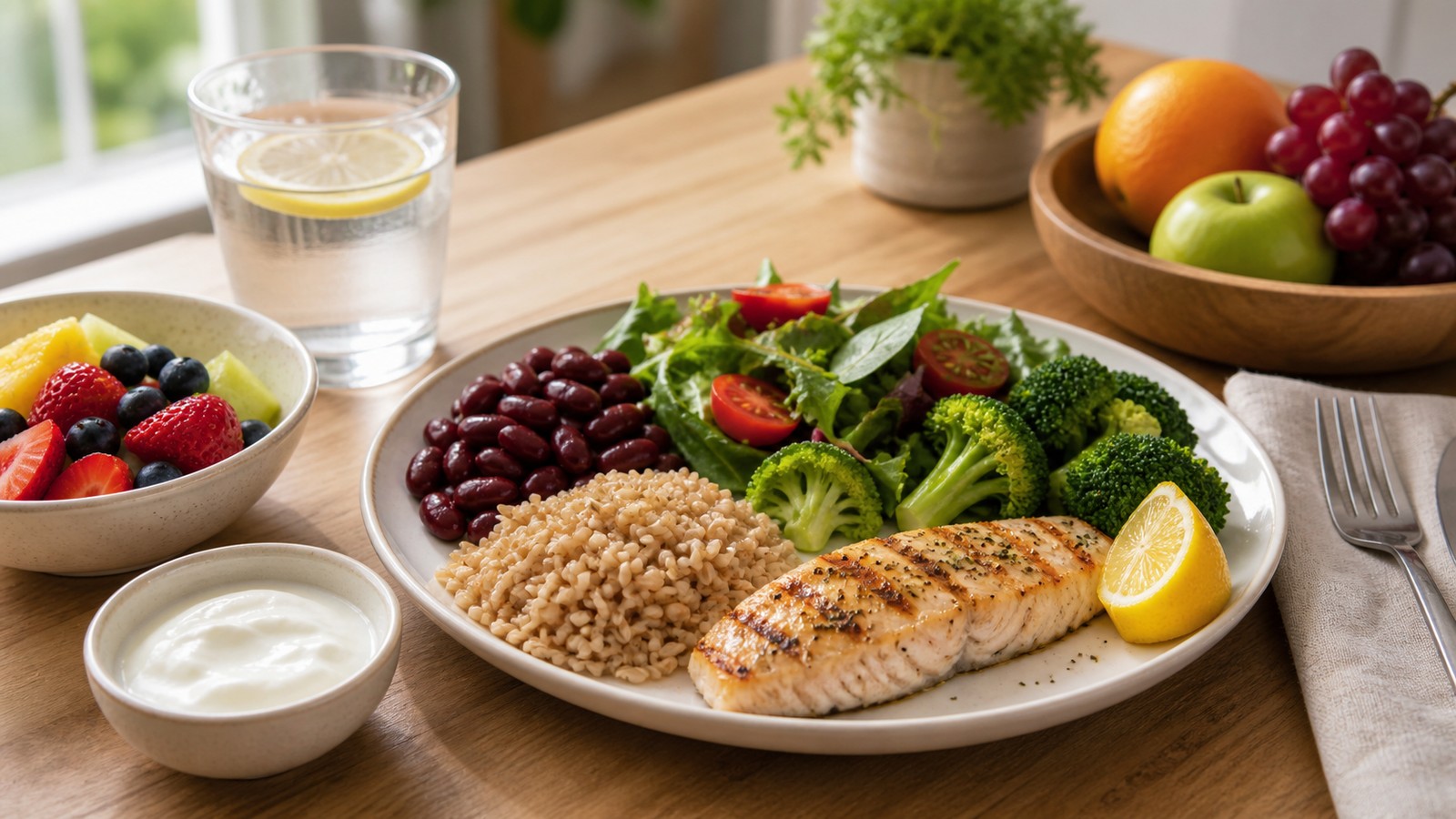
An Evidence-Based Eating Pattern Designed for Blood Pressure
The DASH diet was developed through clinical research on dietary patterns and blood pressure. Its name means Dietary Approaches to Stop Hypertension, but it is broader than a low-salt menu. DASH emphasizes vegetables, fruit, whole grains, beans, nuts, seeds, low-fat dairy, fish, poultry, and lean meats while limiting sodium, sweets, sugary drinks, and saturated fat. This combination increases potassium, magnesium, calcium, fiber, and unsaturated fats while reducing dietary features associated with cardiovascular risk. Controlled feeding trials found that the overall pattern lowered blood pressure, and reducing sodium further produced additional benefit. DASH is adaptable rather than proprietary: it does not require special products, supplements, or exact recipes. Serving targets vary with energy needs, and kidney disease, medication, food allergies, or other clinical conditions can require modification.
A: No, it sets sodium limits and encourages strategic flavoring.
A: It can be, though fish, poultry, and lean meat are optional components.
A: Yes, within an overall pattern low in saturated fat.
A: Families can, with age-appropriate energy and nutrient needs.
A: Yes, but sodium and saturated fat make portions and selection relevant.
A: Only when celiac disease, allergy, or another need requires it.
A: Its fiber and fat pattern can support healthier LDL levels.
A: No, although portions matter for weight goals.
A: They overlap, while DASH has explicit blood-pressure and serving research.
A: No, the evidence concerns combinations of foods, not a pill.
How DASH Was Studied
The original DASH trial compared typical American-style eating with patterns richer in fruit and vegetables or a combination pattern that also included low-fat dairy and reduced saturated fat. Participants were provided food, which strengthened control over what they ate. The combination DASH pattern produced the largest blood-pressure reductions.
A later trial examined sodium levels within different diet patterns. Both lower sodium and the DASH pattern reduced blood pressure, with particularly strong effects when combined. Results varied by baseline blood pressure and individual characteristics.
These trials demonstrate the effect of a complete pattern, not a single miracle nutrient. Potassium, calcium, magnesium, fiber, protein sources, and lower saturated fat operate together.
Vegetables and Fruit
DASH recommends generous produce because it supplies potassium, magnesium, fiber, and diverse plant compounds. Dark greens, orange vegetables, tomatoes, peppers, cruciferous vegetables, berries, citrus, melons, apples, and many others can fit.
Fresh produce is not required. Frozen fruit and vegetables without sugary or salty sauces are convenient, and no-salt-added canned products reduce waste. Whole fruit generally offers more fiber and fullness than juice.
Potassium is often discussed as sodium’s counterpart because higher intake can support blood-pressure regulation. Supplements and salt substitutes are not interchangeable with food, and excess potassium can be dangerous in kidney disease or with certain medications. Food recommendations still require clinical context.
Variety matters because different colors and plant families contribute different compounds. A week that rotates greens, orange vegetables, berries, citrus, tomatoes, and cruciferous vegetables is more useful than chasing one “best” produce item.
Whole Grains
Whole grains include oats, brown rice, barley, bulgur, quinoa, corn, whole-wheat bread, and whole-grain pasta. They provide fiber, B vitamins, minerals, and energy. DASH is not a low-carbohydrate diet.
Refined grains can appear, but whole forms are emphasized. Product names can be misleading, so check whether a whole grain leads the ingredient list. Compare sodium in bread, wraps, crackers, and cereals.
Beans, Nuts, and Seeds
Legumes provide plant protein, fiber, potassium, and magnesium. Lentils, chickpeas, black beans, kidney beans, split peas, and soy foods can replace or extend animal protein. Nuts and seeds contribute unsaturated fat and minerals.
Traditional DASH serving frameworks list nuts, seeds, and legumes across the week rather than requiring all of them daily. Unsalted nuts and lower-sodium canned beans make sodium management easier.
People increasing fiber quickly may need smaller portions at first. Cooking dried legumes thoroughly or rinsing canned beans can improve convenience and tolerance.
Dairy and Alternatives
Low-fat or fat-free dairy supplies calcium and protein with less saturated fat than full-fat versions. Milk, plain yogurt, and some cheeses can fit, though cheese and cottage cheese may be high in sodium.
Dairy-free versions should use suitable fortified alternatives. Soy milk generally provides more protein than almond, oat, or coconut beverages, but products differ. Calcium, vitamin D, iodine, added sugar, and allergens deserve attention.
Lactose-free milk remains dairy and usually retains similar protein and calcium. Plant beverages differ dramatically: some provide almost no protein, while fortified soy products may more closely replace milk. Read the panel rather than assuming every white beverage is nutritionally equivalent.
Plain yogurt often contains less sodium than cheese and can become a sauce, dip, breakfast, or dessert. Sweetened versions may contain substantial added sugar, so compare products according to the role they serve.
Fish, Poultry, Meat, and Eggs
DASH favors fish, poultry, and lean meats, using portions appropriate to energy needs. Fish adds variety and, in fatty species, omega-3 fats. Eggs can contribute protein and make vegetable-rich meals practical.
Fatty cuts, processed meats, and large red-meat portions are limited because of saturated fat and sodium. Cooking methods such as roasting, grilling, baking, and poaching help, but sauces and marinades can change the sodium profile.
Fats and Sweets
Olive oil, nuts, seeds, avocado, and fish provide unsaturated fats. Butter, cream, coconut oil, fatty meat, and large cheese servings contribute more saturated fat and are limited. DASH does not require fat-free meals.
Sweets and added sugars are included sparingly. Fruit offers an everyday sweet option, while dessert can fit in planned portions. Sugary drinks are particularly easy to reduce because they add energy and sugar without much fullness.
DASH research did not test a fat-free diet. Fat supports absorption of fat-soluble vitamins, flavor, and satisfaction. The emphasis is on type and amount, favoring unsaturated sources while keeping saturated fat comparatively lower.
Added sugar can hide in yogurt, cereal, sauces, coffee drinks, and granola. Reducing liquid sugar is often easier than eliminating every sweet food and may produce a larger practical change.
Sodium Levels Explained
A standard sodium ceiling of about 2,300 milligrams per day is commonly used, while a 1,500-milligram level may lower blood pressure further for some people. Current individual guidance should come from healthcare professionals when medical conditions, medication, or heavy sweating complicate the decision.
Sodium is not the same as salt by weight. Packaged and restaurant foods supply most intake for many people. Bread, pizza, sandwiches, soup, processed meat, sauces, cheese, and savory snacks can accumulate even when no salt is added at the table.
Potassium-based salt substitutes can lower sodium but are dangerous for some people with kidney disease or certain medications. “Natural” sea salt and pink salt contain sodium like table salt.
Blood-Pressure Benefits
DASH can lower systolic and diastolic blood pressure, including among people without diagnosed hypertension. Larger reductions are often seen in those starting with higher blood pressure. The pattern complements, rather than replaces, medication when medication is needed.
Blood pressure should be measured with correct technique and interpreted as a trend. Dizziness or unusually low readings after diet changes may require medication review. Do not adjust prescriptions independently.
Heart and Metabolic Health
The pattern can support lower LDL cholesterol through reduced saturated fat and higher fiber. It is associated with cardiovascular benefits and aligns with many heart-health recommendations. Sodium reduction also matters for blood pressure and fluid balance.
DASH can support glucose management because it emphasizes whole foods, legumes, whole grains, and balanced meals, but carbohydrate amount still matters for individual diabetes plans. Weight loss is possible when energy intake is lower than expenditure; DASH does not guarantee it automatically.
Alcohol, smoking, physical inactivity, poor sleep, and untreated sleep apnea can undermine blood-pressure control. DASH is one part of cardiovascular care. Its benefits should not be used to minimize other risk factors or delay evaluation.
For diabetes, whole grains and fruit still raise glucose to varying degrees. Pair carbohydrate with protein, fiber, and fat, choose individualized portions, and review medication as eating patterns change.
Kidney Health Requires Context
Blood-pressure control can protect kidney health, and DASH-like patterns may be beneficial for many people. However, advanced kidney disease can require limits on potassium, phosphorus, protein, sodium, or fluid that conflict with generic DASH advice.
Anyone with kidney impairment should avoid independently increasing high-potassium foods or using potassium salt substitutes. A renal dietitian can adapt the pattern to laboratory results and treatment stage.
Earlier-stage kidney disease and later-stage disease may require different priorities. Laboratory values, dialysis status, medications, and appetite shape the plan. Internet lists of “kidney foods” cannot substitute for that assessment.
How DASH Servings Work
Serving frameworks vary by calorie level. A typical plan distributes grains, vegetables, fruit, dairy, lean proteins, fats, and weekly legumes or nuts across the day. These are planning tools, not mandatory counting for every person.
A visual plate can be simpler: half vegetables and fruit, one quarter whole grain or another quality carbohydrate, and one quarter lean protein, with dairy or an alternative added as useful. Snacks can combine fruit, vegetables, nuts, or yogurt according to hunger.
Serving-count charts can teach proportions but may become burdensome. People who prefer less tracking can prepare repeatable breakfasts, use the plate model, and monitor weekly variety. The method is secondary to achieving the food pattern consistently.
Energy needs influence every serving range. A small older adult and a highly active young adult should not be expected to eat identical quantities because both follow DASH.
A Sample Day
Breakfast could be oatmeal with berries, walnuts, and low-fat milk. Lunch might be lentil soup, whole-grain bread, a leafy salad, and fruit. Dinner could include baked fish, brown rice, roasted broccoli, and plain yogurt with cinnamon.
A vegetarian day might use eggs or tofu at breakfast, a chickpea bowl at lunch, and bean chili with corn and salad at dinner. Season with herbs, spices, vinegar, citrus, garlic, and measured salty ingredients.
This sample demonstrates balance rather than a universal calorie target. Increase or decrease portions based on needs, goals, and guidance.
Advantages and Challenges
DASH uses familiar foods, accommodates many cuisines, and has strong blood-pressure evidence. It does not require ketosis, fasting, supplements, or elimination of entire macronutrients. Families can share the same basic meals.
Challenges include label reading, restaurant sodium, produce preparation, and adjusting to less salty flavors. Dairy emphasis requires alternatives for allergy or preference. People accustomed to heavily processed food may need gradual changes.
Taste adaptation is real but gradual. People accustomed to very salty food may need several weeks before lower-sodium meals taste normal. Reducing packaged sources first allows some salt in home cooking and can improve adherence.
Another advantage is compatibility with shared meals. A household can serve one base of vegetables, grain, and protein while individuals choose portions and condiments. The main challenge is organizing those components often enough for convenience to compete with processed food.
Putting the Evidence Into Practice
Start by adding produce and beans, choosing more whole grains, replacing processed meat, and comparing sodium in foods eaten frequently. Use herbs and acidity so sodium reduction does not mean flavor reduction.
Monitor the outcome that matters and review it with appropriate professionals. DASH is powerful because its separate choices reinforce one another. The goal is not a perfect daily score, but a durable pattern that supports blood pressure and cardiovascular health.
What DASH Does Not Promise
DASH cannot guarantee avoidance of hypertension, heart attack, stroke, kidney disease, or medication. Genetics, age, existing disease, social conditions, activity, sleep, tobacco, alcohol, and access to care all influence outcomes. The diet changes risk; it does not create certainty. That limitation does not weaken its value. DASH offers a well-studied direction built from accessible food groups. Applied with medical context and sustained over time, it is one of the clearest evidence-based eating patterns available for blood-pressure support.