A Vegetarian Diet Is Defined by Exclusion but Succeeds Through Inclusion
Vegetarian diets exclude meat, poultry, and usually fish, while their treatment of eggs and dairy varies. Lacto-ovo vegetarians eat both, lacto-vegetarians include dairy, ovo-vegetarians include eggs, and vegans exclude all animal-derived foods. Any of these patterns can support healthy living when meals provide sufficient energy, protein, fiber, iron, zinc, calcium, vitamin B12, iodine, vitamin D, and omega-3 fats. Problems arise when meat disappears but is replaced only with cheese, refined grains, snacks, or small salads. A complete vegetarian plan uses legumes, soy foods, eggs or dairy when included, whole grains, vegetables, fruit, nuts, seeds, and appropriate fortified foods or supplements. This guide offers a planning framework rather than a rigid menu so it can adapt to culture, budget, appetite, medical needs, and household preferences.
A: A clear source at main meals makes adequacy and fullness easier.
A: No, but excluding them increases the need for fortified foods or supplements.
A: Yes, with varied sources, vitamin C, and attention to individual risk.
A: No, variety across the day is generally sufficient.
A: Moderate soy-food intake is considered safe for most people.
A: Some do, especially vegans or people with low intake or absorption.
A: Yes, with sufficient protein, energy, and resistance training.
A: Their quality varies; compare labels and use them according to purpose.
A: Increase gradually, rinse canned beans, and try smaller servings or lentils.
A: Individual needs can include B12, iron status, vitamin D, and others.
Choose Your Vegetarian Pattern
Define which foods you include so nutrient planning is accurate. Someone eating eggs and dairy has different protein and vitamin B12 options from a person excluding both. Fish-eaters are usually described as pescatarians rather than vegetarians, though personal language varies.
The label is less important than the actual foods. Write a short inclusion list and note allergies, intolerances, ethical choices, or religious practices that further narrow options.
Restaurant and packaged-food definitions may differ from yours. A dish labeled vegetarian can contain dairy or egg, while cheese may use animal-derived rennet. Decide which distinctions matter, then ask targeted questions rather than assuming one label answers everything.
Allergy requirements remain separate from preference. Shared fryers and surfaces may be acceptable ethically for one diner but unsafe medically for another.
Build Every Main Meal Around Protein
Use beans, lentils, chickpeas, tofu, tempeh, edamame, seitan, textured vegetable protein, eggs, yogurt, cottage cheese, milk, cheese, nuts, and seeds according to the pattern. Protein appears in grains and vegetables too, but a clear anchor makes adequacy easier.
Examples include tofu with rice and vegetables, lentil soup with bread, eggs with potatoes and greens, or Greek yogurt with oats and nuts. Larger bodies, athletes, older adults, pregnancy, and recovery can raise needs.
Plant proteins do not need to be combined into a precise “complete protein” at every meal. Eating varied foods across the day generally supplies essential amino acids.
Plan Iron With Absorption in Mind
Lentils, beans, tofu, tempeh, fortified cereal, pumpkin seeds, cashews, quinoa, and leafy greens provide nonheme iron. Pair them with vitamin C from peppers, tomatoes, citrus, berries, or broccoli to improve absorption.
Tea and coffee with meals can reduce absorption. People who menstruate, are pregnant, donate blood, have gastrointestinal disease, or have a history of deficiency may need testing. Do not take high-dose iron without guidance; excess is harmful.
Cooking in cast iron can add small amounts of iron to some acidic foods, but it cannot replace a varied diet or treatment for deficiency. Likewise, spinach contains iron but also compounds that reduce its absorption. Legumes, tofu, seeds, and fortified foods broaden the plan.
Blood tests distinguish low iron stores from other causes of fatigue. Vegetarian eating should not be blamed or defended before the cause is known.
Secure a Reliable Vitamin B12 Source
Vitamin B12 is naturally found primarily in animal foods. Eggs and dairy contribute, but intake may be inadequate depending on amounts. Vegans need fortified foods or a supplement, and some vegetarians benefit from the same reliability.
Nutritional yeast contains B12 only when fortified. Fermented foods, mushrooms, spirulina, and unfortified plant foods are not dependable sources. Absorption can also decline with age, medications, or medical conditions.
Supplement schedules range from smaller daily amounts to larger less-frequent doses because only part of a dose is absorbed. Follow product and professional guidance. More is not always more useful, and gummies may contain lower doses than expected.
Cover Calcium and Vitamin D
Dairy products provide calcium and often fortified vitamin D. Plant-based sources include fortified soy milk, calcium-set tofu, some greens, sesame, tahini, almonds, and fortified foods. Oxalate content affects calcium absorption from certain greens.
Read labels because plant milks differ widely. Shake fortified beverages so minerals do not remain at the bottom. Vitamin D needs depend on sun exposure, skin, geography, age, health, and diet; testing or supplementation may be appropriate.
Bone health also requires adequate energy, protein, and weight-bearing or resistance activity.
Spread calcium sources across the day because absorption is limited from very large single doses. Breakfast milk, calcium-set tofu at lunch, and yogurt or greens later can contribute.
Include Omega-3 Fats
Walnuts, chia, flax, hemp, and canola oil provide alpha-linolenic acid. The body converts only a limited amount to EPA and DHA, the longer-chain forms found in fish.
Algae-derived DHA and EPA supplements provide a vegetarian or vegan option. Needs and evidence vary, so discuss supplementation during pregnancy, lactation, cardiovascular care, or other clinical circumstances.
Grind flax shortly before use or store it cold after grinding. Add it to oats, yogurt, sauces, or baking. Whole flax can pass through digestion with less nutrient availability.
Omega-3 intake is one consideration among the entire fat pattern. Olive and canola oils, nuts, seeds, and avocado help keep saturated fat comparatively lower.
People who dislike seeds can use walnuts or canola oil and discuss algae-derived EPA and DHA. A plan should accommodate taste rather than depend on one celebrated ingredient.
Remember Zinc and Iodine
Beans, lentils, tofu, tempeh, nuts, seeds, dairy, eggs, and whole grains provide zinc. Soaking, sprouting, fermenting, and leavening can improve mineral availability, though a varied diet usually matters more than elaborate preparation.
Iodized salt, dairy, eggs, and sea vegetables can supply iodine. Seaweed content varies dramatically and can become excessive. Specialty salts are often not iodized. People limiting dairy and salt should assess a reliable source.
Seaweed is not a simple daily iodine solution because species and portions vary. Nori generally contains less than kelp, but labels may still lack reliable amounts. A measured supplement or iodized salt can be more predictable when clinically appropriate.
Use Whole Grains and Starchy Foods for Energy
Oats, rice, barley, quinoa, corn, whole-grain bread, pasta, potatoes, and other staples support energy and fiber. Vegetarian does not mean low-carbohydrate. Active people and growing children need adequate fuel.
Refined grains can fit, especially in cultural meals or when digestive needs call for them. Pairing grains with legumes, vegetables, and fat creates a more balanced meal.
Low appetite and high fiber can make adequate intake difficult. Use rice, pasta, bread, potatoes, and oils in comfortable forms rather than insisting every food maximize fiber. Nutrition includes enough energy as well as nutrient density.
For weight management, preserve protein and vegetables while adjusting energy-dense portions. Removing carbohydrate entirely is not required.
Eat Vegetables and Fruit in Useful Forms
Include cooked and raw produce, varied colors, and frozen or canned options. Roasting, sauteing, blending, and seasoning make vegetables more substantial than a garnish.
Fruit supports snacks, breakfast, dessert, and portable eating. Juice and dried fruit are concentrated, so whole fruit is often more satisfying. There is no need to avoid fruit because the diet already contains carbohydrate.
Vegetable variety can be planned by cooking method rather than color charts. Keep one raw, one roasted, one frozen, and one sauce-ready vegetable available. This makes produce easier to use before it spoils.
Decide How Processed Foods Fit
Meat alternatives, frozen meals, protein powders, fortified cereal, and plant milks can improve convenience and nutrition. Processing alone does not determine value. Compare protein, sodium, saturated fat, fiber, added sugar, cost, and ingredient suitability.
A plant-based burger can help at a barbecue, while beans may better fit everyday cost and fiber goals. Vegetarian cookies, chips, and sweets remain discretionary foods despite the label.
Fortification makes some processed foods particularly valuable. A cereal with iron and B12 or soy milk with calcium may solve a real nutrient need. Evaluate the product’s complete role instead of using processing as a moral category.
Sodium deserves attention in veggie burgers, cheese, frozen meals, sauces, and deli-style substitutes. Balance frequent convenience choices with simpler staples.
Create a Repeatable Meal Structure
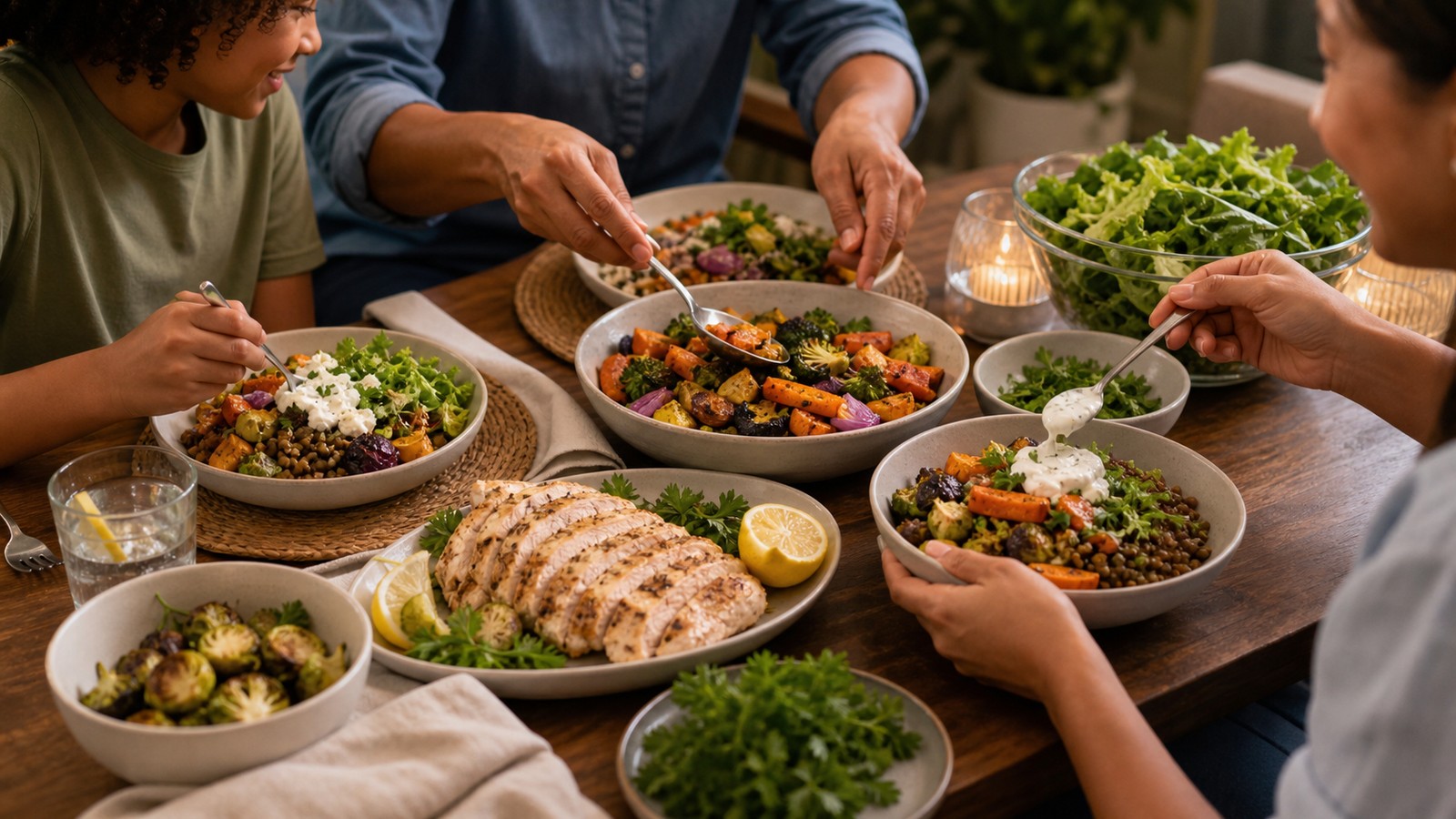
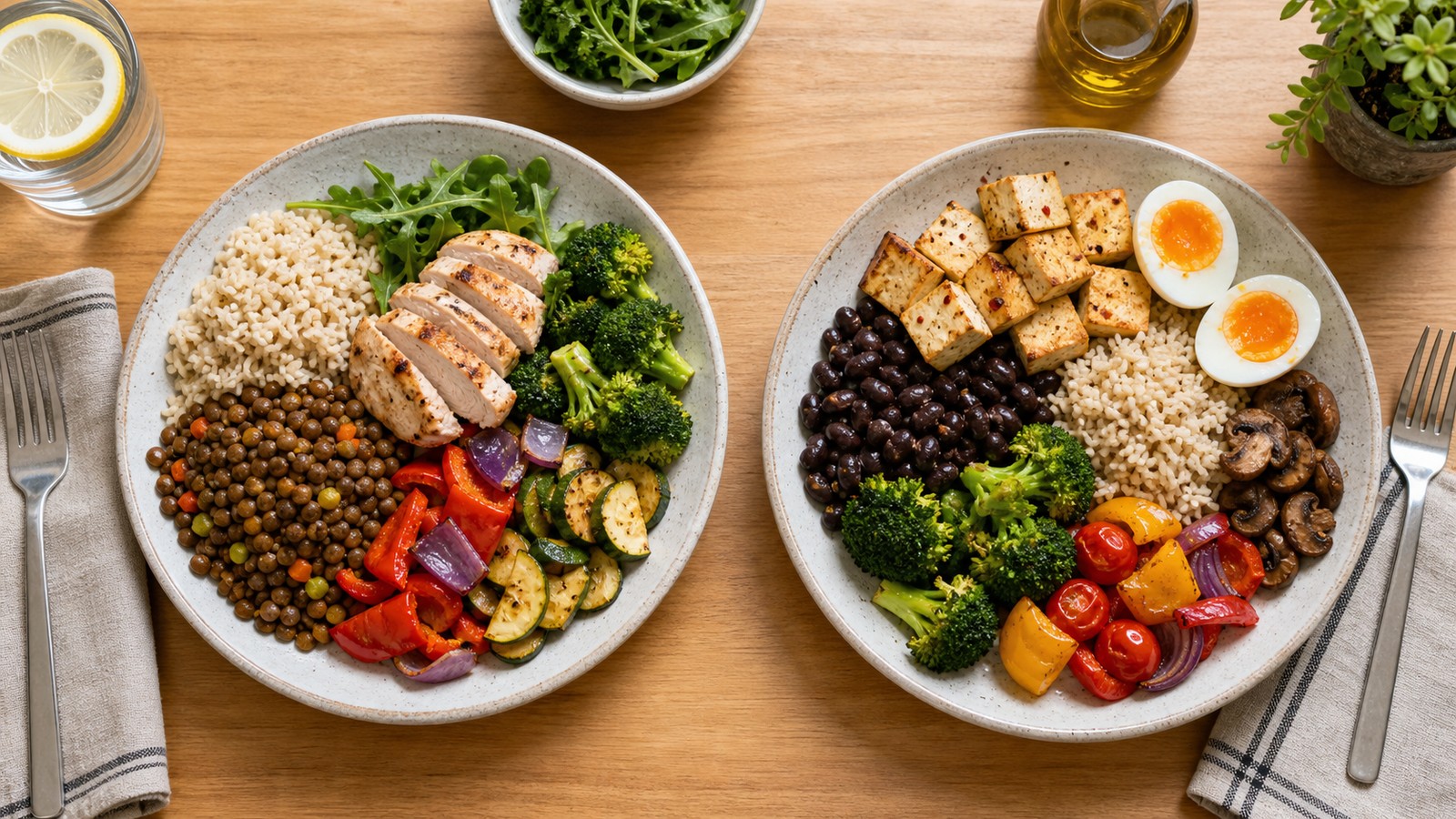
Choose a protein, vegetables or fruit, a grain or starchy food, and a flavorful fat or sauce. A bowl might use tofu, brown rice, broccoli, carrots, and peanut sauce. A plate might use lentil patties, potatoes, cabbage, and yogurt sauce.
Breakfast can combine eggs and vegetables, or oats with soy milk, nuts, and fruit. Lunch can use leftovers, bean soup, hummus sandwiches, or yogurt and grain bowls.
Keep three emergency meals: canned bean tacos, eggs with frozen vegetables and toast, or pasta with white beans and spinach.
Plan a Sample Day
Breakfast: oatmeal with fortified soy milk, berries, chia, and walnuts. Lunch: chickpea salad sandwich with vegetable soup and fruit. Dinner: tofu stir-fry with brown rice, broccoli, mushrooms, and sesame sauce.
A lacto-ovo alternative might use yogurt at breakfast, lentil soup with cheese at lunch, and vegetable frittata with potatoes at dinner. Snacks are optional and can include fruit, nuts, yogurt, vegetables with hummus, or toast with nut butter.
Portions should expand for activity, growth, pregnancy, and recovery. Add another sandwich, larger grain serving, extra tofu, or snacks as needed. A sample day is a structural example, not a universal calorie prescription.
For a vegan version, replace yogurt and eggs with fortified soy foods, tofu, legumes, and a reliable B12 source. The planning principles remain, but supplementation becomes more explicit.
Shop and Prepare Efficiently
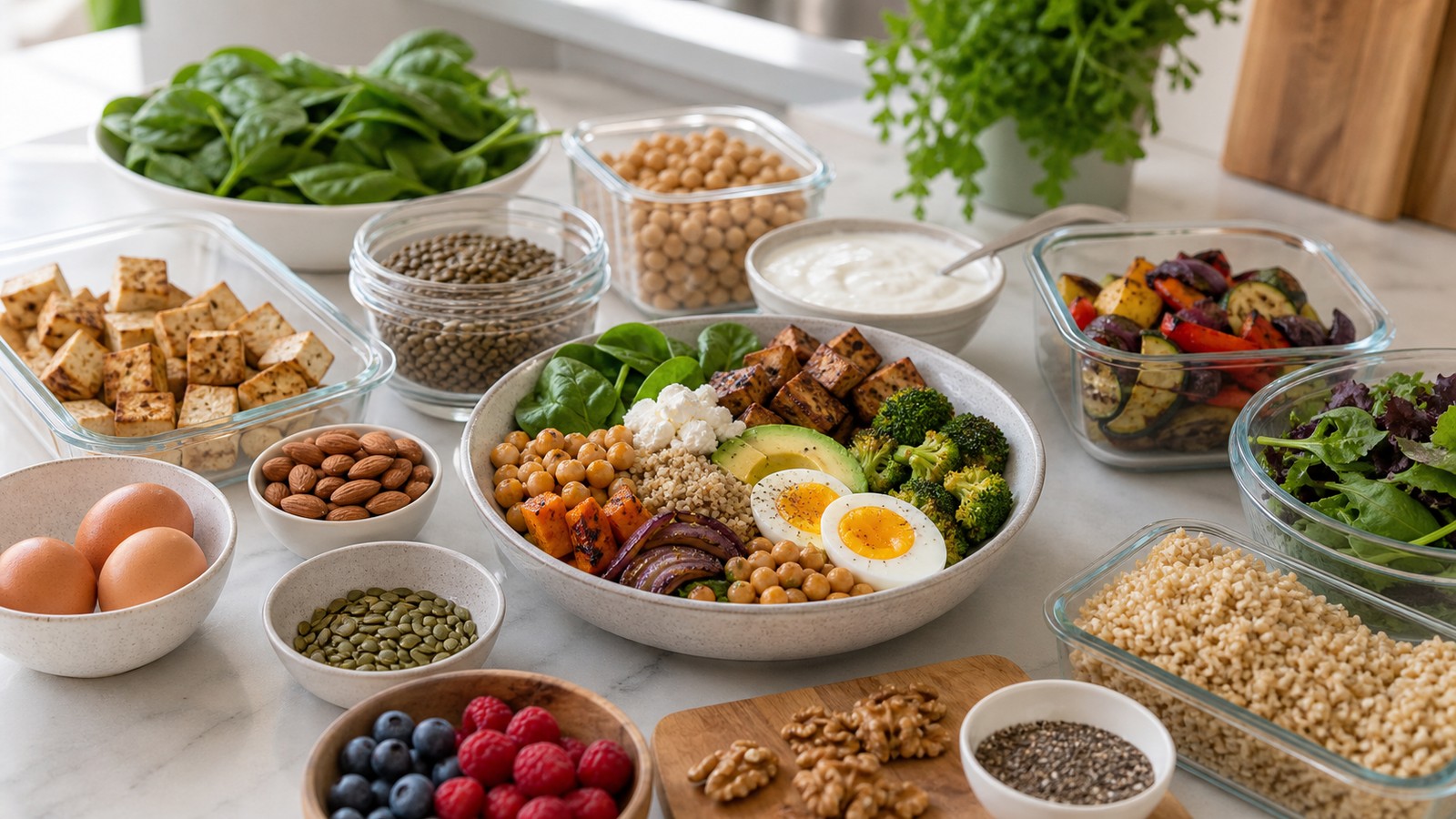
Stock canned beans, lentils, tofu, eggs or yogurt when included, frozen vegetables, grains, nuts, seeds, fruit, and two versatile sauces. Cook one grain and one legume-based dish for multiple meals.
Use delicate produce early and durable cabbage, carrots, frozen vegetables, and canned staples later. Freeze bread, cooked beans, and leftovers before quality declines.
Create an ingredient relay: roasted vegetables enter dinner and eggs; lentils enter soup and salad; yogurt becomes breakfast and sauce. Reuse reduces labor without forcing identical leftovers.
Budget staples include dried lentils, canned beans, oats, eggs, peanut butter, frozen vegetables, potatoes, rice, and seasonal fruit. Specialty products are optional.
Keep a freezer inventory so cooked beans, bread, vegetables, and prepared meals are used. Forgotten food does not provide nutrition or savings.
Adapt for Children, Pregnancy, and Older Adults
Children need adequate energy, fat, protein, iron, zinc, calcium, B12, iodine, and vitamin D for growth. Large high-fiber meals can fill small stomachs before enough energy is consumed. Pregnancy raises several nutrient needs and requires food-safety attention.
Older adults may need more protein per meal and reliable B12 assessment. A pediatrician, prenatal clinician, or registered dietitian can tailor the pattern.
Evaluate the Plan Over Time
Monitor energy, strength, digestion, menstrual health, mood, food variety, and relevant laboratory markers. Fatigue is not proof that vegetarian eating fails, but it deserves investigation of energy, iron, B12, sleep, and medical factors.
Keep the diet broad enough to remain practical. A healthy vegetarian plan is not measured by avoiding animal food perfectly; it is measured by whether the included foods support health, satisfaction, and daily life.
Review supplements annually and whenever brands change. Fortification and doses differ, while accidental duplication can occur across multivitamins, B12, vitamin D, and specialty products.
Build a Plan That Can Survive Change
Travel, illness, new medications, pregnancy, training, and aging can alter nutrient and energy needs. Revisit the plan rather than assuming the same meals remain adequate forever. Vegetarian eating is a framework capable of adaptation.
Keep reliable protein and B12 sources, preserve enough food, and use laboratory or clinical feedback when risk warrants it. Healthy living comes from responsive planning, not static adherence to a label.