
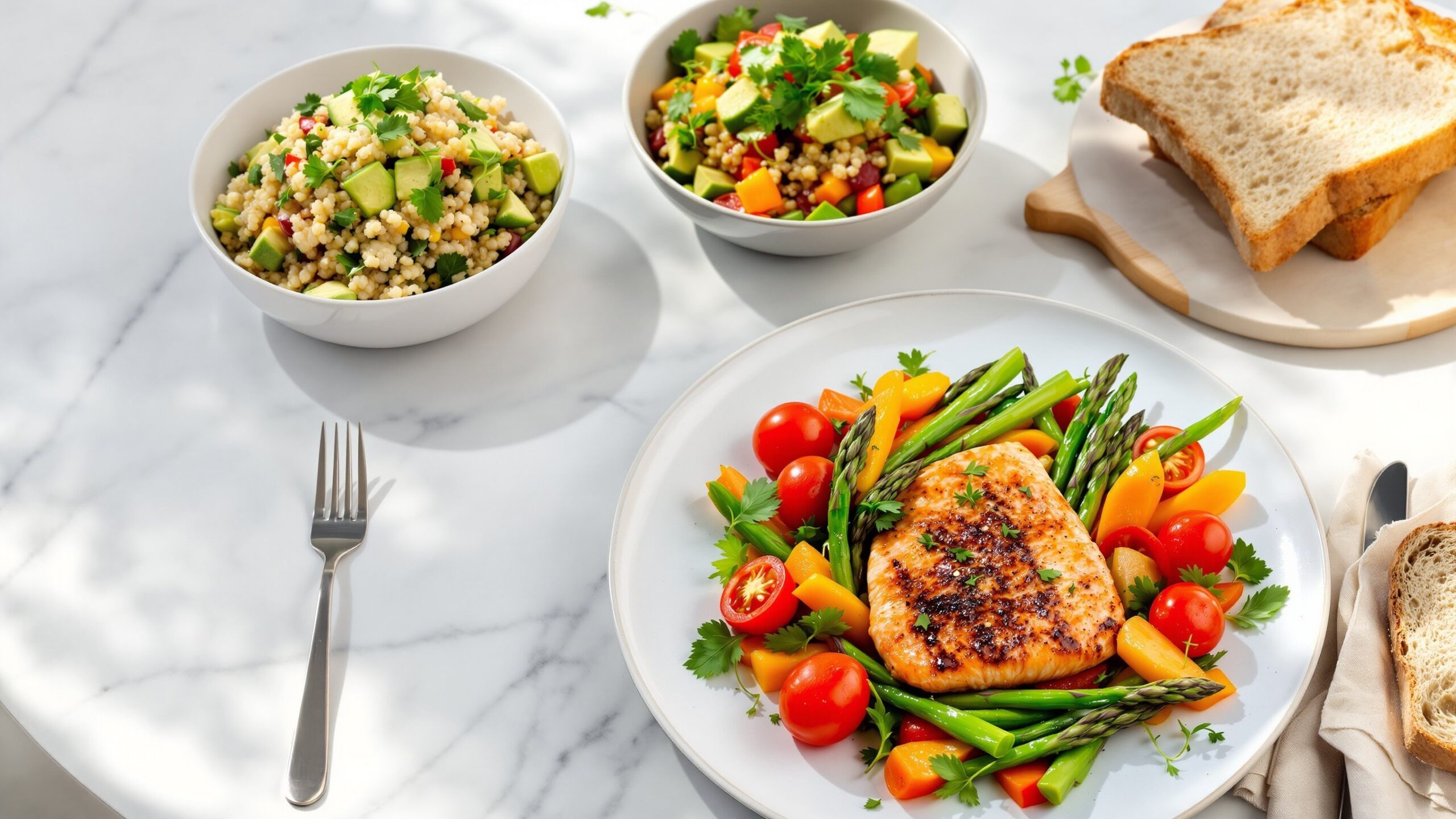
Healthy eating often feels complicated. Between calorie counting, trendy diets, and conflicting advice, many people are left wondering what a “normal” meal should even look like. The Balanced Plate Method offers a refreshingly simple solution. Instead of strict rules or expensive specialty foods, it teaches you how to arrange everyday ingredients in a way that naturally supports energy, weight control, and long-term wellness. By focusing on proportions rather than perfection, this approach makes nutritious eating realistic for busy lives.
A: Not usually. The plate method is a “visual measuring tool” that works well without tracking.
A: Use beans, lentils, tofu/tempeh, edamame, eggs, and Greek yogurt as your ¼-plate protein.
A: Leafy greens, broccoli, cauliflower, peppers, mushrooms, zucchini, tomatoes, cucumbers, onions.
A: No. They’re a carb choice—pair with protein and veggies and keep the ¼-plate guide.
A: Build around veggies, choose a protein-focused entrée, and swap/halve starch sides when possible.
A: Add more veggies first, then a bit more protein or healthy fat.
A: Olive oil-based dressing, avocado, a small handful of nuts, or a sprinkle of seeds.
A: Maybe. If you do snack, try “mini plate”: fruit/veg + protein (apple + peanut butter, carrots + hummus).
A: Keep the same “plate framework,” change flavors—taco night, Italian night, stir-fry night with the same core.
A: Lean on beans, eggs, frozen veggies, seasonal produce, and batch-cooked grains.
What the Balanced Plate Method Really Means
At its heart, the Balanced Plate Method divides a meal into three main parts: vegetables and fruits, protein, and carbohydrates, with a small space for healthy fats. Rather than weighing food or tracking numbers, you use your plate as a visual guide. Half of the plate is filled with colorful produce, about one quarter with protein, and the remaining quarter with wholesome carbohydrates. This structure mirrors what nutrition science has shown to be most supportive of stable blood sugar, steady energy, and overall health.
Why Proportions Matter More Than Diet Labels
Many popular diets focus on removing entire food groups. The Balanced Plate Method takes the opposite view. It recognizes that the body needs a variety of nutrients working together. Carbohydrates fuel the brain and muscles, protein repairs tissues and keeps you full, and fats help absorb vitamins and support hormones. When these elements appear in the right proportions, meals become naturally satisfying without feeling restrictive. This balance also helps prevent the energy crashes that often follow meals heavy in refined starches or sugars.
Building the Vegetable and Fruit Foundation
Filling half your plate with produce is the cornerstone of the method. Vegetables and fruits provide fiber, vitamins, minerals, and protective plant compounds that support heart health and digestion. The goal is variety and color. Dark leafy greens, bright peppers, deep purple berries, and orange squash each bring different nutrients. Fresh, frozen, or lightly cooked options all count. When produce takes center stage, meals become larger in volume but lower in calories, which supports healthy weight without hunger.
Choosing Quality Protein for Staying Power
Protein occupies about a quarter of the plate because it plays a powerful role in appetite control and muscle maintenance. Lean meats, poultry, fish, eggs, beans, lentils, tofu, and yogurt all fit within this section. The Balanced Plate Method does not demand one single source; instead, it encourages rotation. Plant proteins bring fiber and antioxidants, while seafood provides omega-3 fats that benefit the brain and heart. By including protein at each meal, you create a steady release of energy that can carry you through busy afternoons.
Smart Carbohydrates Without Fear
Carbohydrates often get a bad reputation, yet they are the body’s preferred fuel. The key is choosing the right kinds and the right amounts. Whole grains such as brown rice, quinoa, whole-wheat pasta, and oats deliver slow-digesting energy along with fiber. Starchy vegetables like potatoes, corn, and peas also belong here. By keeping this section to about one quarter of the plate, you enjoy the comfort of carbohydrates without overwhelming your blood sugar. This balance allows room for occasional treats while keeping everyday meals grounded.
The Quiet Role of Healthy Fats
Although not assigned a large physical space on the plate, fats complete the picture. A drizzle of olive oil, a handful of nuts, slices of avocado, or the natural fats in fish enhance flavor and help absorb fat-soluble vitamins. The Balanced Plate Method views fats as partners to the other food groups rather than enemies. Using them thoughtfully adds satisfaction so meals feel enjoyable rather than clinical.
From Theory to Real-Life Meals
Putting the method into practice is easier than it sounds. Imagine a dinner of grilled salmon, roasted sweet potatoes, and a large salad tossed with tomatoes, cucumbers, and olive oil. Without measuring a single gram, the meal naturally fits the balanced template. A vegetarian lunch might feature lentil soup, a slice of whole-grain bread, and a side of fruit. Breakfast can follow the same pattern with scrambled eggs, sautéed spinach, and oatmeal topped with berries. The framework adapts to any cuisine or preference.
How the Method Supports Weight Management
Unlike crash diets that rely on deprivation, the Balanced Plate Method works through gentle biology. Fiber from produce and whole grains slows digestion, helping you feel full on fewer calories. Protein further reduces appetite by influencing hunger hormones. When meals are built this way, snacking becomes less necessary and portions regulate themselves. People often find that weight stabilizes without the emotional strain of counting every bite.
Benefits Beyond the Scale
Healthy eating is about more than body weight. Balanced plates deliver a broad spectrum of nutrients that support immunity, brain function, and long-term disease prevention. Regular intake of vegetables and fruits is linked to lower risk of heart disease and certain cancers. Whole grains help protect against diabetes, and adequate protein preserves muscle as we age. The method quietly supports these goals simply by guiding everyday choices.
Adapting the Plate for Different Lifestyles
One of the strengths of this approach is flexibility. Athletes may increase the carbohydrate portion to fuel training. Older adults might emphasize protein to protect muscle mass. Children can use smaller plates while keeping the same proportions. Cultural foods from around the world fit naturally as well, whether the meal features Mediterranean chickpeas, Mexican beans and rice, or Asian stir-fried vegetables. The plate becomes a universal language for nutrition.
Grocery Shopping with the Balanced Plate in Mind
Successful meals begin in the store. Shopping the outer aisles for produce, lean proteins, and dairy sets the foundation. Choosing whole grains instead of refined versions improves the carbohydrate quarter. Keeping frozen vegetables and canned beans on hand makes balanced cooking possible even on rushed evenings. The method encourages planning but not obsession; a few staple ingredients can create dozens of combinations.
Cooking Strategies That Keep Balance Easy
Simple cooking techniques support the plate structure. Roasting a large tray of mixed vegetables at the start of the week provides instant half-plates for several meals. Grilling or baking proteins in batches saves time. Whole grains can be cooked ahead and reheated with herbs for flavor. When the components are ready, assembling a balanced meal takes minutes rather than hours.
Eating Out Without Losing Balance
Restaurant portions often tilt heavily toward refined carbohydrates and fats. The Balanced Plate Method becomes a helpful compass in these situations. You can ask for extra vegetables, share oversized starch portions, or choose grilled proteins instead of fried. Even fast-food meals can be improved by adding a side salad or fruit cup. The goal is not perfection but steering choices closer to the familiar plate pattern.
Listening to Hunger and Satisfaction
While the method provides structure, it also respects internal cues. Some days you may need a larger plate, other days a lighter one. Paying attention to hunger before eating and satisfaction afterward helps fine-tune portions. Balanced meals make this easier because they stabilize blood sugar, reducing the intense cravings that follow unbalanced eating.
Teaching Children the Balanced Plate
For families, the plate offers a gentle way to introduce nutrition without turning meals into battles. Children can learn to fill half their plate with colors and choose a favorite protein and grain. Involving them in arranging their own plates builds independence and curiosity about food. Over time these habits become second nature and travel with them into adulthood.
Common Myths the Method Clears Up
Many people believe healthy eating requires expensive superfoods or complicated recipes. The Balanced Plate Method proves otherwise. Frozen peas are just as valuable as exotic greens, and a simple egg can be as nourishing as trendy protein powders. Another myth is that treats must be eliminated. In reality, desserts and special foods can fit alongside balanced meals without guilt when overall proportions are respected.
Overcoming Obstacles and Setbacks
Life rarely runs perfectly. Holidays, travel, and stressful weeks can disrupt routines. The beauty of this approach is its forgiving nature. Instead of abandoning the plan after one indulgent meal, you simply return to the plate at the next opportunity. Each meal becomes a fresh start, which prevents the all-or-nothing mindset that sabotages many diets.
Pairing the Plate with Hydration and Movement
Nutrition works best alongside other healthy habits. Drinking water with meals supports digestion and prevents confusing thirst with hunger. Gentle movement such as walking after eating can help regulate blood sugar. The Balanced Plate Method complements these behaviors rather than competing with them, forming part of a broader lifestyle.
A Sustainable Way Forward
The Balanced Plate Method endures because it aligns with how people actually live. It does not demand rare ingredients, extreme willpower, or endless tracking apps. Instead, it teaches a visual skill that can be used anywhere—from home kitchens to office cafeterias. Over time, this simple habit reshapes preferences so that balanced meals feel natural and enjoyable.
Taking the First Step Tonight
Starting is as easy as looking at your next meal and asking one question: does my plate reflect balance? Add an extra spoonful of vegetables, choose a modest portion of grains, and include a satisfying protein. Small adjustments accumulate into meaningful change. The Balanced Plate Method turns nutrition from a confusing puzzle into a clear picture, empowering anyone to build healthy meals easily and confidently.

