A Useful Pregnancy Meal Can Begin With Familiar Food
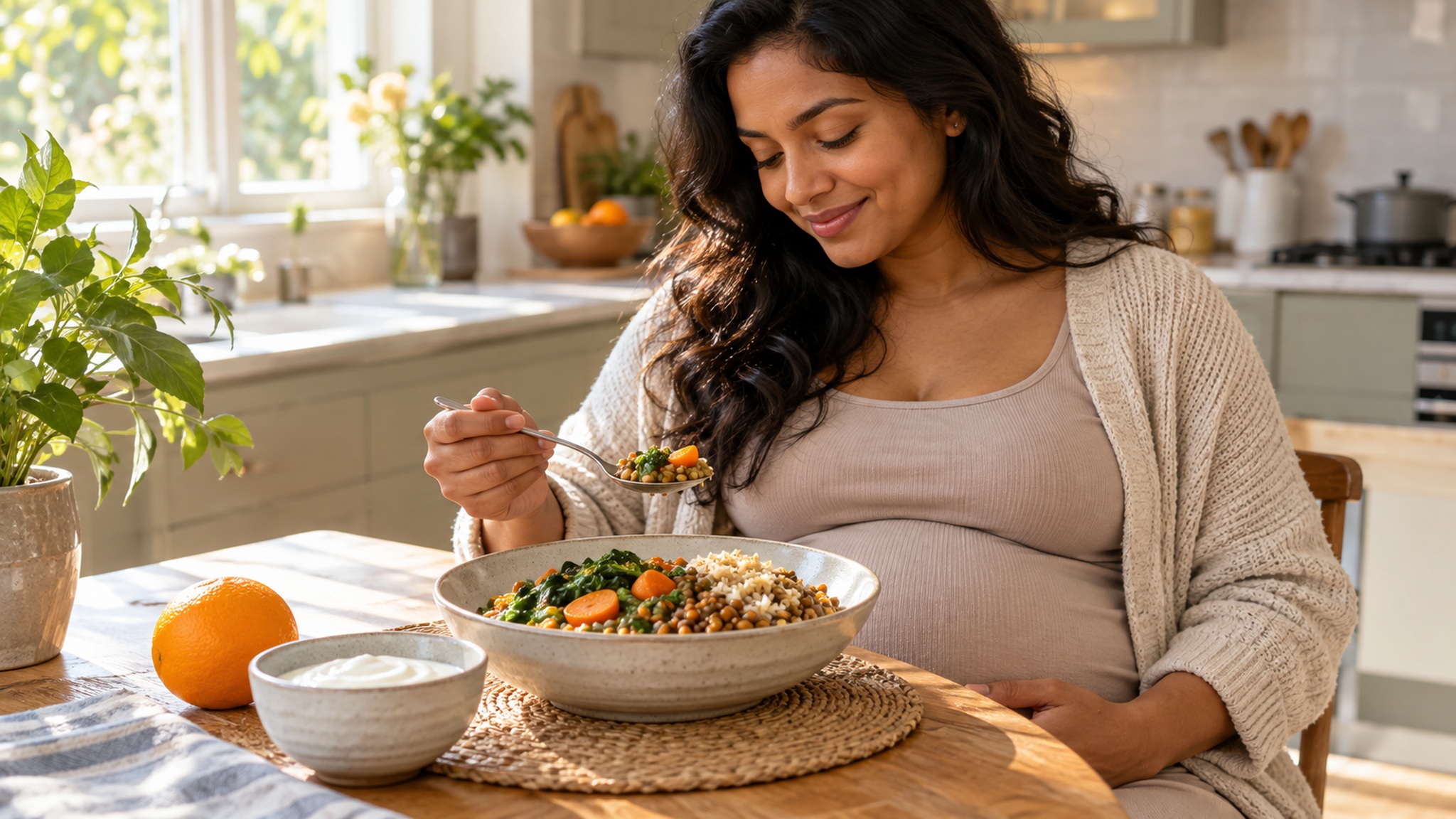
A bowl of lentils and rice, tender greens, yogurt, and an orange can do more for everyday pregnancy nutrition than a complicated list of expensive specialty foods. The meal brings several useful nutrients together, yet leaves room for different tastes, budgets, and cooking traditions. That flexibility matters when appetite changes or the foods you usually enjoy suddenly become unappealing. The best prenatal foods are therefore ingredients that help meet nutritional needs and can actually be eaten regularly, prepared safely, and fitted into your household. Pregnancy also calls for a suitable prenatal supplement and individual care; food choices cannot replace those supports or guarantee a particular outcome. This guide focuses on building a varied eating pattern, recognizing the jobs different foods can do, and making practical adjustments when ordinary meals become difficult. Think in terms of dependable options rather than a perfect plate at every sitting.
A: No. Build variety across eating occasions and days while following your individual prenatal plan.
A: Food folate supports the diet but does not replace recommended folic acid or a suitable prenatal plan.
A: Try a bean you tolerate in a modest portion, with gradual changes and appropriate preparation.
A: No. Calcium, protein, and other nutrients vary; compare the product label and your overall needs.
A: Rice can fit a varied diet. Any blood-sugar condition needs individualized meal guidance.
A: Yes. They can be practical ingredients when handled and cooked safely.
A: Other foods can contribute useful nutrients; discuss remaining gaps and supplement decisions with your care team.
A: It helps meet a need, suits your preferences, fits your budget, and can be prepared safely.
A: Use tolerable options and contact your clinician if vomiting persists or hydration and intake become difficult.
A: Yes. A dietitian can help with restrictions, access, appetite changes, and practical meal planning.
Start With the Meal You Can Sustain
Pregnancy advice often arrives as isolated instructions: eat more greens, remember protein, choose calcium, and avoid certain foods. A meal makes those instructions easier to use. Begin with a familiar starch, add a protein food, include produce that suits your appetite, and find a dependable calcium source elsewhere in the day. The combination can be a rice bowl, a sandwich with a safely cooked filling, a vegetable stew, or something already common in your family.
Variety can develop across several days rather than appearing in every meal. A modest breakfast does not cancel a more balanced lunch, and an uncomfortable evening may call for simple food. Keep returning to a few workable ingredients while expanding when you can. If dietary restrictions, persistent symptoms, or a medical condition narrow the available options, a prenatal clinician or registered dietitian can help make the pattern more complete.
Beans and Greens Bring Folate Into Ordinary Dishes
Lentils, beans, leafy greens, and citrus are useful sources of food folate. They can enter meals without a separate nutrition project: lentils in soup, beans in a wrap, or cooked spinach alongside rice. Washing produce and cooking ingredients appropriately make these foods easier to incorporate safely. Use the preparations you tolerate rather than forcing a large raw salad because it appears especially healthy.
Food folate does not remove the need for recommended folic acid. The CDC emphasizes folic acid before and during early pregnancy because neural tube development happens very early. Discuss your prenatal product and any individual dosing needs with your care team. A food guide should support that plan, rather than imply that eating enough greens can substitute for it.
Convenient versions can help with consistency. Canned beans, frozen spinach, and washed oranges are often easier to keep available than ingredients requiring extensive preparation. Choose plain options when practical and adjust seasoning to taste. A food is useful partly because you can obtain and prepare it on an ordinary tired day. Think about how much effort happens between opening the cupboard and sitting down to eat. A ready-cooked lentil pouch may be a better purchase than dry lentils that never reach the stove. A frozen vegetable can be portioned directly into a simmering pot, reducing waste as well as preparation. These practical differences make nutritional intentions easier to carry out. They also allow a partner or family member to prepare a familiar meal without needing detailed instructions. Keep the simplest successful version in your regular rotation before adding more ambitious variations.
Protein Belongs in More Than the Evening Meal
Fully cooked eggs, cooked poultry or fish, beans, lentils, tofu, and pasteurized yogurt offer different ways to include protein. Spreading these foods across meals can be easier than relying on a large dinner. A breakfast egg, lentil lunch, and yogurt snack each contribute to a varied pattern. You do not need to eat every option or adopt a high-protein regimen. Appetite, preferences, and clinical circumstances should guide the practical choices. Consider texture as well as the ingredient itself. Soft tofu in soup may feel very different from a firm baked tofu dish, just as an egg incorporated into a sandwich can differ from an egg served on its own. Changing the preparation may restore an option that initially seemed unavailable. Do not force a food that repeatedly worsens discomfort; look for another suitable choice. The aim is a range of workable meals, with enough flexibility that a single disliked ingredient does not disrupt the day.
Make Iron Foods Easy to Recognize
Iron deserves attention because pregnancy increases the demands associated with blood production and growth. Meat, poultry, beans, lentils, and iron-fortified cereals can all contribute, although their iron is not absorbed identically. A vegetarian meal can pair beans with tomatoes or a vitamin C-rich fruit. That combination is a simple food decision, not a guarantee that blood iron levels will be adequate.
The NIH iron guidance distinguishes dietary needs from treatment for deficiency. Testing and prenatal care determine whether you need a separate iron regimen. Do not use tiredness alone to diagnose a deficiency or decide how much supplemental iron to add. Food supports the plan, while a clinician interprets symptoms and blood results.
Choose a Calcium Source You Will Actually Use
Pasteurized milk, yogurt, and appropriate cheeses provide convenient calcium options. If dairy does not suit you, examine fortified alternatives rather than assuming every plant drink has the same nutritional profile. Calcium content and protein can differ substantially between products. The label is more useful than a broad claim that something is a milk replacement.
Calcium-set tofu can also contribute, but the amount depends on how it is made. The NIH calcium food guidance identifies several sources beyond dairy. Build them into actual eating occasions: fortified soy beverage with breakfast, yogurt alongside fruit, or tofu in a cooked vegetable dish. Availability and taste affect whether a source becomes dependable.
Check food and supplements together with your care team when intake is limited. A prenatal tablet may contain little calcium, and taking several products can complicate the picture. Timing may also matter if an iron supplement is prescribed. A pharmacist or clinician can help arrange the products without turning every meal into a calculation.
Eggs and Soy Foods Can Help With Choline
Choline is an essential nutrient that can be overlooked in discussions centered on folic acid and iron. Eggs, soy foods, meats, and several other foods contribute. The NIH choline fact sheet lists a pregnancy adequate intake of 450 milligrams daily. That is a dietary reference, not a direction to buy a supplement of that amount. Include suitable foods, then discuss gaps if your usual diet excludes major sources or your prenatal product raises uncertainty.
Fish Choices Need Species and Preparation Together
Fish can provide protein and useful fats, but pregnancy recommendations distinguish species because mercury exposure varies. In the United States, the FDA and EPA fish advice recommends choosing lower-mercury options from its Best Choices list. Cooked salmon, sardines, shrimp, or other suitable choices can fit different preferences. Follow the current chart and local advisories rather than treating all seafood as interchangeable.
Preparation remains a separate safety issue. A lower-mercury species does not make raw fish appropriate for pregnancy. Choose thoroughly cooked seafood and avoid bones when serving. If you avoid fish entirely, discuss the wider diet and any supplement decision with your prenatal team rather than trying to reproduce a fish recommendation through a random oil product.
Whole Grains and Produce Keep the Pattern Broad
Oats, whole-grain breads, brown rice, and other familiar grains offer ways to include fiber and energy. Fruit and vegetables add variety, but they do not have to appear as elaborate salads. Cooked carrots, a washed apple, frozen berries heated into oatmeal, or vegetables in soup can be practical. Choose forms that fit your appetite and food-safety routine.
Fiber changes are often easier when gradual and accompanied by sufficient fluid. A large sudden increase can be uncomfortable, particularly if digestion is already different during pregnancy. Pay attention to the overall pattern rather than chasing the highest-fiber food at every meal. Constipation that persists or becomes concerning deserves a clinical discussion, including whether a prescribed supplement is contributing.
Carbohydrate foods should not be casually removed because pregnancy advice mentions blood sugar. A person with gestational diabetes needs an individual plan addressing portions, timing, and treatment. That plan can still include suitable carbohydrate foods. General internet rules should not replace the guidance provided for your own pregnancy.
Food enjoyment also belongs here. A meal that tastes familiar can be easier to eat and share with others. Use culturally meaningful grains, vegetables, and seasonings within safe preparation practices. Nutritional usefulness does not depend on making every household eat the same menu.
Food Safety Changes a Few Familiar Habits
Choose pasteurized dairy and thoroughly cooked animal foods, wash produce, and prevent raw ingredients from contaminating ready-to-eat food. Keep perishable meals refrigerated promptly and reheat stored foods appropriately. A meal can be nutritionally well planned yet unsafe if storage or preparation is neglected. These habits protect the usefulness of the ingredients you chose.
Some ready-to-eat foods need extra care because of Listeria risk. The CDC pregnancy-relevant prevention guidance recommends heating deli meats until steaming hot and avoiding unheated queso fresco-type cheeses even when made with pasteurized milk. Check the specific food rather than relying on a general impression that every packaged or pasteurized item is safe. Ask about uncertain ingredients when someone else prepares the meal.
Adjust the Menu When Appetite Becomes Unpredictable
Nausea, smell sensitivity, and early fullness can make a previously easy meal difficult. Smaller eating occasions, cooler foods where safely prepared, and milder flavors may be more manageable for some people. Keep a few simple alternatives available so that one rejected dinner does not leave you without another option. The aim is tolerable nourishment, not demonstrating discipline through unpleasant food.
A period of limited variety deserves compassion and practical support. Try returning gradually to a protein source, a calcium source, and different produce as symptoms allow. Family members can help by preparing foods away from strong smells or offering smaller portions. Do not interpret a challenging week as evidence that you have failed at pregnancy nutrition.
Repeated vomiting, difficulty keeping fluids down, dizziness, reduced urination, or weight loss requires prompt contact with your care team. These problems should not be managed solely by changing recipes. Treatment can make eating and hydration more achievable. Food advice is most useful when it sits alongside appropriate care.
Let the Shopping List Reflect Real Life
A short list of eggs, canned lentils or beans, oats, frozen vegetables, yogurt or a fortified alternative, and suitable fruit can support many meals. Adapt it for allergies, affordability, access, and taste. Ask about food assistance or dietetic support when those constraints make adequate eating difficult. The best prenatal foods are the ones that form a safe, varied, workable pattern over time. Keep prenatal care and the recommended supplement plan beside that pattern, and let individual needs shape the details. Before shopping, check what remains in the refrigerator and decide which ingredients will be used first. Planning one or two shared dishes can reduce cooking demands while still leaving choices for changing appetite. If another person shops for you, explain which substitutions you can tolerate. Clear, ordinary arrangements often make a balanced eating pattern more achievable than another long list of foods to buy.